
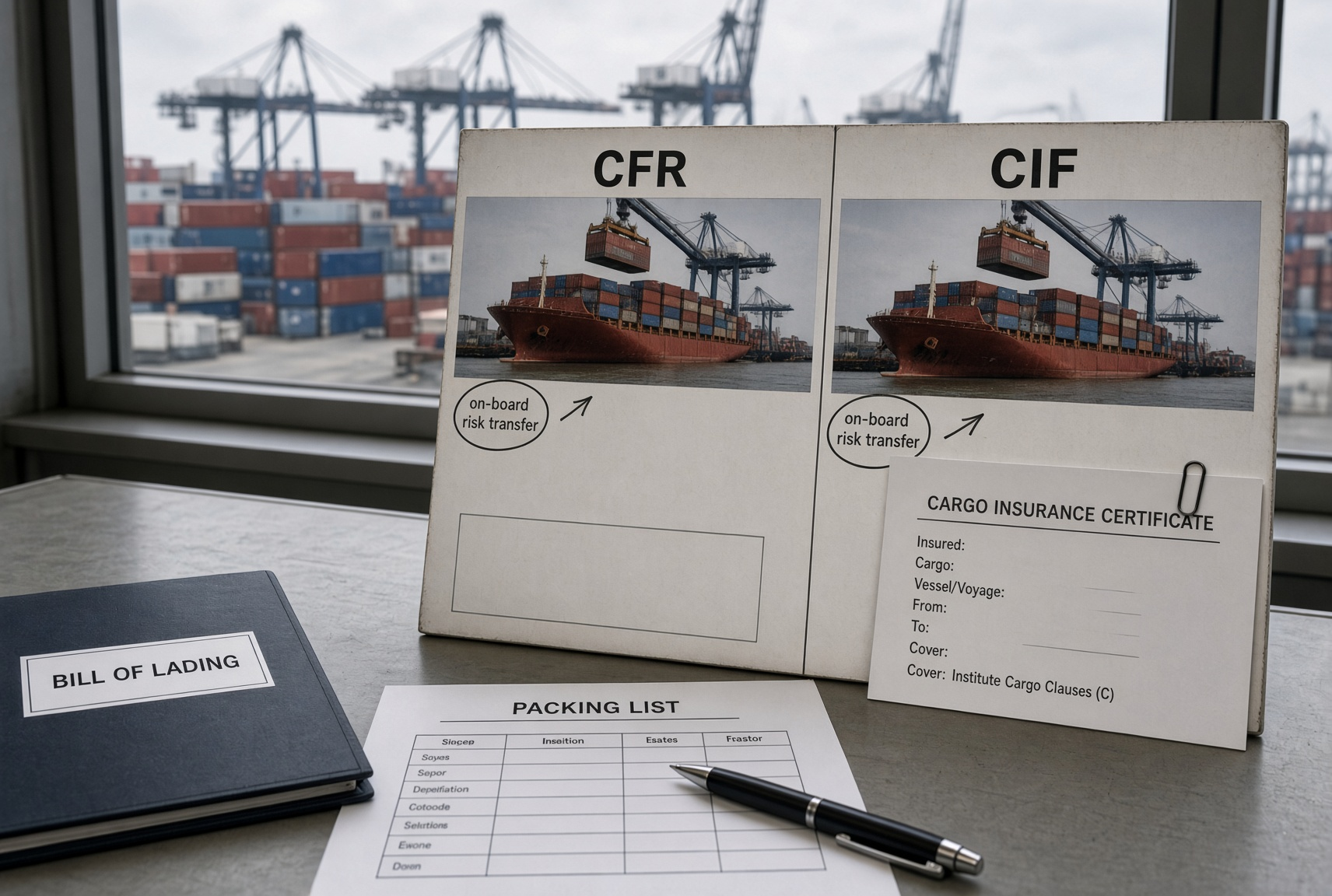
The process of CFR vs CIF is truly not as complex as the majority of China supplier quotes portray it. Under Incoterms® 2020, CFR (Cost and Freight) and CIF (Cost, Insurance and Freight) are almost the same sea-freight terms. Seller arranges and pays ocean freight to the named destination port. If the goods are on board at origin, they are still at risk for the buyer. The only change in structure when cargo insurance is added is this: Under CIF the seller will provide the minimum cargo insurance required to that named port, while under CFR it will not.
Both terms involve the buyer clearing the destination, clearing the duties, taxes and inland delivery. The question for overseas importers isn’t so much which term is safer, but rather, is the cover included in the CIF sufficient or should they opt for a policy of their own? Below: definitions, the minimum insurance meaning, how insurance quotes are calculated and a helpful way to pick one.
CFR and CIF Under Incoterms 2020 — Core Definitions
Both are designed for shipments on sea or in inland waterways. They do not designate a destination warehouse door, they designate a destination port. If your quote includes the words “CIF USA” or “CFR Europe” but no port, then your quote is incomplete. A usable quote is naming a location such as Shanghai to Los Angeles, Ningbo to Hamburg or Yantian to Long Beach.
CFR (Cost and Freight): Seller Pays Freight to the Named Port
Under CFR the seller delivers when the goods are on board the vessel at the origin port and the ocean freight will be paid for by the seller to the named port of destination. Once goods are on board, the transit risk falls on the buyer. The buyer covers the cost of destination customs clearance, customs duties and taxes, and inbound transport (either by truck or train) and typically purchases cargo insurance separately. The seller’s additional role is not to be a risk, or a duty, or a last-mile delivery but freight to the port.
CIF (Cost, Insurance and Freight): Seller Adds Minimum Cargo Insurance
CIF imposes seller obligation on top of CFR – Seller to obtain cargo insurance on the buyer’s interest to the named destination port at a minimum standard. Risk continues to be transferred on board at origin. Buyer still does customs, duty and transport it inland. CIF isn’t door-to-door and it’s not duty paid. It equals the sum of CFR and the minimum insurance policy which was prepared for the move by sea or inland water.
What Actually Changes Between CFR and CIF?
The one difference between the two is the structure, which is insurance. The nature of risk transfer remains unchanged. No changes to the destination work. A quote may appear to be “safer”, based on the letters, but it is important to check the policy, not the three letters.
Risk Transfer Is the Same; Insurance Is the Difference
Risk is transferred under both CFR and CIF at the origin country’s port when the goods are put on board. The buyer already bears the commercial risk if the carton is crushed at a feeder from Ningbo, held at a transshipment hub, or wet-damaged on the mainline to Los Angeles. CIF does not retain that risk. Just requires that the seller purchase a minimum insurance policy for the benefit of the seller during that transit. The most common error in reading these terms is just to treat CIF as if it were the “factory is responsible until the port” clause.
Destination Charges, Duty, and Inland Delivery Are Still the Buyer’s Problem
CIF Begins at named port of origin. Under both CFR and CIF, the buyer must cover and coordinate shipping costs to the warehouse or fulfillment center, import customs clearance, import duties and taxes, storage after free time and trucking to the warehouse or fulfillment center. Not all costs are covered a CIF Hamburg quote, such as German duty or a truck to a Berlin warehouse. No dray to an inland depot or U.S.
A Simple Cost Checklist for CFR vs CIF
The total path and not the unit price on the proforma is to be compared:
- Product price (same under both terms, all else equal)
- Ocean freight (paid by seller on both CFR and CIF quotes; frequently included in the unit price on a CIF quote)
- Insurance:
- USPS: the seller arranges and pays
- CIF: the seller offers a minimum cover, in which the premium may be included in the quote.
- Duties and taxes for the buyer(under both) destination clearance
- If the goods are delivered by land from the port where they are to be discharged (both buyer and seller)
If destination charges are high or if you add a second policy (and the cover is too thin), then the CIF unit price might be slightly higher than CFR, but be more costly landed price. Follow that trajectory, by market, by mode, by customs work, by delivery – by the same planning view used to make other shipments from China: Origin port, ocean routing, destination port, and costs that begin upon arrival.
Understanding the Insurance Component in CIF
It’s the bit that actually gets changed! CIF insurance is a contractual requirement and does not guarantee prompt and complete payment of claims.
What “Minimum Cover” Means Under Incoterms 2020
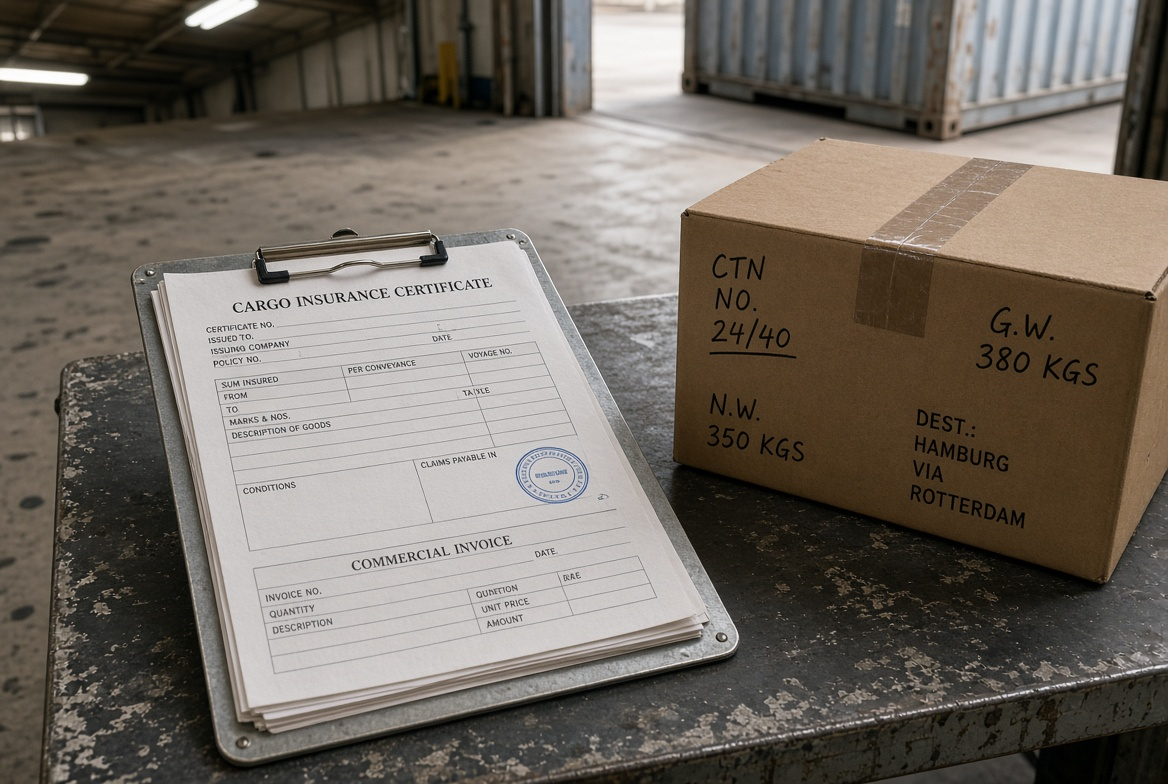
According to Incoterms® 2020, the seller is responsible for providing a basic ‘named-perils’ level of cargo insurance. In practice it is often the Institute Cargo Clauses (C) or as a minimum an equivalent minimum form. That is a policy that usually reacts to significant occurrences (fire, explosion, vessel grounding, etc.) instead of a larger series of events that many importers think of when they hear “insured.” A minimum form is not required if the water damage is from normal handling, if the container is stolen from a container yard, or if the water damage is not explained. CIF should not be considered as an all-risk cover. Before accepting, ask for the actual clause, exclusions and deductible.
Insurance planning comes next to the ocean booking, since CFR/CIF is a sea and inland waterways type of booking. If that occurs, the sea freight from China is the mode decision that remains to be made when you compare FCL and LCL on the same China lane, and the handling profile of a full container is not the same as the LCL consignment.
Insured Value and Claim Process
The insured value of the CIF is generally the invoice value plus a margin, typically 110 percent, but not always. An alternative percentage, alternative valuation basis or cap may be used in the policy. Typically, it is the purchaser who is the one who will gain from the cover, although the policy can be placed with the seller’s insurer. A claim is then usually passed through the supplier, the forwarder they had used and an insurer you did not select. That path can work. It is also slower, and not as direct, as a claim on an existing policy with an insurance company familiar with the type of cargo.
When CIF Insurance May Be Enough
Minimum CIF cover may be appropriate where the goods are of low value, robust and replaceable, such as basic hardware, packaged consumer goods that are not "thief-proof" or bulk-type carton goods not subject to break-out. It may also be permissible in certain cases where the route is short, familiar, or operationally simple, the buyer has a high tolerance for a partial uninsured loss, or the cost of a wide coverage policy is greater than the loss the buyer is seeking to cover. This is a matter of business sense, rather than a rule that CIF is “good enough” for all first orders.
When You Should Arrange Your Own Insurance Anyway
If the items being shipped are high value electronics, fragile goods, sensitive to abrasion, water sensitive, or have a theft history, purchase the cargo insurance for the shipper for goods on a CIF shipment. If you already have an open cargo policy, the same applies. There might be some overlapping coverage. What the practical reason is for having a copy of your policy is that you will have more favorable terms and a claims desk that works for you. The CIF minimum cover will be available as a backstop in the file. This should not be the sole safeguard for a shipment that you can’t afford to lose.
Cost Implications — Is CIF Really More Expensive Than CFR?
The CIF charge is sometimes higher. Sometimes it is nearly indistinguishable because it includes a small insurance premium and freight in the price of the unit. Simply flaring a gap does not equal protection.
How Sellers Price CFR vs CIF
In most China Factory Quotes, the CFR rate is the product plus ocean freight logic and the CIF is the product plus ocean freight logic plus a basic premium. Sellers will sometimes include freight and insurance charges in a single unit price, making it difficult to compare side by side. The prices of a CIF may be slightly higher than CFR and may cover only a thin policy. It can also contain a freight rate that the seller had to pay under CFR. Even if you agree to a single unit price, request the supplier to divide the product, freight and insurance costs. If they will not tell you what cover was purchased, then you are not comparing terms. You are comparing two composite numbers.
Comparing Total Landed Cost, Not Just Unit Price
Landed Cost is: Product + Extras (from origin) + Ocean Freight + Insurance (Embedded or Separate) + Destination Terminal Charges + Customs Brokerage + Duty and Tax + Inland Delivery. The destination charges may be forgotten or the cargo may require a second, wider policy, otherwise the cheap quote from CIF can become an expensive shipment. Follow the same point check for both terms. Then, determine whether the premium in the included CIF is an added value that you would still have purchased if you hadn’t had CIF, or an added value that you wouldn’t have gotten otherwise.
Decision Framework — When to Choose CFR vs CIF
There are no default ‘better’ terms. Match the term with the correct party to be covered and the extent of the cover required.
Choose CFR When You Want Control Over Insurance
CFR applies if you have an open cargo policy and you wish to select the insurer and the clause or wish to have cover extend beyond the destination port. It also works when you don’t want to have two policies that are competing against each other for the same loss. Freight is paid as per seller’s booking. You just carry insurance in your personal process.
Choose CIF When You Want the Seller to Handle Basic Cover
CIF can be used if the cargo is normal, the value is relatively low, there is no previous policy, and the coverage is less than the named port. Decreases one task from origin. It won’t cancel destination work and won’t provide coverage for additional risk cover unless you agree to purchase it and the seller provides you with its terms.
Questions to Ask Your Supplier About CIF Insurance
Before accepting CIF on a China sea shipment get written answers:
- Which clause/standard does insurance use?
- What is the insured value and is it a percentage on the invoice?
- What are the beneficiaries and how to make a claim?
- What risks are included in the coverage and which are not?
- What if there is more coverage — can it be added, and what effect does it have on the quote?
If the responses to those questions are general, assume that the “included insurance” line was not completed.
Common Mistakes Importers Make With CFR and CIF
- Assumes transit risk if the seller assumes CIF. Both terms have risk transfer at origin on board.
- Assuming that CIF insurance is all risk for high value or fragile goods, without reading the policy.
- If you simply pick CIF because you are told that insurance is included and then disregard an existing policy that already has insurance coverage, this is not appropriate.
- Using “CIF [country]” to replace the named port of destination that leaves the freight and insurance stop-point unknown.
- Purchasing multiple coverage without understanding which one is to be the primary cover.
- Changing from CFR to CIF or from CIF to CFR once goods are on board vessel, resulting in last minute changes of documents and costs.
Frequently Asked Questions
What Is the Main Difference Between CFR and CIF?
The main difference is insurance. CIF requires the seller to give a minimum cargo insurance to the named port of destination. Under CFR they do not under any circumstances. There is otherwise a risk transfer and destination responsibility.
Is CIF Insurance Enough for High-Value Cargo?
This is often not the case, in that CIF is built around minimum cover. High value electronics, fragile goods and specialist goods are typically going to require a more extensive policy as well as a commercial term of CIF.
Who Handles Claims Under CIF Insurance?
The intended beneficiary is typically the buyer of the policy, although the policy is frequently paid for by the seller. Claims could be required to be processed by the supplier or their insurance company, which may take longer than the processing time for claims on a policy that is directly owned.
Does CIF Include Customs Duty and Door Delivery?
No. CIF: freight and minimum insurance until the named port of destination. Buyer retains the responsibility for import clearance, duties and taxes, and inland delivery.
Can I Use CFR or CIF for Air Freight From China?
No both CFR and CIF are for shipments by sea or inland waterway. When using air freight, it is referred to by other terms, most commonly, CPT or CIP, depending on whether insurance is placed with the seller.
Should First-Time Importers Use CFR or CIF?
If you are able to put in place suitable cargo insurance, CFR retains that control. CIF is usable for low value standard cargo with minimum cover to the named port with no existing policy. Verify before you buy a book, because its cover is not necessarily a guarantee of its contents.
CFR and CIF remain tight-knit brothers, apart from insurance. Make sure you have the cover you are getting under CIF, and compare it to any policy that you already have, and select the term that reflects the value of the cargo and the risk that you are willing to assume after you place cargo on board.