
The comparison that most importers make after seeing a huge line on an ocean freight bill is per diem vs demurrage. The charge levied at the port, by the terminal-side, for cargo or container that is not picked up within the free time. The charge for using or holding that container beyond that window, typically after it has departed the terminal, is called "per diem.
These fees are not port taxes like you would normally expect to pay. They typically follow delayed clearance, late pick-up appointments or additional days spent unloading and storing in the box on shipments from China. This guide is intended to explain both charges, detail the difference between charges and detention and THC, and take you through the steps required to be taken to keep them off the next invoice.
Per Diem vs Demurrage Defined: Equipment vs Terminal Time
Two charges are in the same invoice family, but the charges being measured are different. Demurrage is the time taken by cargo or container in the terminal. Per diem records your time of use of the equipment. To fight with the carrier, combine those two clocks.
Demurrage: Time Your Cargo or Container Spends at the Terminal
Demurrage begins when import cargo – or the container containing it – is left at a terminal beyond the free time or before it has been picked up or released. The ground space is required at the terminal. After the first window of free days, additional days will be charged.
There are no random or obscure causes; typical triggers include:
- The commercial invoice, packing list, certificates or HS description does not correspond with cargo, so there is a mismatch of documents/Cargo.
- Documents received by the broker post-vessel.
- Booking of appointments at the end of the day or during the day of the Child and Family Service.
- Until the container has been placed in the stack, no trucker is assigned to it.
- Demurrage relates to the throughput of the terminal. The box may be completely filled, closed, and sound. If it’s still in the yard after free time the clock is ticking.
- Per Diem: per day charge of equipment being used or held in a container.
Demurrage is about terminal throughput. The box can be full, sealed, and undamaged. If it is still in the yard past free time, the clock is running.
Per Diem: Daily Equipment Charges for Using or Holding Containers
Per diem is a daily fee for using or holding carrier or lessor equipment beyond the agreed free time or contract terms. The container has usually left the terminal. The charge is for the box as equipment, not for the yard slot it used to occupy.
Common scenes look ordinary until the invoice arrives:
- The warehouse unloads over three or four days because labor or dock space is tight.
- The container sits on the lot as short-term storage while sales or QC decides what to pull first.
- Special or leased equipment stays out of rotation under a daily usage arrangement.
Per diem behaves like a time-based equipment rental. Demurrage behaves like a terminal occupancy fee. That is the operational split importers need when they read per diem and demurrage charges explained on a statement.

How Per Diem and Demurrage Charges Are Calculated
Once you know where each clock lives, the next question is how the money builds. Both charges usually start after an agreed window. Both can get more expensive the longer that window is missed.
Free Time, Grace Periods, and Tiered Rate Structures
Free time and equipment-use windows are published by carriers and terminals, respectively, free of charge for destination stay and equipment-use windows, respectively, after pickup. Free time and charges for equipment in sea freight are not synonymous. However, they are two calendars which can expire on different days.
Once free time is over, rates tend to increase incrementally every day. Extra days may be charged at one rate if the days occur in the early part of the month. A longer hold up into a higher band. The length of time it’s in the box is why a “few more days in the box” can end up costing more than the ocean freight line some importers thought they would be able to see. Never quote an early rate for the week’s second week. Note the tariff schedule or quotation for your booking, including weekends and holidays, if applicable, and if the terminal includes these in its schedule.
Actual free time days and dollar amounts are subject to change based on carrier, port, equipment type, and contract. Request a free time and per diem schedule in writing before departure, NOT after the first invoice.
Where Importers Feel the Pain Most: Destination Operations
Per diem and demurrage are possible at both origin and destination. Importers from China feel them the most at a destination as it is where their team is in control of clearance, pickup, unloading and empty return.
- Demurrage: goods are not unloaded from or loaded into the terminal in the country where they are intended for delivery.
- Per diem: Container is kept/used outside the terminal (warehouse yard, trucker depot or customer dock) beyond the equipment terms.
Origin delays still matter. A late factory handoff or a missed cutoff can tighten the destination calendar. The importer then inherits a shorter practical window even if the published free time looks unchanged.
Typical Line Items on an Invoice: What to Look For
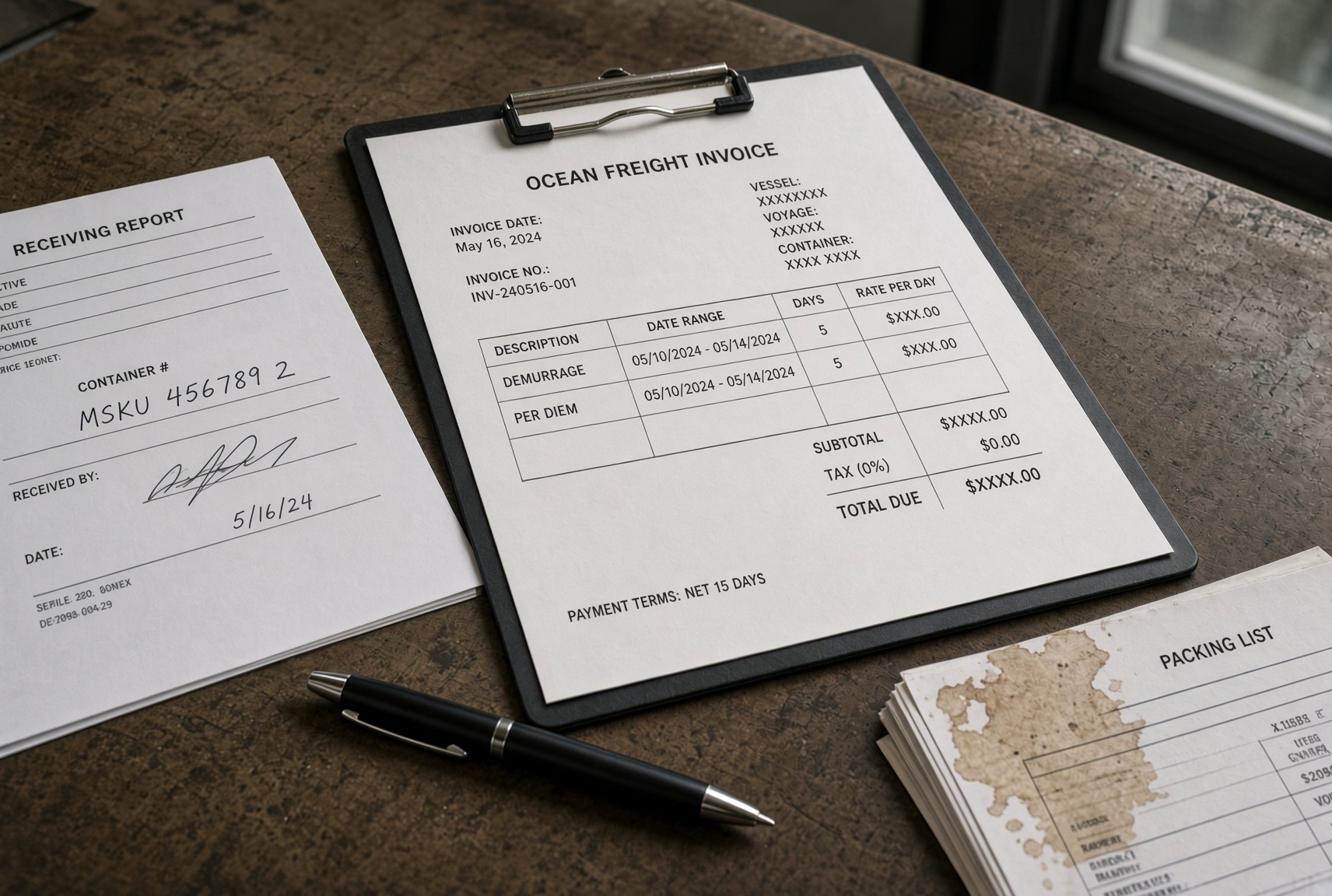
Such charges are not concealed within the ocean freight on a destination invoice. They will be listed on separate lines: “Demurrage,” “Per Diem,” “Equipment Usage” or as a description of equipment hire. Each line needs a day range, day count and per day rate.
Compare your dates with the above dates: arrival, customs release, pick up date, warehouse receiving date, and empty-return date. If the billed start date is before release date or end date is after the return gate-in, bring it up to the forwarder’s attention before the subsequent sailing. When the dates on the page are fixed to events you can demonstrate, importers from China don’t have to pay high container charges.
Common Scenarios That Trigger Per Diem and Demurrage
The language used in the tariff is formal. Billing triggers are well known.
Customs Clearance Delays and Documentation Gaps
The most frequent way of getting in demurrage is with incomplete or inconsistent documents. If there is a discrepancy with the invoice, HS code, certificate and packing list does not match container, it will slow the release. Those files arriving at the broker after the arrival are correlated with the increase of customs clearance delays and demurrage risk.
Tight windows in the vessel make the situation worse. Even if the team does not begin to put the pieces together until the ship reaches the pilot station, free time is beginning to decrease. File early and file complete.
Using Containers as Short-Term Storage or Multi-Day Unloading
Some importers leave the box on the dock because there is either no space in the warehouse or the unloading is to be done over several shifts. The decision to store and per diem in containers equals the decision to be more convenient now, and to pay for a daily equipment bill later.
Typically more cost-effective than a container being treated as an on-site temporary warehouse, this will involve a same day or next day unload followed by an empty return of the container to the nominated depot. If it is necessary for cargo to be stored, store it in your own storage and return the equipment.
Trucker Scheduling, Appointment Slots, and Terminal Congestion
When there are not enough trucks, there are not enough appointments and yard congestion causes delay to pickups and returns. A container which cannot be accessed at the terminal collects demurrage. A pulled container that is not able to be returned in time begins the equipment clock out of the gate.
It is only during the peak season and when the ports are jammed that slots are squeezed. Don’t book trucking based on when someone realizes the container is available, book trucking based on the time expected of arrival. Buffer time is not a luxury option, it is an operations tool.
Per Diem and Demurrage in Context: How They Relate to Detention and THC
These two charges are in addition to the destination costs. They are grouped incorrectly and this is how “port fees” become a single mysterious number.
Per Diem and Demurrage vs Detention Charges
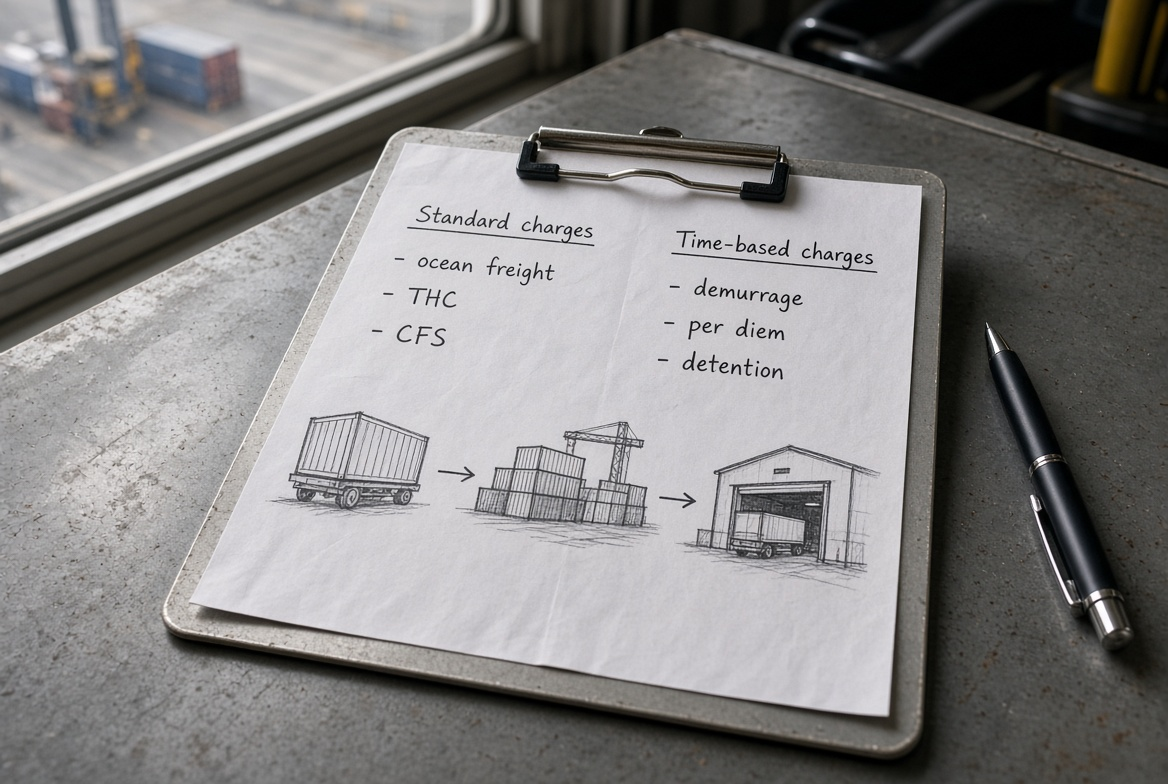
Keeping the box’s location in mind will make it easier to understand the differences between demurrage, detention, and per diem:
- Demurrage: time spent at the terminal after free time.
- Per diem: Charges per day for keeping or using the container for equipment usage beyond the terms of agreement.
- Detention: penalties for not bringing carrier equipment back into the terminal within the allotted time for loading, unloading or return free time.
Per diem = detention in everyday life. Both are related to equipment that is not in the terminal. The frames are different. Per diem is typically expressed as a usage fee, similar to renting. A detention will be written as a consequence for a late return. Your invoice text is as per carrier’s tariff, not the textbook. Before challenging the name, read the line label and the date range.
Per Diem and Demurrage vs THC and Other Standard Charges
Terminal Handling Charges aren’t the same family.
- THC: Normal handling operations of the container within the terminal. It is a handling event, it is not a delay.
- CFS charges – applies primarily to LCL cargo for consolidation and/or deconsolidation operations.
THC and CFS are anticipated process costs. The charges of per diem, demurrage and detention are charged by the hour. They will show up if a date goes by or equipment remains. This is why they shouldn’t be shoehorned into operations planning, but instead in the “unavoidable port extras.”
Practical Steps to Reduce Exposure to Per Diem and Demurrage
The charges are easily anticipated and can be countered. The work is reflected in earlier documents, tighter containers and named owners for each milestone.
Documentation Readiness and Early Customs Filing
If the files are available, prepare the commercial invoice, packing list, certificates and product descriptions prior to the vessel’s departure from China. Make sure the HS codes, values and quantities match what is contained in the carton. Send the pack to the forwarder/customs broker as soon as the shipping documents are issued.
If the destination permits, clear and/or pre-file. In-transit freight that arrives at the yard in a releasable condition will take fewer hours to cause demurrage.
Limiting Container Use as Storage and Planning Unloading Windows
If not, do not use the container as a warehouse without first obtaining and signing the daily rate and agreeing to its terms. Schedule an unloading time for the standard FCL (same/day or next day after pickup), the labor and dock space are reserved before the truck arrives.
Clear Internal Handoffs and Milestone Tracking with Your Forwarder
Assign the owner for every step: vessel arrival watch, customs filing, booking of truck, expiry of free time, expiry of equipment use, and approval for container to be used extra days. Now, if “someone on the team” has all of those, nobody has the clock.
Monitor real-life start and end points of billing: arrival, customs release, picking, warehouse receiving, empty return. When those dates are communicated early enough and in time, it is helpful to the freight forwarder to be able to rebook a truck, file a missing certificate, or reject an extra day of storage before the tiered rate increases – which is exactly what the China per diem and demurrage tracking service can help her do.
A forwarder who is coordinating factory pick up, export docs, carrier booking and destination agent in China can see the delays before they are destination charges. That’s only a big help if the importer responds to the questions in the document and the appointment are on the same clock.
Treating Per Diem and Demurrage as Manageable Costs
Per Diem and Demurrage are not "random port taxes. They are charges based on time spent in the terminal and use of equipment. Those who think of them as a common occurrence continue to pay them. By regarding them as products of the process, documents, appointments, unloading and empty return, importers reduce the frequency and dimensions of the bill.
Although definitions, early filing, disciplined container utilization, and tracking milestones with your forwarder will help you avoid as many surprises as possible, they won’t solve all your congested-port problems. They will end the next shipment from China due to the same internal gap that resulted in an invoice that is being repeated.