
One of the most frequent and expensive delays in ocean shipping is port delays. When importers ask what is causing port delays, it’s not just one thing. Vessels can be stalled at Chinese origin ports and terminal locations abroad due to congestion, labor shortages, equipment shortages, weather, regulatory or geopolitical events. Those holds carry cargo on to the next sailing, create gaps in inventory and increase the cost of demurrage, detention and expedite when buffers are low.
Delays don’t just happen in peak season and they’re not random either. Certain shocks happen suddenly. If you watch the lane before the cargo is stuck, you will find that many will leave warning signs: the reliability of the schedule is weakening, dwell times are increasing, labour talks are underway, typhoon season is coming, and so on. This guide outlines the primary causes, the impact they have on each other, the signals at your disposal to track and the preparation you can do to prevent every port delay from becoming a crisis in a China import program.
What Causes Port Delays at Origin and Destination Ports
When the terminal is delayed, it’s not all about the port being “busy.” The same family of problems is felt on both ends of the voyage: the box can’t berth, can’t be worked or can’t leave the yard on the plan booked. The name of the driver is important since the fix is different. It is buffers and routing that congestion calls for. A labor action is calling for contingency bookings. Don’t ask for a lower ocean rate, a chassis shortage at destination does.
Port Congestion and Vessel Bunching
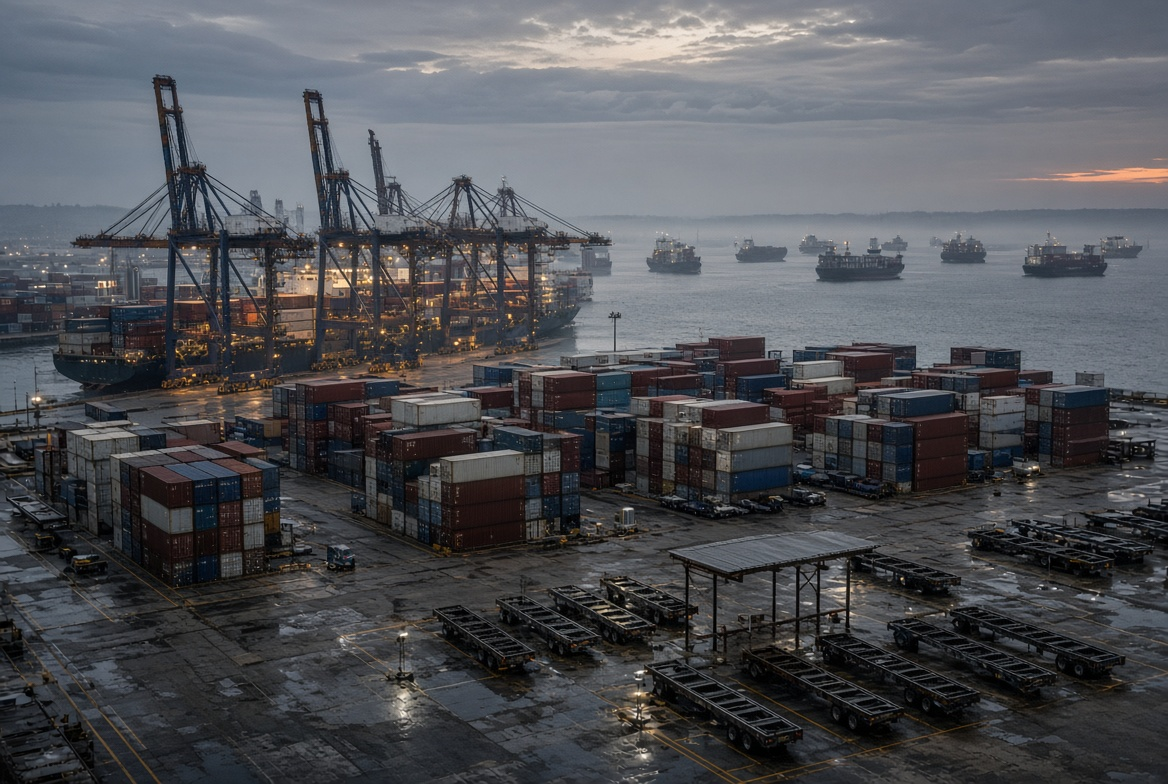
The congestion of ports begins to occur once the number of vessels arriving in port surpasses the terminal’s capacity to berth and work. Sailing vessels are anchored. Berth windows slip. The box discharge and load are slow due to the fact that there are boxes in the quay which have not been moved inland and the yard is already full. Sailing stays are published on a sailing schedule sheet, and the actual vessel is out of the breakwater.
That is exacerbated by the bunching of vessels. When a ship is not scheduled due to weather, labor, or a rotation missed, multiple ships will come in near each other rather than in a spaced pattern. Then, instead of a moderate flow of moves over time, the terminal experience a big one in a couple of days. Sailings are delayed and waiting time stretches, the next sailing is late. This trend is true for origin ports in China and destination ports in the USA, Europe, Australia and other markets. Typical conditions are imbalances in trade, seasonal fluctuations, and a lack of berths or yard capacity. Often, shipping delays and congestion in the ports are the first signs of problems caused by China, and can manifest as revised ETAs, and then as rolled bookings.
Labor Issues: Strikes, Shortages, and Productivity Constraints
Cranes, gates and trucks actually use the capacity of labor. A terminal or a strike or lockout could leave the terminal at a skeleton crew. There is less movement on the shift in the event that a contract negotiation, a work-to-rule, or a sudden walkout occurs.
Limits and shortages are more subdued and persistent. Thin trucking or rail labor, reduced gate hours, slower crane cycles, and limited night gates are all examples of factors that extend dwell. There are no drivers and no appointment slots and chassis that should turn in a day sit. Strike Day is not the only day that has a headline about labor strikes or port delay impact. It can take a week or more to replace a vessel that was scheduled to arrive on time, but has fallen behind due to chronic understaffing at a rail ramp or truck gate, and no strike.
Equipment and Infrastructure Constraints: Cranes, Yards, Chassis, and Rail
Throughput can fail even though there are berths at a terminal. When there aren’t enough quay cranes, or the yard is full beyond capacity, or there isn’t enough chassis, or there is a bottleneck on the rail line, you will see long turn times for trucks, a container not picked up on time, or import containers waiting too long for an inland move that never occurs on the day.
The lack of equipment and chassis space at ports can easily be confused as “customs delay.” It could be a ship that has reached and is now in port. It is possible to discharge the box. No matter if there is no chassis, no rail slot or no yard space to stage the pickup, the importer still has no cargo. The problem can be turned upside down on the origin side too: export yards are full, there’s a lack of available empty equipment that’s not in the right place, and the cargo is available at the factory, but the booking is not for the right ship.
Weather, Natural Events, and Force Majeure
A port can be closed, a vessel redirected, and crane operations slowed to a crawl by typhoons on the China coast, hurricanes on the approaches to the United States and the Caribbean, dense fog, snow and high winds. These events are typically referred to as force majeure by carriers and terminals. That’s the definition of being liable. It is not about planning.
These events tend to be concentrated in the season. No one was surprised at South China typhoon months, or when it comes to North America, hurricane season, or even fog or ice at some Northern ports during the winter months. The location of the landfall is still unclear. That is not the lack of need for additional transit slack in those windows.
Regulatory Changes, Customs Policies, and Geopolitical Events
Intensified inspections, documentation requirements, sanctions, and sudden changes in trade policy can clog an individual port or a particular product without affecting other ports or other products. More exams, additional document verification, and late rerouting of merchandise all seem to be “the box is at the port” even as the clock ticks away on free time.
These delays are unevenly distributed. A particular type of cargo may be loaded while other cargo is unloaded. This can be done with one origin-destination pair while another port remains open. Those that view all ports as equals are missing the point that regulatory risk may be product and lane specific.
How Port Delays Cascade Through the Supply Chain
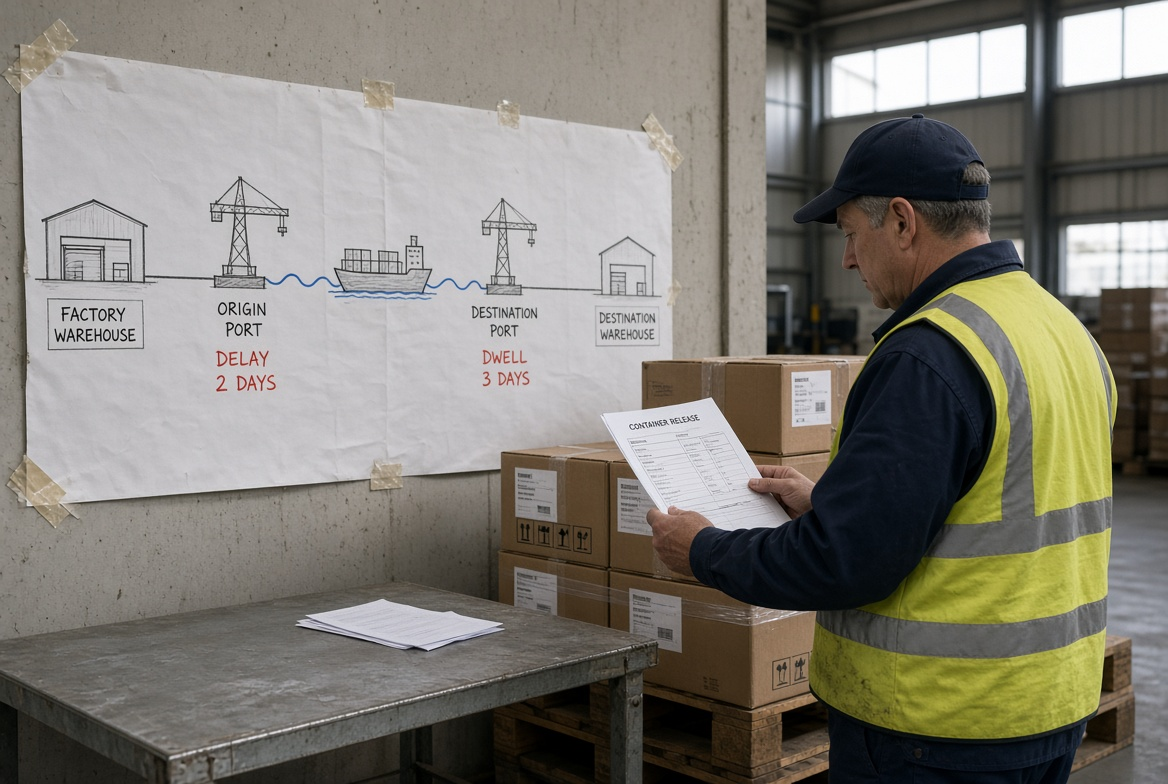
There is no way to avoid a late berthing. This delay trickles down the line: missed vessel, missed rail/truck load, emptying the warehouse bin, and a bill that wasn’t included in the freight quote.
Missed Connections and Rollovers to Later Vessels
A delayed export stack or a missed cutoff turns to a rollover at origin. Cargo on board on Saturday’s sailing is waiting for next vessel to sail – this may be the following week or even later if the service is already blanking sailings. Risks of blank sailing and rollover go hand in hand. A blank sailing is one that takes capacity away. The remaining capacity is used up by a rollover.
When the ship reaches destination, the importer may still not be able to make the rail cut or truck appointment. The box sits. The slot in the warehouse reserved for that arrival remains vacant. No stock has been built up for the next production or replenishment wave.
Inventory Gaps, Stockouts, and Promotion Risks
Late deliveries create opening in the destination warehouse. The stockouts that occur are the consequence of sizing the buffer for a “normal” ocean week and then allowing the ocean to arrive 2-3 weeks later. Promotions that run for a specific period, retail ship windows, and lean replenishment models are the worst hit. The sales plan was set for a time. The terminal refused to accept it.
This is the first to be felt by importers conducting just-in-time replenishment from China. A single missed FCL can wipe out a hero SKU. If you are having an LCL consolidation that fails to ship on the correct vessel, you may end up with several purchase orders to stand still, as they were meant to ship together.
Higher Demurrage, Detention, and Expedited Transport Costs
The longer a container remains in terminal after free time, the greater the demurrage exposure. Higher detention, the longer the box remains out with the trucker after pickup. When we have a port delay, both clocks are pushed. Importers then have to pay for weekend gates, special appointments or air freight on a portion of the order to fill in a stockout.
Those additional lines frequently add to the ocean-rate saving, which is the rationale for the original route. A lower rate service that rolls/dwells is not a lower rate service when inventory and accessorials are calculated.
Early Warning Signs That Port Delays Are Likely
When the tracking status is "vessel delayed", this is late. If there is someone reading the early warning signs of port congestion and network stress, they can typically be detected days or weeks before.
Carrier Schedule Reliability and Blank Sailings
One of the top indicators is schedule reliability on a lane. The network already has to cope with delay due to frequent revisions of ETDs and ETAs, fewer ports and blank sailings. Noisiness is one revised ETA. Planning Input: A pattern across 3 or 4 sailings.
Request the last few reliable statistics for your particular point-to-point route from the forwarder and not an average for the world. The same service that may work well on a trade-lane brochure might not work on the rotation you are interested in.
Rising Dwell Times and Congestion Reports at Specific Ports
Average container dwell, published congestion notes, and reports of ships at anchor at a named port are concrete.Average container dwell, published congestion notes, and reports of ships at anchor at a named port are concrete. Monitor a short list: ports used for loading the ships and ports that are used to unload ships that are destined for warehouse storage. The fact that there is a dwell increase at Los Angeles, Rotterdam, Felixstowe or Sydney does not automatically imply that Shenzhen is OK and vice versa.
Consider those figures to be directional. There are variations in definitions depending on the source. The usefull one is if your ports have increased their dwell and waiting time this month over the previous quiet month.
Labor Negotiations, Weather Forecasts, and Policy Announcements
In the same folder you’ll find upcoming labor contract voting dates, strike authorization news and seasonal typhoon/hurricane weather forecasts, as well as any new customs or trade policy notices. They are not a "required reading" if you will. A negotiation calendar can support the process of pulling a booking forward, dividing a critical SKU among two earlier vessels, or installing two weeks of cover stock prior to the risk window.
Practical Steps Importers Can Take to Prepare and Mitigate
The key to preparing for port delays isn’t about forecasting the next big headline, it’s about eliminating single points of failure before the headline even occurs.
Diversifying Ports and Routing Options
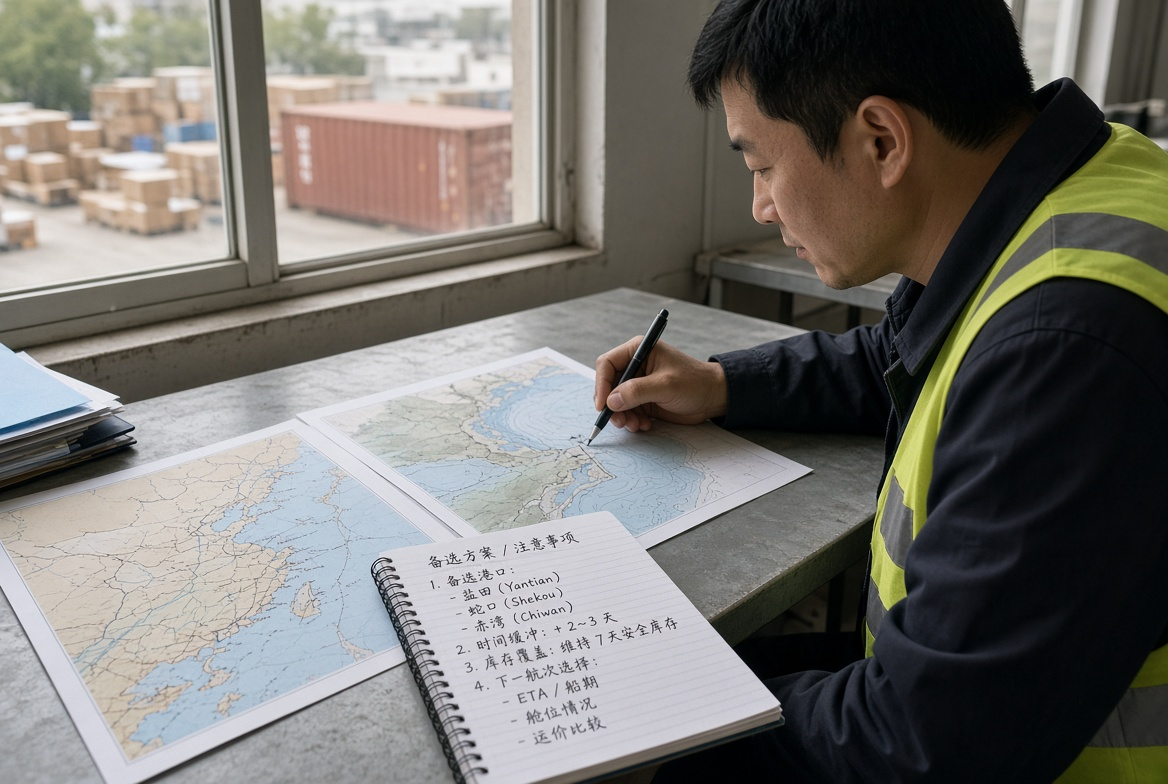
If a Chinese port becomes blocked by a ship and the destination terminal is blocked by a different ship, the entire supply chain will come to a standstill. Use more than one origin gateway and discharge option, when possible, for volume and product type. If the days at sea appear to be a bit longer on the schedule, a nearby hub or less busy load port can handle a closure.
Transshipment is not a free hedge. An additional hub can prevent a blocked direct call, and can even provide an additional waiting location for the box. Review the congestion history of the hub, rather than just the brochure transit time.
Building Time and Inventory Buffers for Critical SKUs
Not all SKUs require the same buffer. Differentiate products according to the fact that a stockout will cause pain and the sensitivity of the sales calendar to late delivery. For Critical SKUs, there is an additional amount of production and sailing slack, plus a strategic stock cover on arrival at the destination. Slow movers can maintain their slimness.
Time buffers should not be added to a safety stock spreadsheet. However, if the factory ex-works dates are against the last possible cut-off date, one day gate delay will be a lost vessel. Shove orders with urgency off that edge!
Strengthening Forwarder Communication and Contingency Planning
Prior to the rollover, the freight forwarder port delay contingency planning from China is effective if the discussion takes place before the rollover. Establish a check-in on active lanes. Prearrange with the vessel that is to be blanked or the port dwell that has increased, what is to occur if the units are to be discharged from the vessel—next sailing, alternate port, split shipping, or limited air lift for units that can’t wait.
Write down the names of escalations. The importer shouldn’t be trying to find someone to rebook space when a terminal is closed. As a Shenzhen based forwarder that handles factory pickups, warehouse consolidation, ocean freight, LCL and FCL, OriginLink believes that taking care of those contingencies should not be viewed as an after-the-fact rescue, but as a part of lane planning. Capacity is still subject to cargo, carriers that week, and destination requirements. The planning habit is the reason that the response is short.
Using Data and History to Inform Lane and Carrier Choices
Maintain a simple report: Booked ETD vs actual departure, booked ETA vs actual availability, delays frequency, delay recovery time, by lane and by service. If the goods are of time-sensitive value, it might be more cost-effective to pay a little more on an ocean charge that arrives faster.
Wait no longer for a perfect data platform. Even better than choosing every booking on the spot rate is a shared spreadsheet that is updated after every arrival.
Common Mistakes Importers Make When Facing Port Delays
Most costly consequences are not due to the storm itself, but rather design decisions taken in a quiet month.
Relying on a Single Port or Lane Without Alternatives
Until it’s hit with a labor action, or a weather closure, one origin, one discharge port, one weekly service seems efficient. All inbound pipeline is then waiting on the same queue. It is more cost effective to develop a second viable route, when volumes are at a level, than it is to invent a route after the cargo has arrived on the water.
Ignoring Early Warning Signals Until Shipments Are Already Stuck
All congestion notes, reliability charts, labor news are dismissed as industry noise until the tracking page turns red. The booking is definite at this point, the production slot is gone and there is no further promotion date. React to the signal – move a critical booking forward, move the load port or lift cover stock whilst box can be redirected.
Focusing Only on Freight Rate and Not on Reliability
If the terminal is experiencing chronic dwell, and the service rolls cargo into the terminal or does not stop at the port, that will be a bad indicator of the lowest ocean rate. The total landed cost is rewritten by stockout, demurrage, detention and emergency air freight. The rate is followed by reliability and recovery speed, particularly for SKUs that support the sales plan.
Treating Port Delays as a Manageable Supply Chain Risk
China’s ocean shipping delays are not an exception. Congestion, working hours, equipment, weather and policy will continue to create disruptions to berths. Even the importer who understands the reasons, is alert to the early symptoms and has established alternatives – multiple ports, honest time and inventory buffers, an honest forwarder with a predetermined backup plan – takes hits. They don’t drop the quarter when terminal slows down.
The question to ask now is not if there will be a delay, but how long will it take until everything resumes its normal course. It’s whether the next delay presents a single-lane program where no cover stock is present or a plan that is able to reroute, wait with inventory and recover without an emergency air bill on the whole program.