There is not one one “Amazon shipping” product, that’s shipping from Alibaba or a Chinese factory to Amazon FBA. The supplier makes and ships the cargo per an Incoterm. The goods are transported by a forwarder and/or courier. Amazon only accepts against your shipment plan, carton labels and in-bound rules. If you have to know how to send the goods from Alibaba to Amazon FBA without the pallet or inventory getting rejected in the port yard, consider those three jobs as separate handoffs.
The usual error is to think that the factory will “just send it to FBA.” That only works if the following is laid out in the plan and communicated to both the supplier and logistics team: labelling, content on carton, freight booking, import responsibility, and the appointment of the FBA. This shipping guide from Alibaba to FBA covers the entire process, including order terms, cargo preparation, freight, export order and import, and FBA delivery, with the points at which the handoffs typically fail.
Clarify the FBA Shipment Plan Before Anyone Moves Cargo
FBA shipment plan is the main document. Packing on the factory floor, booking with the carrier, the carton content and the type of label are all influenced by SKU quantities.SKU quantities influence packing on the factory floor, booking with the carrier, the carton content, and the truck that arrives at Amazon. Change the plan once the carton has been sealed or labeled – and once you pay to reprint, rework, warehouse another couple weeks, and have it shipped in later.
First, develop the plan in Seller Central prior to sending the factory a packing instruction. Confirm the SKU that travel together, the number of units in each carton, whether it is a single SKU or a mix carton and the fulfillment center assigned by Amazon. Then lock that list. When a supplier packs “as usual” while you are still shuffling around quantities in the plan, box IDs prevent Amazon from matching what they are expecting to scan.
Translate your FBA plan into factory instructions
Amazon is planning for inbound receiving. The factory requires a packing sheet to do on a production line. Transcribe the plan into four directions the workshop would follow without taking a guess:
- What SKUs should be packed into a carton and the quantity of individual units per carton
- How many total cartons (carton level packing list)
- Which labels should be placed on the product and which should be placed on the outside carton?
- Any other marks that remain on the box, such as shipment ID, destination FC code (if applicable), “do not mix” notes, etc.
The goods are all set for a truck but not for Amazon. Address this through a single page packing brief and photo examples of a properly labeled carton prior to bulk packing.
Determine the location of labelling and prepping.
Decide where labeling and prep happen
There are three real-life opportunities for using FBA labels and completing a prep:
- At the factory. Best when FBA work has been completed by the supplier and pictures or a pre-shipped inspection are available before the item is picked up.
- At a China warehouse. Suitable for multiple suppliers providing the same inbound, when labels are late or when the factory’s initial efforts are incorrect.
- At destination, prior to the FBA delivery. Expensive, but rework after import is possible but may be out of appointment window.
FBA Labelling requirements in China is not an Amazon rulebook. They’re the same labels that were put into the inbound chain at a previous step. The risk is taking the labels as they are the ones that the factory gave. Request the photos of the carton, carton ID, product label placement and readable packing list. If there is a discrepancy between pictures and shipment plan, halt the cargo. Relabeling in Shenzhen is more economical than finding the mismatch after the box is in the vessel.
Choose Incoterms and Freight Methods That Fit FBA
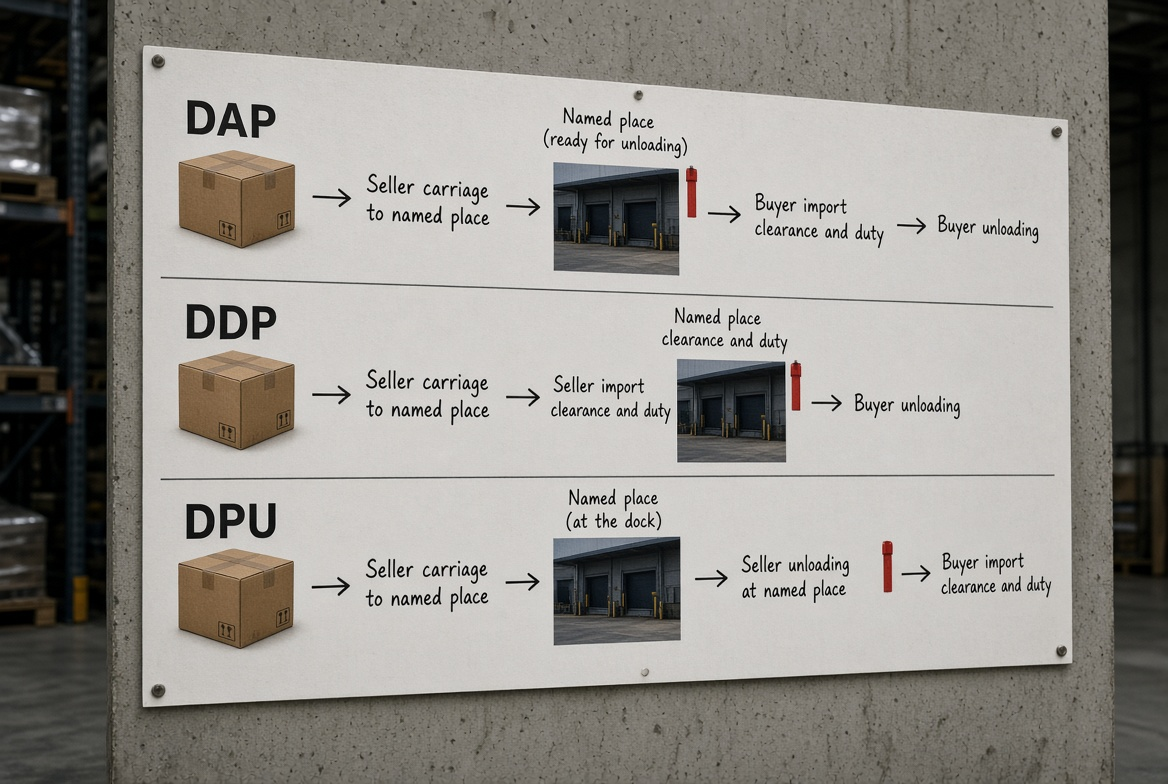
The allocation of who has the control of the move between FBA and who owns the issue if Amazon refuses a pallet depends on the incoterms and the freight method. The terms EXW, FOB and DDP are not price terms. These are maps of responsibility. Express, Air, LCL, FCL, etc. freight options then lie atop of this map. Avoid choosing a mode, just because a supplier has said “direct to Amazon.” Choose the most appropriate mode for carton volume, inventory timing and who has to book last truck.
EXW and FOB: Seller controls the FBA move
EXW or FOB is generally used by experienced vendors who require their own forwarder, wish to combine cargo from several factories or are responsible for the delivery of FBA themselves. EXW is arranging for pick up at the factory. FOB means the provider will deliver the goods to the port or terminal in China agreed upon and you will cover the international leg and post.
That control is helpful. You select the warehouse that will inspect labels, the carrier that will be able to maintain the carton list, and the trucker that will be able to schedule the FBA appointment. It also involves export declaration, destination import, import duties and taxes and final delivery. Those pieces might be divided between the factory, a cheap agent and last mile broker that haven’t fulfilled to that order fulfillment center, and the shipments on paper will not match what shows up on the dock.
DDP and supplier-arranged FBA shipping: convenience with caveats
The advantage to use DDP shipping with Amazon FBA is that the quote can appear to be at one rate with the fulfillment center. The catch is scope. Confirm in writing:
- The Amazon shipment plan is created by the Amazon S3 team or by users.
- Who is performing or checking FBA labels?
- Who is importer of record
- The appointment for the delivery of FBA is booked by:
- If Amazon rejects a carton or pallet, what is the consequence?If Amazon refuses to accept a carton or pallet what will happen?
- If the appointment slips, where does the cargo go?
A supplier arranged ‘DDP to FBA’ that doesn’t go beyond the destination warehouse is not ‘FBA delivery’. A quote without the provision of appointment no shows or relabeling is not a full FBA service. When Amazon inbound is refused, you require a named party to collect, store, correct labels and rebook. Write that name on the booking confirmation prior to departure from China.
Origin Handling: From Factory to FBA-Ready Cargo
A significant portion of the problems with FBA begin in China; it’s wrong packing or missing labels on boxes, it’s mixed cartons which were meant to be single SKU, or it’s pallets Amazon will not accept. Origin handling is the process of transforming factory production into a load for a fulfillment center to accept.
Carton and pallet specs that Amazon actually enforces
Amazon changes requirements for inbound. Verify the latest Seller Central instructions for the market you are shipping to before you freeze packing. There is still a need for the shipping partner to have a functional baseline:
- Cartons remain in Amazon’s program size and weight limits
- Each carton is identical to the shipment plan: SKU mix, unit quantity and box ID.
- Product labels and carton labels are not covered over, not on the seam only, and readable
- Pallets do not have overhang, even stretch wrap labels outside.
- Stacking is sufficiently stable for forklift and receiving dock.
The majority of factories that ship out general export goods tend to palletize for a container, and not an FBA dock. These include overhang, mixed carton heights, and labels facing inward. Specify whether you’re sending from China to FBA on pallets in the packing brief. Being restacked at the destination, floor loaded containers represent handling and delay to the appointment.
Consolidation from multiple Alibaba suppliers
There’s more to it than just saving a freight bill when you bundle up Alibaba orders for FBA. You’re bringing together different ready dates, different packing habits and different cities into one inbound. The common way is to have two suppliers from Dongguan finish at the end of the week and the Yiwu supplier finish later. Each lot is received to the warehouse where carton count is compared to carton packing list, a single carton inventory is rebuilt in the Amazon plan and then the main carriage is booked.
The additional coordination time is not a figment of your imagination. Never assume that the first factory is ready and assume Amazon will be available in that week. Accepted the pack-out from the last supplier plus the check-in in the warehouse time window and any relabel window. If one shipment is unlabeled, retain the combined shipment or split the ready shipment. The whole inbound is delayed when mixing a clean lot with an unworkable lot.
Inspection and rework before export
A short origin check will pay off: carton count, photos of labels, visible damage, sample carton content versus shipment plan. If get a wrong box ID in China, reprint and restick. If it is caught after import, a destination warehouse, missed appointments and inventory that cannot check in are experienced.
Perform inspection before the documents for export are completed. The document issue is certainly a problem when carton counts are changed in the packing list after the bill of lading or air waybill is issued, and the FBA issue is certainly a problem as well.
Export, Import, and the FBA Delivery Handoff
FBA is not a customs exception, but rather the last address. The China to FBA process remains the same as export declaration, international transportation, import clearance and final delivery of the goods is compliant. This is the part people get caught out by after the factory truck has gone.
Export from China and import in the destination country
When exporting from China, it is necessary to provide a coherent commercial invoice, packing list and product description that customs and carrier can use. There still needs to be an importer of record in the destination country. This party could be you, the forwarder, or another named party as per Incoterm and service. Duties & taxes are still applicable on the end address of an Amazon fulfillment center.
Shipping to Amazon doesn’t imply that the seller can ignore import planning. When the importer of record is not known, goods may not be able to be cleared or may be cleared late. Where the description on the invoice is too general to classify the item, the risk of inspection also increases. Make sure that all the commercial documents correspond with the FBA carton list that is being shared with customs, the carrier and Amazon.
Final trucking and FBA appointment rules
FBA check-in is not the arrival at the destination port/airport. Final trucking requires the proper fulfillment center address from the shipment plan, the cartons or pallets that will still fit the inbound specs after the ocean leg or air leg, and an appointment when Amazon needs one.
Two frequent stalls:
- Cargo is delivered to the port, but no appointment was made, so the truck is unable to make delivery.
- After deconsolidation, pallets are rebuilt, they do not comply with the plan, and the dock rejects them.
Provide the ID, FC, carton and pallet numbers as well as any carrier notes Amazon provided. Confirm if the cargo needs to be palletised. A frequently cited reason for a “delivered to FBA” plan to halt at a local warehouse is the floor loaded LCL that wasn’t palletized by the consolidator after being deconsolidated.
What happens when FBA rejects or delays inbound
Amazon will reject/reject slowly incoming if labels are not readable, damaged cartons, item contents do not match with plan, or the delivery does not meet the appointment rules. Have a contingency address in place prior to cargo sailing: A location with a warehouse or third party to store, relabel and reboke cargo. If the sole address on the documents is the fulfillment center, then there is no legal, practical delivery address.
If any rejections occur, obtain photos, reason code/note from Amazon, and a list of carton level failures. Then make a decision about whether to correct and re-deliver the same shipment or to close it and make a new plan. Please refrain from returning the same non-compliant pallets to the same dock.
A Practical Step-by-Step Flow: How to Ship from Alibaba to Amazon FBA
This is an operating sequence for a first FBA inbound or for a multi-supplier stock restock.
From order confirmation to cargo readiness
- Make sure that the Incoterm is confirmed in the PO: EXW, FOB, DDP or another term which you really want to work with.
- Produce Amazon shipment plan and set up carton logic & SKU quantities (frozen).
- Include a packing and labelling note with the plan (not a screenshot of Seller Central!) to the factory.
- Determine the point of labeling – factory, China warehouse, or destination.
- Reach agreement on cargo ready meaning: packed, labelled as indicated, carton list issued, address and contact for pickup confirmed.
- Before anyone asks for a truck book freight and own the appointment for FBA.
If two of those 6 items are still "we will figure it out", then do not book the main carriage.
From freight booking to FBA check-in
- You can defend the book express, air, LCL or the carton volume to be picked up.
- Ensure that export documents are consistent with carton list and commercial invoice.
- Practise the main leg, but use port or airport arrival as a mid-point.
- Clear a product into the country with a named importer of record and duty/tax plan.
- Book final trucking to assigned fulfillment center and appointment (if needed).
- Track the status of Amazon inbound deliveries and have a warehouse alternative in place in case deliveries are delayed.
Ensure that everyone involved in the carton movement (seller, forwarder and supplier) are on the same carton list at every handover. The vast majority of the FBA delays are not the “ship was slow” incident. They are a packing list that was altered after being printed with labels.
Frequently Asked Questions
Can my Alibaba supplier ship directly to Amazon FBA?
Yes, if they already know about FBA packing, labels and the appointment for delivery, and if it’s written on the incoterm or in the scope of services. There are many factories that can produce and pack export cartons but have not shipped to a fulfillment company. Only if the supplier, or their agent accepts the full inbound rules, will direct-to-FBA be possible – not just ocean or air booking.
Who should apply FBA labels: the factory or a warehouse?
Reserve the factory if they have a successful FBA process and can show images or check in place before pick up. When you need to mix suppliers, labels take a while to arrive or the initial factory run is incorrect, use a China warehouse. This is a fallback mechanism and should not be used as a regular option as it is more expensive and may not be available at the appointment.
What Incoterm is best for shipping to FBA?
There is no one right term. EXW or FOB is suitable for the sellers who wish to select forwarders, package goods together and manage FBA delivery. DDP is possible when the provider has all the labels, appointment, import and rejection handling in its written scope. Pick the term that reflects the owner of each handoff, and not the term which appears to be the lowest on the supplier’s quote.
Can I combine multiple Alibaba orders into one FBA shipment?
Yes. Pick up each supplier’s product, verify labels, carton contents, and prepare one carton inventory to match one Amazon shipment plan; book one main carriage. Allow for various dates of readiness and for a check-up in the warehouse. Do not combine lots which still do not agree with the plan.
What happens if Amazon rejects my FBA pallet or carton?
There has to be something for the cargo to go to. Schedule redispatch, fix order or pallet error; re-schedule pickup or make a new plan for the shipment. If there is no warehouse to store the rejected freight, then they have to wait for the rejected freight in a truck or on a terminal and storage and detention charges add up.
Do I still need to handle import customs for FBA-bound cargo?
Yes. FBA is not import clearance, it is the delivery address. There needs to be an importer of record who’s responsible for duties and taxes. On DDP quotes (and others, as not all quotes are the same), ensure that the party has been confirmed prior to goods leaving China as it may not be what you believe.