How to import toys from China is not factory search + booking of the freight. It’s a logistics & compliance project. The shipping method and Incoterm are required to go hand-in-hand with customs classification, duty planning, product compliance – testing, labelling, documents or else the cargo will sit in a queue, require rework or won’t sell.
Compliant does not equal market access in the case of toys. While test reports and factory labels assist, the final say is most often with the importer in the destination market. The report is not the same as the SKU, it doesn’t contain a warning, or the invoice contains “gifts” instead of a usable toy description, then the factory’s self-assurance doesn’t move the shipment.
Step 1 – Freight and Incoterms: Getting Toy Cargo Out of China
Toy products can be so familiar on a purchase order: cartons of rubber, plastic, or board games are leaving factories in Guangdong, Zhejiang, or Jiangsu. But all that simplicity ends with the freight decision. Toys are often bulk and relatively low dollar items. Margin can be devoured by air freight. Ocean freight may not be in season. Who books export, who files import entry and who pays when something is wrong are all determined by the Incoterm.
Choosing the right freight method for toys
The mode choice is determined by order size, calendar, and destination, rather than “fast” or “cheap.”
Use Expression Suits for samples, first production lots, and small replenishment when carton quantities are low and sell date is near. Air freight is perfect for medium-sized shipments, it is unsuitable for large containers. The bill for a buyer who places a full container of stuffed animals on air freight is typically the volume, not the unit price. Ocean LCL is suitable for several SKUs from one or more factories that share space, with the additional flexibility of having a calendar with extra handling at origin. FCL can become economically viable if carton volume takes full advantage of the capacity of a 20ft or 40ft container without occupying empty space in the container.
A second trap is created by seasonal toys. Break up one holiday booking into five small air bookings can seem more secure than just one ocean booking. Pickup, export file and destination fee are unique to each flight. The “safe” split is frequently an expensive option compared with a buffer planned ocean move.
Incoterms and who handles export/import
The parties are responsible for export/import: export/import and incoterms.
Incoterms deal with origin work, main freight, import clearance and final delivery. EXW means that the buyer is responsible for the factory-door pickup, export clearance and almost everything else thereafter. Usually, FOB is used when the seller arranges the ocean or air transport and puts the goods on board at a specified port and the buyer arranges the destination work and the ocean or air transport. With DAP and DDU, the seller or his agent assumes a larger burden for handling of destination, but the duties and import taxes still require a named payer. There’s no other term that makes more arguments about toy files than DDP.
The problem is that one gets the impression that a factory “DDP” line is a one-size-fits-all compliance solution. What does the quoted DDP price cover? What happens if there are additional documents required by customs? What about the last mile delivery? Unless the contract specifies, you have no DDP. You have a price and an undefining hole.
Complete the Incoterm, name of the country where the goods are going to be shipped and the party who will be the importer of record for toy shipments before production is complete. It’s costly to change that after cartons have been taped.
Consolidation from multiple toy suppliers
Not all toy programs are one factory. Plush is a source, plastic parts are from another source, packaging or batteries are from another source. Documents and destination fees are multiplied for each factory shipped as its own LCL or express shipment. The commercial story is kept in one set of papers through the process of consolidation in China, which includes warehouse receiving, check-in, labeling (if applicable), and one export file.
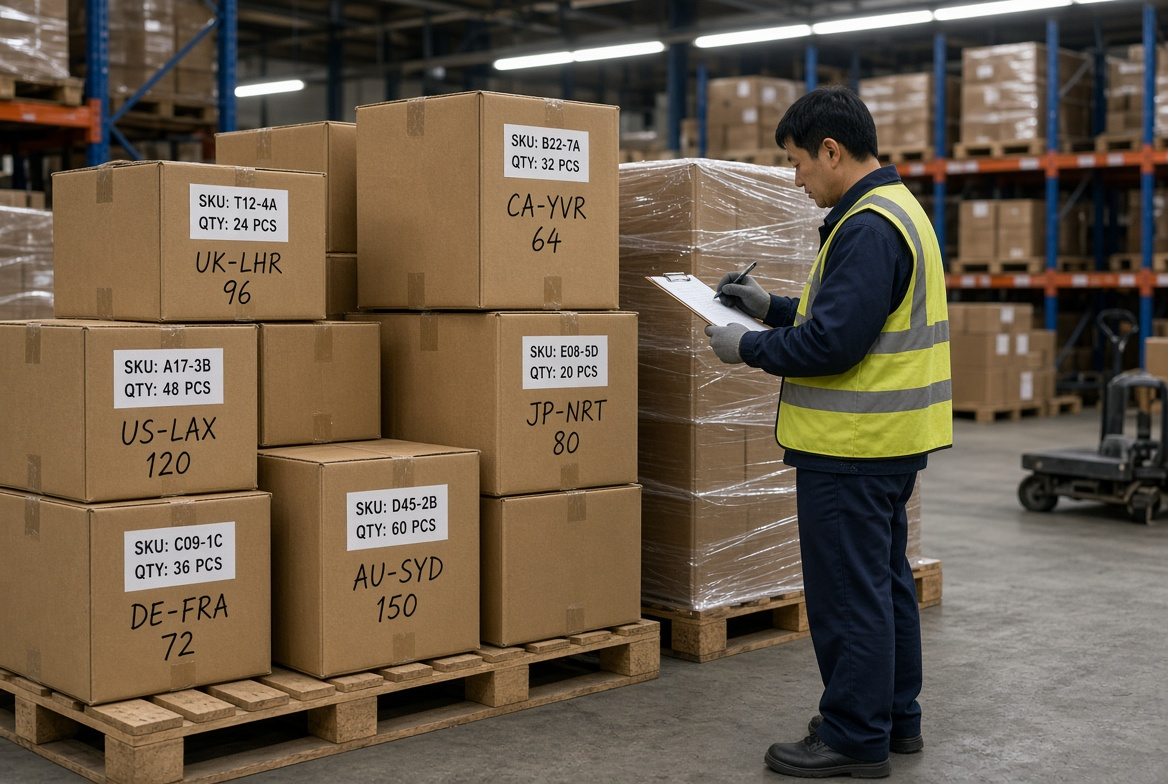
That only benefits if carton planning is clean. Use marked cartons to separate SKUs. Limit the use of mixed cartons and keep them on list. Print factory name, SKU, quantities, and batch or lot number on the outside box. Both customs and you will own warehouse will inquire about the contents of the package. It’s not a saving if it comes as unlabeled mixed toys. It is a destination sort operation.
Step 2 – Customs Classification, Duties, and Import Requirements
Freight gets toys out of China. They either get into the destination market the first time they go there, or they don’t. Most common reasons for toy shipping and customs compliance failures include the absence of product information, importer data, and a landed cost strategy that didn’t go beyond product and freight.
HS classification for toys and common pitfalls
HS classification of toys is based on the product, rather than the catalog name. Things like dolls, stuffed toys, construction sets, electronic toys, ride-on toys and games may be listed in various headings. The duty rate and in certain markets, additional checks, are driven by the heading.
The risk of operation is the invoice line. The terms “gifts,” “plastic products,” “promotional items” and “toys assorted” leave the broker guessing. Guessing invites questions. Questions invite holds. Create a description for the classifier; material, function, whether it is electric or not, whether it is targeted to a particular age group (part of the commercial identity), and a model or SKU.
Never copy a supplier HS code without understanding what it is. A code that successfully exported before may be used in the factory. The same item may be subject to a different treatment in your destination tariff. Show the actual product, photos and composition to the forwarder/broker and agree the heading before locking the first Commercial Invoice.
Duties, taxes, and landed cost planning
Duties and import taxes are normally based on a dutiable value, which may consist of the product value, freight and insurance, depending on the valuation rules that apply to the destination country. On top of all this are local fees, such as brokerage, terminal, exam, storage.
Before the arrival of the toy, the landed cost calculation should be made for imports. If a buyer is only considering FOB product + ocean freight, he’s not budgeting the import. This is compounded by seasonal toys: holding them in peak season increases storage and reduces the sale time.
Construct an easy model: product, origin handling, main freight, insurance (if applicable), estimated duty and tax, destination handling and last mile. Apply zones of rate fluctuation. The question is: Does the retail or wholesale price still apply when destination charges are on the high end?
Importer of record and compliance responsibility
The importer of record is usually the importer as stated on the customs entry. That party typically makes the declaration, sets the duties and taxes and demonstrates compliance with local product rules. The entry can be made by a broker or agent. Absorbs the legal position only if the contract provides in clear terms.
Confirm the Incoterm to identify who is the importer of record. Ask the factory / trading company about their name if they say they will ‘clear for you’ and what the name of the technical file would be and who would hold the technical file if asked by a market authority later on. Some sellers who are selling their products online for the first time end up finding out that the low cost of DDP service they got from an agent is the one who can’t reach them when the shipment is questioned.
Step 3 – Product Compliance: Testing, Labels, and Documentation
Toys are considered regulated consumer products in most mature markets. The papers may be inspected by customs. Market surveillance can be carried out on the box or on the product once it has been released. A certificate of toy safety for imports is not a certificate that is hung on the wall. It is proof that this SKU – in this construction – is marketable in that market.
Toy safety testing and test reports
Importers are often required to have test reports from accredited laboratories on the hazards that apply to the toy type including mechanical and physical properties, flammability if appropriate and chemical limits for contact with children. Battery-operated electronic toys and products create electrical and transportation inquiries that might not be addressed by a “standard toy test.”
The report must conform to the goods. A test of a different filling or the 2015 colour or a sample from another factory, does not describe the cartons on the vessel. If the market is expecting batch or production linkage, retain the lab reference with the lot marks on the cartons.
Request the real report, lab name, SKU or model tested, materials on the list and the date. A picture on a WeChat chat does not constitute a file to pass over to a broker.
Age grading, warnings, and country-specific labels
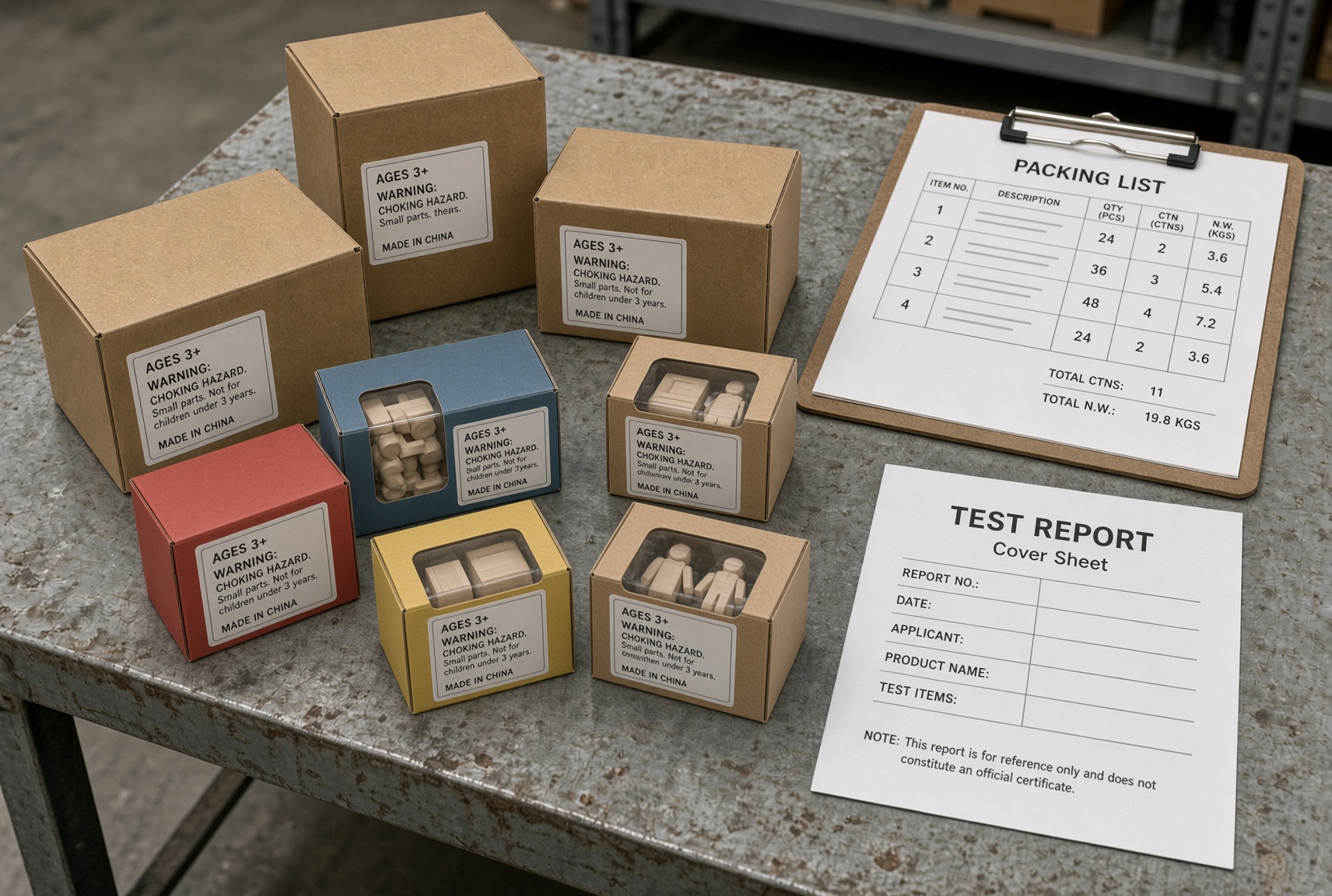
A frequent area of packaging failure for factory standards is in toy labelling requirements by country. Markets prefer clear age grade, warning statements that correspond to hazard, and country of origin marking. Others would like to have the importer or manufacturer’s identification on the pack.
Printed box for one market is not always suitable for other markets. If the small text is part of any rule, and that rule is not satisfied when the text is used in a destination language or format, the small text is not validated. Label switches after arrival involve a loss of time, opening cartons and reprinting labels. Accept/Reject artwork according to the destination rule set prior to mass printing.
Maintain uniformity of inner packs in relation to outer carton. The master carton indicates one age grade and the polybag indicates another – it’s easy for an inspector to answer this question.
Technical files, declarations, and traceability
Don’t add the technical file at the end. All of that information is typically contained in that file, including the product description, bills of materials, test reports, label artwork, declarations needed by the destination, factory information, batch/lot record, and so on.
When one SKU is called into question and the rest of the container is not, it is time for traceability. When a carton is not marked with a lot number and the packing list reads “toys, 400 cartons”, a problem can’t be isolated. You have too many in your hands or have them in your memory.
Keep the file in a place where the importer of record can create the file. A PDF file that only exists in the sales manager’s inbox is not in your control.
Common Mistakes That Get Toy Shipments Held or Rejected
A short list of common toy import customs. The freight is typically relatively light. The documents tell of the story, not the story.
Incomplete or inconsistent customs documents
The Invoice, packing list and the Bill of Lading or Air Waybill should convey the same information: Shipper, Consignee, quantity, weight and description that helps to classify. A $2 unit on the invoice and a $12 unit in the packing list is no rounding error to an officer. It’s not 200 cartons on the B/L, and 180 cartons on the packing list.
Toy descriptions should be specific enough to be classified and to determine compliance. Assorted toys + a round number equals an invitation to examine. Any value reduced or with tooling, state this in a manner the broker can understand. Undervaluation is the same as silent discounts.
Missing or non-conforming test reports and labels
One common waystop is the absence of reports, a report against an obsolete rule set, or a label created for a different country. It’s not a test report and an artwork file that travel the world. If there are two different markets for the same SKU, there will be 2 separate rule checks, even though the plastic part is the same.
A factory “export pack” is not necessarily “for export.” Before sealing, do a physical check of the pack against the market list. Rework is more expensive than a reprint in China.
Poor carton planning and mixed-SKU chaos
There are no carton level lists. All questions are mixed SKUs. Customs enquires about contents of carton 47. Quality: which batch of paint did they use? You won’t be able to reply to a packing list containing “mixed toys.”
Invest in carton marks, SKU level quantities and batch tracking. Partial examinations and partial recalls remain partial as long as the warehouse can find the correct boxes.
Use with the supplier, forwarder and the broker. It is a planning list, and not destination legal advice.
A Practical Checklist for How to Import Toys from China
As well as on the factory sales sheet, confirm the destination market’s toy safety and labelling requirements with someone who works in that market.
Before production and shipment
- Prior to mass print, lock the label artwork, age grade, warnings and origin marks for that market.
- Send pictures of items, composition and purpose of the forwarder to discuss HS classification BEFORE the commercial invoice is issued.
- Identify the Incoterm, the named place and the importer of record.
- Design carton marks, SKU separation and batch/lot codes.
- When multiple factories are involved, determine if there is any cargo consolidating in China, or who provides the consolidated document.
Before customs clearance at destination
- Compare invoice with packing list and transport document on descriptions, quantities, weights and values.
- Check test reports and labels are still the same as the ones in the cartons, not an earlier sample.
- Identify the party making the entry and who will pay duties and taxes; and how an examination request will be processed.
- Maintain technical file and factory contacts on hand during entry window.
- In a seasonal shipment, leave a time in the calendar for questions. Peak season exams will not be moved if a listing has been published.
Frequently Asked Questions
What documents do I need to import toys from China?
The core documents of transport are a commercial invoice, packing list and bill of lading or air waybill, and the entry documents that your broker prepares for the destination. Product side files can contain test reports, labelling art, and any statement or technical information needed for the market. Exact forms vary from country to country and type of toy. Create the list with the broker and not an “any toy shipment” list taken from another purchaser.
Who is responsible for toy safety compliance: factory or importer?
It enables factories to test, label and pack to a written specification. In most destination markets, the importer of record remains responsible for the contents of the declaration and sold. If the factory’s report is incomplete, or the pack is incorrect, the entry and the report of the product is still up for you to defend. Incorporate testing, labelling and document ownership in the purchase contract – before production.
Do I need a separate test report for each toy SKU?
Generally yes if SKUs vary in materials, construction, electronics or coatings. A report on a similar item is not necessarily a report on this item. Select some families of SKUs to group together when appropriate, depending on the lab and the destination rule set. With the product breakdown, ask that question. Be sure to not assume that one PDF is for an entire catalog.
How are duties and taxes calculated on toy imports?
Typically, they are determined based on classification and value for duty. This value can be the product cost plus freight and insurance value, depending on the local valuation rules. Topping that off is taxes and local processing charges. Rates and formulas are variable. Having a landed-cost estimate before confirmation of order; having a broker validate heading and value basis for that shipment.
Can I use the same test reports and labels for different countries?
Scarce without a check. The safety themes are overlapping but written standards, mark format, languages and responsible-party details do not necessarily overlap. One of the common reasons for the success of goods in one market and failure in another is because of re-use of one pack. Don’t assume that all destinations will require the same carton design for export; check each one individually.
What happens if customs questions my toy shipment?
A more detailed description, value support, test reports, photos or a physical exam is requested of the broker or importer of record. Response time matters. Fees are charged for both storage and examinations for missing files. The question remains small if the documents and the cartons all tell the same story: SKU, quantity, batch and compliance pack. If they don’t, the hold spreads to the entire bill of lading.