
What is the FCL shipping from China? It is about planning one whole container around your cargo, equipment, origin loading point, ocean route, export documents, vessel cut-offs, destination customs and final delivery. If you are able to reserve a container for that shipment rather than sharing it with other shippers, you proceed without other shippers and load the cargo in sequence: confirm cargo and equipment requirements, book space, load at the factory/warehouse, file documents and customs at destination, gate in before cut-off, sail, clear customs at destination, and deliver to inland.
When a box comes to the factory gate, FCL does not begin. The scope of the delivery, dimensions, packaging, readiness, equipment, booking and customs data must be clarified first. FCL is not necessarily the more economical or expedient way to transport goods compared to LCL.FCL is not necessarily the cheaper or faster way to send goods than LCL. The cost and time are dependent on the utilization, inland work, handling, documents and written service scope.
What FCL Shipping Means
FCL is also known as Full Container Load, which involves planning a shipment around one container booked. The cargo is put together as one shipment, sealed and given to the carrier as that container. LCL or less than container load, involves cargo from various shippers being consolidated into the same container, typically transported through a consolidation warehouse at origin and deconsolidation at destination.
You don’t need to fill up all the cubic meters in FLC. A half full container may still be a valid FCL booking when the cargo type or handling risk is more important than the fact that a container may be partially filled. The FCL is not an Incoterm, but a freight option. The Incoterm still determines who has to cover the cost of picking up, exporting, freight, insurance, import clearance and last mile delivery.
FCL Versus LCL
The difference between the two operations is in booking, loading control, handling points and destination work.
| Point | FCL | LCL |
|---|---|---|
| Container booking | One container is booked for the shipment | Space is booked by volume or weight inside a shared container |
| Loading control | Cargo is loaded as one shipment at a factory or warehouse | Cargo is received, often mixed with other shippers, then stuffed later |
| Handling points | Fewer shared handling steps after sealing | Extra origin consolidation and destination deconsolidation |
| Documents | Built around one container, one seal, one packing list | Built around your lot inside a mixed container |
| Delivery | Container can move to a warehouse, factory, or 3PL if the scope includes it | Cargo is usually unpacked at destination CFS before local delivery |
One furniture factory that has large crates may be able to be loaded FCL since the items have to be stacked and should not be assigned to a box for unrelated goods. Until the volume, readiness, and destination plan makes it more appropriate to dedicate a container, several small suppliers sending mixed apparel or electronics cartons may still be in LCL.
When FCL May Fit the Cargo
FCL will be considered when cargo is too large, too similar, or too sensitive to tolerate multiple handling. Any of the following can be candidates for FLS: Dense building materials, assembled furniture, machinery crates, solar panels, or mixed packing cartons are all candidates for FLS. Fragile or high value electronics occasionally travel FCL so loading plan and seal remains all in one team.
No universal cut-off for cubic meters. The light, bulky shipment can fill the container without appearing “big” on the weight sheet. The box may be full before a dense shipment reaches its weight limit. The fit is dependent on dimensions, weight distribution, packaging, loading accessibility, unloading at destination, and waiting for a single loading date for the cargo.
What FCL Does Not Automatically Include
An FCL quote can be CY-to-CY, port-to-port or door-to-door. The location of the carrier’s terminal or the designated area for handing in or collection of a loaded container is termed container yard (CY). Typically, port-to-port will terminate at the other port’s terminal. If the booking calls for it, Door-to-Door will proceed to a warehouse, factory, 3PL or fulfillment center.
Some extra charges, such as export customs, import duties and taxes, cargo insurance, unloading labor, destination warehouse receiving, demurrage, detention, and empty container return are not automatic extras. Demurrage is the fee for having the container in the terminal for a period of time exceeding the time limit. The charge for the container remaining at the terminal (your warehouse or on the street) outside of the permitted detention time. Check all the items in the scope of work before it’s a complete landed plan.
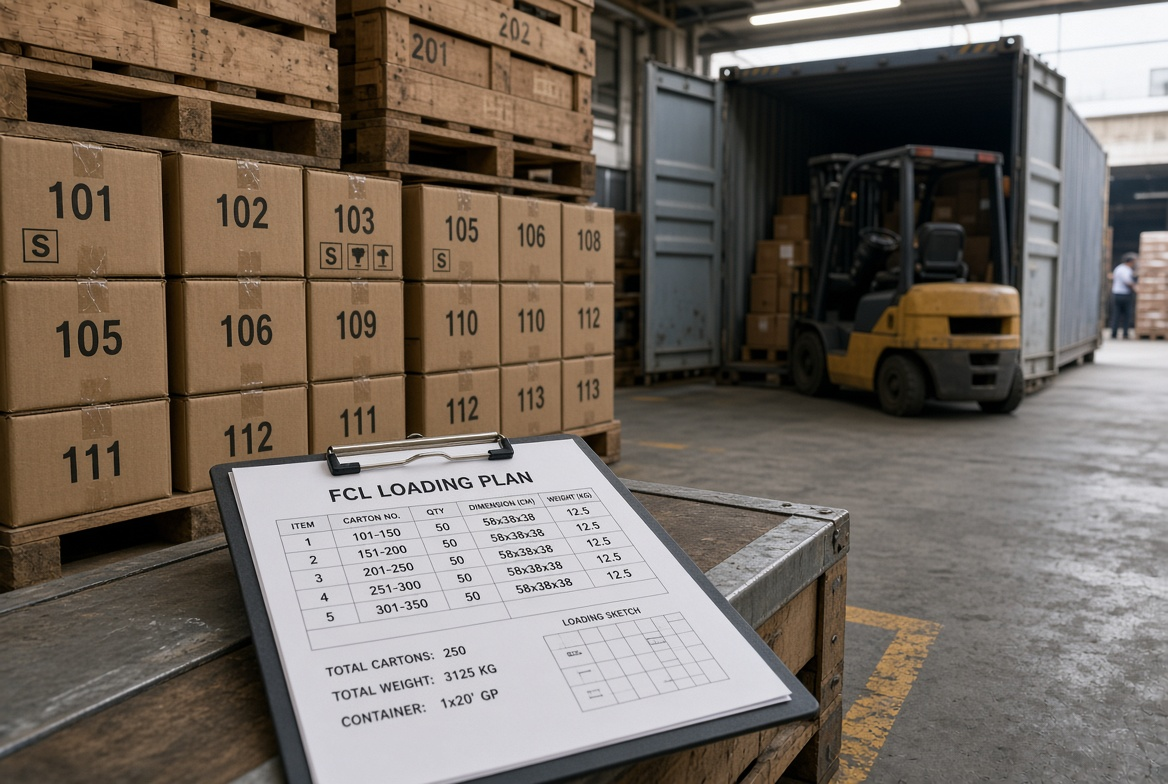
Prepare the Cargo Before Booking an FCL Container
Incomplete cargo brief results in creating the wrong equipment, creating a loading delay, additional handling, or paying for unused space. Treat cargo data as a book of first class documents and not as a detail to be ‘confirmed later’.
Confirm Cargo Type, Weight, and Dimensions
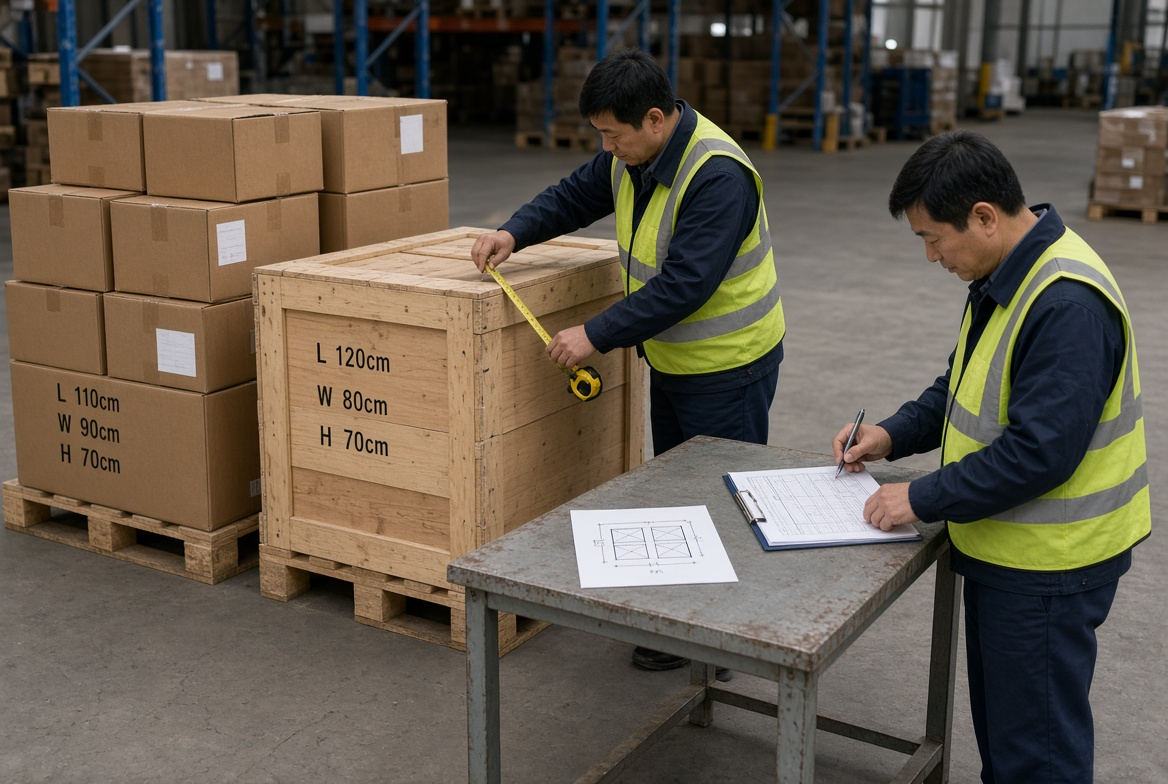
Provide detailed product information, carton or piece count, gross and net weight, outer dimensions, packaging type, special features, etc. to the forwarder. Views of the machinery’s center of gravity and crate drawings are required. Furniture requires knock down to assembled dimensions. Inner-pack and battery flags are required for electronics. For mixed SKUs, a packing list will be needed to be able to be reconciled at loading.
The actual size of the warehouse can differ from supplier estimates. After adding inner carton packaging, carton sizes change. Pallets, crates, or moisture barrier wrap may be missing from a “ready” WeChat message. If estimated, remeasure at booking point again.
Confirm Cargo Readiness and Supplier Locations
A factory with a set loading date is a different job to five suppliers that are still producing the product. The container date is not a cargo date if goods are still in the packing stage in other cities. Multi-supplier cargo typically requires pick up, receiving at the warehouse, inspection, repacking (if required), labelling and final carton count prior to a container call.
Avoid hiring a vessel on a supplier’s promise which has not been substantiated by finished goods. With a late carton lot, there is a choice to make: waiting or risking cut-off, shipping off a portion of the carton lot, or splitting the remainder onto another booking.
Select Equipment Based on Cargo, Not Habit
Equipment is based on cargo size, weight, loading, site access, cargo packaging, and carrier availability. The typical example for common cartons is a standard dry container. Not all shipments are default. When an over-height crate, long machines, liquids or cargo are not forkliftable through the standard doors, a different plan must be implemented before anyone asks for a box.
This is also dependent on port and week and equipment type. Check with the carrier what they are able to get out on the scheduled loading date and don’t assume they will have the normal size in the depot.
Check Special Cargo Requirements
Batteries, chemicals, dangerous goods, oversized machinery, liquids, fragile cargo and cargo which requires special securing or permits must be evaluated prior to the booking being accepted as firm. Acceptance is dependent on classification, documents, packing and carrier conditions and requirements. This type of cargo is served only after those conditions can be verified. Avoid putting a battery SKU in a general electronics and assuming it gets in on the original schedule.
Book FCL Space and Confirm the Route
This is the question that the booking stage of FLC (full container load) shipping from China looks like. You give details of cargo and route to them, request their equipment and space, confirm the origin and destination and review the booking confirmation before lining up for pickup or loading with the cut-offs. Lead time is dependent on shipment. It relies on the cargo readiness, equipment, port pair and space on the planned sailing.
Information Needed for an FCL Booking
The following is a list of typical components of a usable booking request:
- The information on shippers and consignees.Information about shippers and consignees.
- Description of goods being transported, or any special cargo flags.
- Type of container or equipment used.
- The weight of an object when everything is added together and the volume of an object is about.
- Origin loading location & ready date
- The port that the vessel is to depart from and the port it will arrive at.
- Last place of delivery, if door delivery is needed
- If agreed, Incoterm.
- Prepare commercial invoice and packing-list drafts (if available)
- It is not always the case that missing one of those items will preclude a provisional booking. It is not a reliable cut off plan.
- The port in town where the goods are taken on board.
Missing one of those items does not always stop a provisional booking. It does stop a reliable cut-off plan.
Port of Loading and Destination Port
The named ports affect trucking distance, terminal rules, vessel service, cut-offs, possible transshipment, and the inland delivery path. A factory in inland China may load closer to one port on paper and still move through another port because of vessel space or equipment. Destination port choice affects how far the container must travel after arrival and which terminal the importer’s trucker can access.
No Chinese port is “always best.” Choose the pair that matches cargo origin, ready date, equipment, and the destination delivery point.
Booking Confirmation and Cut-Off Dates
The booking confirmation should name the carrier, vessel or service, equipment, places of receipt and delivery as booked, and the operating dates that matter: container release, pickup or loading appointment, CY cut-off, shipping-instruction deadline, VGM deadline, and document timing. CY cut-off is the last time the loaded container can enter the designated container yard or terminal for that sailing. Shipping instructions (SI) tell the carrier how to issue the bill of lading. VGM, or verified gross mass, is the certified total weight of cargo, packing, and container used for vessel stowage.
Those deadlines change by carrier and route. Read the confirmation, then align factory loading or warehouse stuffing with the earliest hard date, not the advertised sailing date. Once equipment, ports, carrier, and cut-offs are aligned, FCL sea freight from China can be planned against the actual container route and delivery scope rather than a generic ocean rate.
Load the Container at the Factory or Warehouse
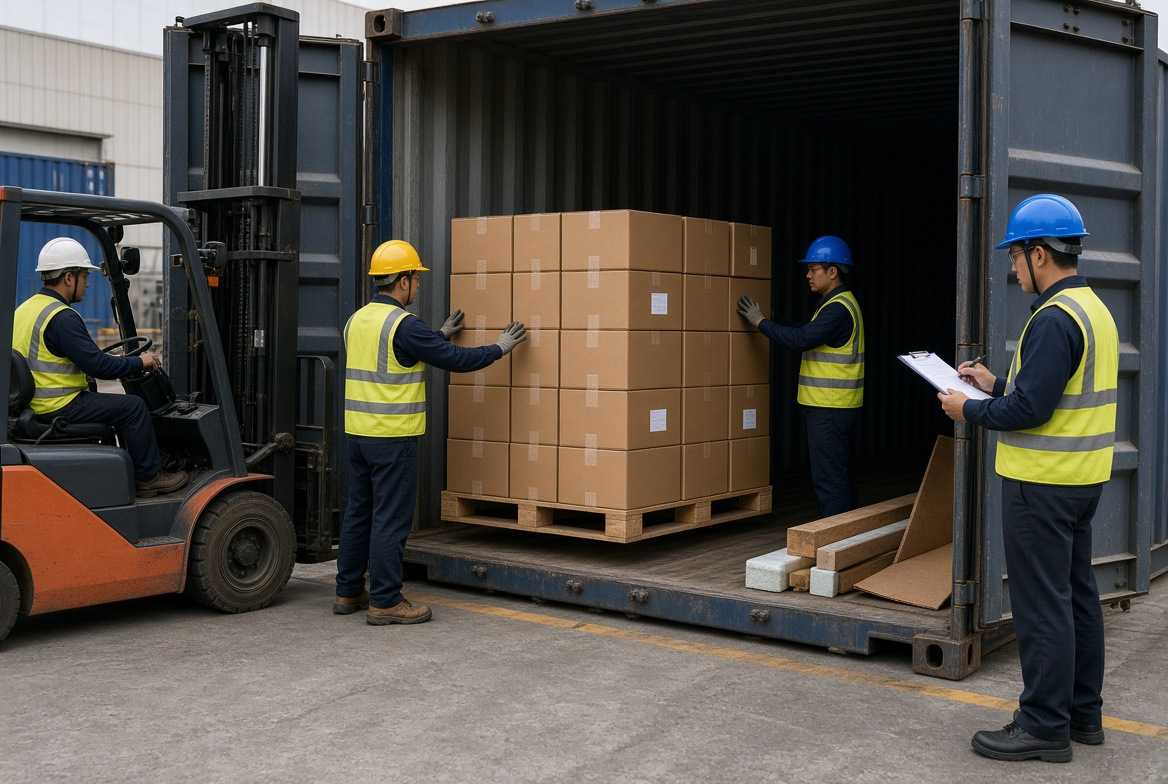
Loading is a risk-control stage. The plan should protect the cargo, use space without unsafe stacking, stay inside weight limits, and produce records that match the commercial documents.
Factory Loading Versus Warehouse Loading
Factory loading works when one supplier has the full lot ready, the site can receive a container, and the loading crew can follow a packing list. The container is delivered, stuffed, sealed, and sent to the terminal.
Warehouse loading is the usual path when cargo comes from more than one supplier or needs inspection, relabeling, or recrating. Goods are picked up or inbound-received, checked against purchase orders, stored, and only then loaded. After several supplier shipments have been received and combined, China warehouse consolidation before FCL loading covers inspection, storage, repacking, labeling, and export preparation so the container is stuffed from one reconciled lot instead of from five unfinished factory floors.
Build a Safe Loading Plan
Distribute weight so the container is not nose-heavy or one-sided. Stack by crush strength, not by whoever arrived first. Brace and block gaps that will shift at sea. Keep fragile cartons off the floor line where forklift blades and door movement cause damage. Separate SKUs or purchase orders enough that destination unloading does not become a sorting project. Protect against moisture with the packaging the cargo actually needs, not with a single desiccant bag dropped in as a gesture.
Do not overload. Do not stack beyond what the packaging can hold. A “full-looking” container that exceeds payload or has a dangerous center of gravity is not a successful FCL load.
Record Container and Cargo Details
Record the container number, seal number, loaded carton or piece count, gross weight, packing-list version, photos of stuffing and seal where appropriate, and any exception: damaged cartons, short pieces, or cargo left behind. If the physical load changes after stuffing starts, the invoice, packing list, VGM, and shipping instructions have to change with it. A seal number that exists only in a driver’s chat is not a document.
Complete Export Documents and China Customs
A sealed container still cannot move cleanly if the paperwork disagrees with the cargo. Export documents, customs data, shipping instructions, and verified weights have to describe the same shipment.
Commercial Invoice and Packing List
The commercial invoice should identify seller, buyer or consignee, cargo description, quantity, value, currency, and country of origin. The packing list should match carton count, dimensions, gross and net weight, and marks. Special features — batteries, wood packing, serial-numbered machinery — belong on the documents, not only in an email.
If the warehouse loaded 420 cartons and the invoice still says 400, the discrepancy will surface at export check, destination clearance, or both.
Shipping Instructions and Verified Gross Mass
Shipping instructions tell the carrier the parties, places, cargo description, and bill-of-lading terms to issue. VGM is the verified gross mass used for stowage. Formats, deadlines, and who submits each file vary by carrier and route. Treat SI and VGM as operating dates on the same calendar as CY cut-off, not as office paperwork that can wait until the container is already in the terminal.
Export Declaration and Classification
Export customs filing needs a consistent product description and HS information, plus the documents that support the declaration. Who acts as exporter of record depends on the commercial structure and the Incoterm. There is no single answer that covers every FOB, EXW, or factory-direct purchase.
Batteries, chemicals, machinery, and other special cargo need early review because classification and supporting certificates can delay filing. After invoice, packing list, classification, and filing responsibility are aligned, China export customs clearance for FCL cargo is the document and declaration work that has to finish before the container is in a position to meet the terminal cut-off. Clearance is not the same thing as vessel loading. A filed declaration can still be queried.
From Port Gate-In to Ocean Transport
After stuffing and documentation, the container still has to reach the correct terminal on time, be accepted, and be loaded to the planned vessel — or to the next available vessel if the schedule changes.
CY Cut-Off and Terminal Gate-In
Arriving after CY cut-off can mean rollover to a later sailing, extra trucking, terminal storage, or a fresh booking. The container must enter the named terminal or yard with the required equipment status and documents. A truck waiting outside the gate with an incomplete VGM or a mismatched seal record is not “almost in.”
Vessel Loading and Transport Milestones
Typical milestones are gate-in, loaded on board, departure, transshipment if the service uses one, arrival notice, and discharge. Carrier tracking is useful, but schedule changes happen. Weather, port congestion, missed connections, and equipment imbalance can move an ETA. Manage those changes through the forwarder or carrier instead of treating the first schedule as a contract date.
Insurance and Cargo Protection During Transit
Cargo insurance is separate from the ocean booking unless it is arranged in writing. For higher-value electronics, machinery, or cargo with a known handling risk, confirm what is covered, what is excluded, the declared value, and what evidence a claim would need: packing list, photos, seal record, and damage survey. Premiums and claim outcomes are shipment-specific. A freight invoice is not proof of insurance.
Destination Customs and Final Delivery
FCL shipping is not finished when the vessel arrives. Import clearance, duties or taxes, terminal handling, container pickup, delivery appointment, unloading, and empty-container return still have to be coordinated.
Import Clearance and Duties or Taxes
The importer, the customs declarant, classification, commercial documents, and destination rules decide how entry is filed. The shipping line does not automatically complete import entry because it carried the container. A destination warehouse does not automatically pay duties because it can receive the box. Duties and taxes are calculated under local law from the declared value, classification, and origin. There is no single China-to-everywhere rate.
Port-to-Port Versus Door-to-Door FCL
Port-to-port or CY-to-CY hands the container over at the destination terminal or yard after the carrier’s scope ends. The importer then arranges clearance, pickup, and inland delivery. Door-to-door continues past arrival: clearance support, trucking, and delivery to a warehouse, factory, 3PL, or fulfillment center if that is what the booking says.
Arrival is not delivery. If the quote stops at the terminal, budget separately for the rest. When the shipment needs coordinated clearance support and final container movement, door-to-door FCL shipping from China is the scope that has to be written down before the container sails, not after the arrival notice lands.
Container Delivery, Unloading, and Return
Confirm truck access, appointment rules, unloading equipment, the delivery window, and who returns the empty container. A site that cannot accept a 40ft trailer creates a second handling plan. Slow unloading or a missed empty-return window can turn into storage, demurrage, or detention. Free-time periods and fees vary by carrier, terminal, and contract. Ask for the actual allowance on that booking instead of using a number from a previous shipment.
Common FCL Shipping Mistakes to Avoid
Most FCL problems start before the vessel, not on the water.
Booking Before Cargo Is Ready
When a supplier says she is “almost finished” she is not a ready date. One late packaging, no packaging label, or one unfinished purchase order can result in a cut-off missed and in having to put away, rebook, or make a partial-load decision for the CY.
Not checking cargo dimensions before choosing equipment.
Choosing Equipment Without Checking Cargo Dimensions
All items from hand tools to machinery, furniture, crates, and oversized items require door opening, internal length and loading method checks. When cargo arrives at the dock without a legal way to stuff it, it’s a result of booking a standard dry box from habit.It’s a habit to book a standard dry box, and that’s how cargo becomes at the dock with no legal way to stuff it.
Loading Without a Document-Matching Process
Count, weight, packing list, seal and carton number must still match after the doors are closed. The process of destination customs and cargo claims begins with loading “by eye” and the paperwork is completed at a later date.
Treating Port Arrival as Final Delivery
After ATA: Destination customs, duties or taxes, delivery appointments, unloading labor and empty-container return. When there is no owner for those tasks it sits and charges begin.
Assuming FCL Is Always Cheaper Than LCL
The cost of FCL is related to the usage of the container, pick and delivery from or to inland, origin handling, destination charge, additional warehouse handling of cargo for loading into the container. A light container, plus two legs inland will cost you more than an LCL that is being moved as freight. Compare the entire extent, not just the ocean line.
You can book an FCL when you have clear cargo, equipment, loading point, port pair, documents, cut-offs, customs responsibility and scope of delivery.
Frequently Asked Questions
What does FCL shipping from China mean?
FCL shipping from China is planning and booking shipment around one container. The cargo is loaded as per the shipment of that container, sealed and transported under the scope of ocean & delivery as agreed. It’s not even an Incoterm; it’s not necessary to fill all cubic meters with it.
How does FCL differ from LCL?
When you book an FCL on a container, it is reserved for one shipment. LCL will share the resources with other shippers and typically includes origin consolidation or destination deconsolidation. FCL provides better loading control and less shared handling points. LCL will accept smaller or staggered shipments which are not all ready to fill a full box.
What information is needed to book an FCL shipment?
Include party, cargo description, weight, dimensions, equipment required, origin loading point, ready date, port pair, delivery point, incoterm (if applicable), and special cargo information. Helpful draft invoice and pack-list data. Specific formats will vary by carrier and route.
Who loads the FCL container in China?
The loading may occur at one factory, or be at a warehouse following receipt of cargo from one or more suppliers. Depending on the commercial term and the service scope the responsible party will vary. Multi-supplier cargo is typically loaded after the warehouse receiving and carton reconciliation.
What documents are needed for FCL export customs?
The basic set consists of a commercial invoice, packing list and information for export declaration and classification. Shipping instructions and VGM are required for the carrier side. Additional certificates are required for batteries, chemicals, wood packing and machinery. Depending on the type of cargo and filing structure, the document lists may differ from one another.
What is the difference between CY-to-CY and door-to-door FCL?
CY-to-CY refers to the time when a container is handed off from one yard to another, under the carrier’s scope. Door to door to a named inland delivery address only and may include destination clearance support, provided that this is there in written form. The arrival of a port does not mean the arrival in a warehouse.
Does FCL shipping include customs clearance?
If the written scope states so. FCL refers to the way in which the cargo is loaded into the container. Export filing, import entry, duties and taxes are different activities. Ensure that the parties know who is responsible for filing, who will be responsible for payment and which documents will have to be provided by each party.
Is FCL always cheaper than LCL?
When the container is used efficiently and inland handling is uncomplicated, No. FCL can be more cost effective per unit. It may cost more if box is lightly loaded, cargo is not ready, high charges for destination delivery and cargo return of the container. Look at utilization, origin work, ocean freight, destination charges, and delivery all combined.