
How to ship from China to USA with the lowest cost? If the cargo is not time critical and is not too large, sea freight is usually the cheapest form of transportation, provided that the shipment can be arranged for a date that is convenient for both the shipper and the carrier. When a stockout or launch date or stop production would cost more than the extra freight, air freight/express is still in the picture.
The lowest attainable practical total cost of the packed cargo, date required, service scope required – port to port, door to door. Low freight line that doesn’t include pickup, warehouse handling, destination release or delivery is not a full comparison. This guide will illustrate the different methods, how to enhance the cargo data prior to booking and how to compare quotes on the same handoff point.
The Cheapest Shipping Method Depends on the Shipment, Not a Single Rate
There are two interpretations of “cheapest.” One is the lowest international freight no on a quotation. The other is the least cost of conveying usable inventory to the point of use. Use the second definition for planning.
A seller that has multiple cartons from two factories is not comparing the same job that a furniture buyer is comparing that is filling most of a carton, or an importer that is racing for a product launch. Lightweight, bulky cartons can also make a difference as light and air and express companies often charge based on charged weight, not weight of product. The plan that seems cheap on the surface might cost you more when you consider origin handling, destination charges and delivery.
Start filtering by using the table. It is not a set of rates, nor does it specify that any one method is always the cheapest.
| Shipment situation | Often worth comparing first | Why it may be cost-effective | What the buyer must confirm |
|---|---|---|---|
| Larger, non-urgent commercial cargo | Sea freight | It can suit higher-volume or cost-sensitive shipments | FCL or LCL fit, total volume, cargo-ready date, port or door delivery scope |
| Cargo close to filling a container | FCL sea freight | A dedicated container may be more practical when volume and loading needs justify it | Container planning, packing, loading location, destination delivery, and total scope |
| Smaller commercial shipment that does not need a full container | LCL sea freight | Shared-container shipping may suit cargo below full-container volume | Origin receiving, consolidation, destination handling, release, and delivery |
| Urgent commercial shipment | Air freight | Higher transport cost may be justified by inventory urgency or time-critical use | Chargeable weight, airport or door scope, cargo acceptance, and final delivery |
| Samples, documents, small cartons, or urgent replacement items | Express shipping | It may be operationally efficient for smaller urgent shipments | Dimensional weight, customs documents, product restrictions, and receiver details |
| Goods from several suppliers | Consolidation before export | It may reduce fragmented international shipments when the schedule allows | Supplier-ready dates, warehouse receiving, labels, cargo compatibility, and shipment deadline |
Begin comparing from the last delivery requirement. LCL, FCL, air, or express quote is helpful only when providing the same carton information and when the agreed handoff point is the same. When shipping to the USA from China, and you still have to coordinate the transport, customs, delivery and route planning, check shipping from China to the USA before assuming that any one freight line is the most economical option.
Sea Freight Is Often the Lowest-Cost Choice for Larger, Flexible Shipments
Sea freight is typically the first choice when the cargo is commercial, has a higher volume and has a longer schedule. This is not a solution that is suitable for every shipment. The choice of modes remains contingent on the delivery needs and overall shipment extent. Sea freight from China is the service-level perspective of buyers who are comparing FCL, LCL, port-to-port and door-to-door planning.
Ocean freight is usually the most convenient choice for replenishment inventory, furniture, building materials, consumer goods, machinery, clothing and other cargo where the length of the transit does not compromise the value. The transport charge is just one of the factors. There remain other points around the voyage such as loading/pickup, export handling, destination release and inland delivery.
Choose FCL when the shipment and loading plan support a full container
If you have sufficient volume of cargo, you need loading control, you need to protect your goods from damage such as bulky items or fragile items, or if you are able to schedule a special container move, you should consider Full Container Load. The cost decision should cover the plan from the factory pick up or the warehouse loading, through the container stuffing, to the terminal handover (T/H), ocean movement, destination handling, customs, and inland delivery.
That container-specific review is required for furniture, building materials, solar products, machinery, and high-volume consumer goods. The actual cost varies due to packing, weight distribution, loading sequence and the US delivery point. A quote for the ocean move is not the same as a quote for the move including loading and destination delivery.
Choose LCL when a full container is not justified
Less than Container Load is helpful when shipment doesn’t fill up the container. Don’t think of it as “a cheaper slice of the same ocean rate.” LCL may include measurement, customs related handling, cargo release and final delivery, origin receiving, consolidation and cargo pickup or delivery to a warehouse.
Please be careful not to make an LCL ocean freight quote a comparison with a door-to-door quote, as if they are the same. Inquire about the price range and what you have to arrange by yourself. Two LCL numbers can be similar and still represent two different handoff points.
Air Freight and Express Can Be the Better Economic Choice When Time Has Value
When the time of the business comes into the picture, sea freight is not automatically the most expensive freight option from China to USA. Air freight and express typically are more expensive in terms of transport costs. If it leads to a stock-out, a missed launch, delayed production, a broken customer commitment or a late split shipment at a higher rate, this slower method may end up costing the business more.
Shipping cost is a business choice. In reality, the question isn’t why is one mode lower on the line-item than the other. It is “which mode might be able to carry this cargo intact to the time that it is needed for the inventory, at the lowest practical overall cost?”
Air freight may make sense for urgent commercial cargo
For time-critical business deliveries where stock levels, production flow or critical delivery dates are more important than additional transport costs, air freight is a viable option to consider. Before determining final carton dimensions and gross weight, obtain these items first. The cost of an air shipment can be influenced by chargeable weight, and a light product can turn into a heavy product when packed.
An importer who must wait for a small amount of machine parts, packaging materials, or fast-moving goods should consider the cost of the air freight versus the cost of inventory that will sit idle, or empty shelves. That comparison remains qualitative until the packed measurements, ready date, airport or door scope and cargo acceptance rules are confirmed.
Express may be practical for samples and smaller urgent shipments
International express is suitable for samples, documents, urgent replacement parts, small parcels and smaller cartons. Packed dimensions, weight, customs documentation, cargo description, receiver information, and cargo restrictions are still factors in the cost.
Express service may require classification, compliant packing, supporting documents and acceptance by the carrier for regulated cargo (batteries, battery powered equipment, chemicals, or dangerous goods). Express does not get rid of customs and compliance tasks. It only alters a smaller urgent delivery’s movement only if the cargo is accepted.
Reduce Cost by Improving the Cargo Plan Before Booking
There are many costs associated with shipping that can be avoided and begin before the product leaves the supplier. A forwarder can only compare between modes when they have the necessary details: final dimensions, gross weight, packaging, readiness date, supplier locations, consolidation requirements, delivery address and scope of service. The rate that you can get from China to USA for cheap shipping is typically a result of a plan, rather than a rate itself.
Try to go through the checklist below before asking for a comparison.
Get final packed dimensions, not product-only measurements
Freight cost is based on the shipment as packed. Outer cartons, pallets, packing materials and packing techniques may alter the volume and/or chargeable weight of a product, despite its small or light size.
Home goods, clothing and promotional items are frequently overfilled in cartons. The parts of the machinery can be light in volume, but heavy in gross weight. Before comparing FCL (full container loads) to LCL (less than container loads), air, or express, ask the carton count, carton dimensions, gross weight, and estimated cubic volume. Weight of the product is not sufficient.
Plan early enough to avoid emergency mode changes
When the product is almost required, the latter choices will become limited. A lower cost sea-freight plan typically requires time for packing, picking up, warehouse receiving (if applicable), export handling, booking, international transit, clearance at the destination, and delivery.
Deliveries need to be buffered for seasonal inventories or retail promotions, Amazon restocking, product launches, and construction and manufacturing cutoffs. There is no standard or blanket formula for lead-time. The bottom line: the sooner the cargo date gets closer to the due date, the more you will pay for speed.
Match packaging efficiency with cargo protection
There is a need to reduce the unnecessary volume through better carton planning. It does not mean to require a supplier to remove protective packing from fragile, heavy, oversized or easily moisture damaged goods. A packing “saving” is lost very rapidly if it suffers damage, recrates, or is claimed.
Corner protection and wrapping of furniture might be required. Machinery may require crating. Apparel could require carton sizes that can be loaded and labelled without any hassles. Don’t use the smallest box that will close, use the packaging to fit the product.
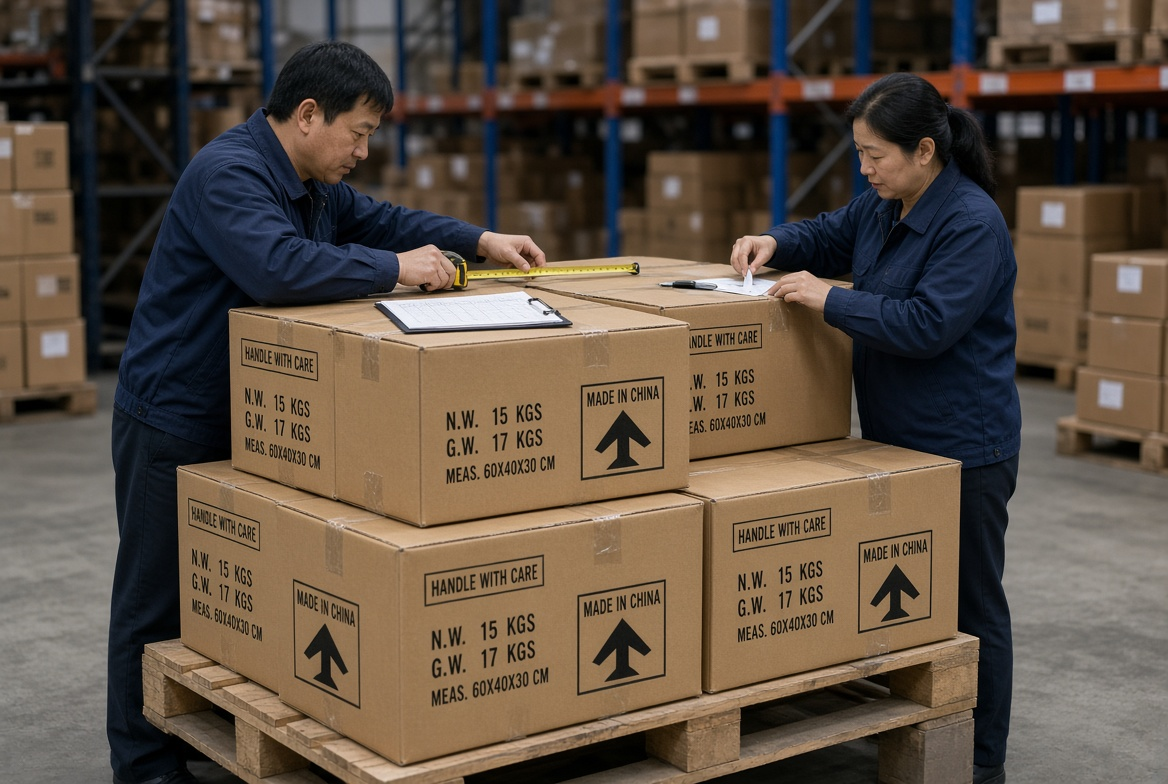
Consolidate Multi-Supplier Cargo When the Timing Works
Ordering from multiple factories in China can result in multiple local pickups, several international shipments, a variety of documents, multiple deliveries to destination, and varying handoffs within the order. If the suppliers are able to offer it within a reasonable time frame and you want your cargo consolidated prior to sending it overseas, then consolidation can be considered.
In reality it’s not always cheaper. Decision will be based on the location of the supplier, cargo ready date, warehouse handling requirements, product compatibility, volume of goods in shipment, cargo restrictions and the final delivery date.
Compare separate shipments with a combined export plan
Calculate the total expenses and delivery schedule for individual international shipments with the total expenses and delivery schedule for cargo received and consolidated in China.Work out the total cost and delivery date of international shipments compared with the total cost and delivery date if cargo is received and combined in China. Add local collection, warehouse receiving, storage (if applicable), cargo checks, repacking/labeling services (if applicable), international goods, customs action handling and final delivery.
An importer might purchase clothes from one city, packing from another and accessories from a third. Separate shipping of each order can minimize waiting time, but can also lead to fragmented handling. When waiting for all goods it can make export easier but result in a delay in exports. Which plan is less expensive in reality depends on the required delivery date.
Give suppliers a clear warehouse and labeling instruction
Consolidation is effective when the suppliers know how to ship cargo, where to package cartons, which reference number to use, and when the cargo should be shipped. Double check carton counts and packing lists and if warehouse checks, repacking, labeling or inspection is required. Once those with references, carton identification, packing information and delivery dates are finalized, the next step is receiving, storage, inspection, repacking, identifying and combining lots for export – all of which can be handled by warehousing and cargo consolidation.
Do not use non-specific forwarding instructions like “forward to the forwarding service”. The absence of identified cartons, incomplete packing information or late deliveries by suppliers add creates rework and reduces the level of certainty for cost confirmation.
Compare Port-to-Port and Door-to-Door Costs Before Choosing the Lower Quote
A reduced international freight number can simply be due to a reduction in service. When there is a plan for customs and cargo release, trucking, transportation and appointments on the U.S. side, then a lower cost structure may be possible from port-to-port. When a coordinated pick-up, international transportation, customs service at destination and final delivery within the agreed scope is required, door to door may be more suitable.
It’s not always the case that door to door will cost more. It is not always cheaper to ship from one port to another. Don’t consider two quotes to be the same job unless they are compared like-for-like based on operational responsibility.
Port-to-port can work when the buyer controls destination-side steps
The narrower scope of transport is typically port-to-port. You must be familiar with the persons concerned with cargo release, customs coordination, processes at the terminals, delivery booking, trucks, risks of storage, and inland delivery upon arrival.
If a port to port without destination plan is selected, there may be additional coordination once the vessel has arrived. No, that’s not an excuse for the service model! A reminder to keep the quote scope in sync with the resources that you have on the US side.
Door-to-door can reduce fragmented handoffs under an agreed scope
Door-to-door shipping can manage more of the shipment process – from China pickup and export, as well as international transport, to customs clearance at the destination and delivery. Always confirm the exact contents, commercial terms, liability for duties and taxes and any special delivery requirements. The next stop after this scope check is the door to door delivery from China under an agreed plan.
For a first time importer or an ecommerce seller who ships to a US warehouse, one coordination point might work out better if they don’t have a dedicated port-side, customs and delivery system already in place. Not all costs or risks are eliminated with the service. It alters the ownership of each stage within the scope of work that was confirmed.
How to Get a Cost Comparison You Can Actually Use
When making a comparison with the modes, the forwarder needs usable cargo and destination information. The question “What is your cheapest shipping price?” is not a reliable question. The information below does not restrict you to a mode. They provide the logistics provider with enough operational data to evaluate and present viable alternatives and illustrate the impact of operational changes on the total cost.
Founded in 2007, OriginLink, a freight forwarder based in Shenzhen, China, evaluates your cargo based on the description, origin point, destination, weight, volume, and demand of the delivery, and then suggests the best route and service. A comparison can be made on the information provided. If circumstances change with regards to cargo, route, scope, or market, the comparison shall need to be re-reviewed.
| Provide for a useful comparison | Do not leave unspecified |
|---|---|
| Product description and any special cargo characteristics | “General goods” without explaining the actual product |
| Supplier pickup city or warehouse-delivery location | “China” with no origin address or handover point |
| US destination city, postcode, warehouse, business address, or port preference | “USA” with no final delivery point |
| Carton count, dimensions, gross weight, and estimated volume | Product unit weight only |
| Cargo-ready date and required delivery date | “ASAP” with no inventory or launch deadline |
| Preferred service scope: port-to-port, port-to-door, or door-to-door | Assuming every quote includes pickup, customs, and final delivery |
| FCL, LCL, air, express, or request for a mode comparison | Asking for “the cheapest method” without cargo size or urgency |
| Incoterm and supplier responsibilities | Assuming the supplier’s shipping statement defines all costs |
| Special requirements: consolidation, inspection, repacking, labels, Amazon delivery, appointment delivery, or special cargo handling | Leaving special requirements until after the booking is made |
Common “Cheap Shipping” Mistakes to Avoid
Low cost shipping from China to USA typically doesn’t work because it is not the cheap one is "cheap" and the expensive one is "expensive.Typically, low cost shipping from China to USA does not work because it is not the cheap one is “cheap” and the expensive one is “expensive”. Look for these empty spaces:
- Selecting the lowest freight line without verifying its inclusion of origin, destination, customs, release and delivery.
- Using product dimensions rather than packed carton dimensions.
- Choosing a mode before the date and the actual cargo becoming ready and the date of delivery.
- When inventory urgency is a factor, assuming that sea shipping is always the lowest total cost.
- Making several small shipments from suppliers without determining if there is an exportable plan for combining several shipments.
- Selecting port-to-port without any knowledge of who will clear the port and/or make the delivery.
- Documentation and cargo-acceptance requirements are not required if the shipper assumed express shipping and the shipment is shipped without customs.
- Failure to account for special cargo requirements and expectations for batteries, chemicals, dangerous goods, oversized goods, fragile goods or machinery.
- Assuming that the words “shipping included” are a full description of freight and destination duties.
- Making reservations without specifying the last delivery details, like access terms, warehouse receiving conditions, or appointments.
Generally, there are two elements to China to USA affordable shipping – accurate cargo information, sufficient lead time and clear service scope – and the shipping mode eventually selected for shipment, not the rate.
Frequently Asked Questions About Cheap Shipping from China to the USA
Is sea freight always the cheapest way to ship from China to the USA?
While sea transport may sometimes be the most cost-effective mode for larger commercial loads and those that are not urgent, it is not necessarily the most cost-effective option. The answer can vary depending on urgent inventory, small carton shipments, bulky low-density cargo on air chargeable weight, narrow versus wide service scopes.
Is LCL or FCL cheaper for my shipment?
Neither is automatically cheaper. FCL can be more practical when volume, loading control, or cargo protection support a dedicated container. LCL can suit cargo below full-container volume, but origin receiving, consolidation, destination deconsolidation, and delivery still belong in the comparison. Compare packed volume and complete scope, not only the ocean line.
When is air freight worth the extra cost?
The two aren’t necessarily the more affordable option. The investment in a dedicated container may be more practical when volume, loading control or cargo protection is part of the consideration. Cargo under FCL is appropriate for LCL, but origin receiving, consolidation and destination deconsolidation and delivery remain in the comparison. Compare packed volume and full scope—not just the ocean line.
Can consolidating goods from several suppliers reduce shipping costs?
It can, under the condition of supplier readiness dates, cargo compatibility and warehouse handling, and delivery date, combine one export. If the inventory date would be missed if waiting for the last factory, it may be more economical or practical to purchase separate shipments. Compare two plans including pickup, warehouse, freight and delivery.
Is port-to-port shipping cheaper than door-to-door shipping?
Not by default. Freight numbers are generally lower on port-to-port as it will represent a smaller job. The door to door may appear higher due to an additional number of stages. The bottom one is only relevant if you know who is responsible for the destination clearance, release and trucking and final delivery.
What details do I need to compare shipping options accurately?
Fill in product description, origin city or handover point, delivery point in the USA, carton number, packed dimensions, gross weight, estimated volume, date of cargo readiness, deadline, Incoterm, preferred scope and special handling requirements. If they don’t provide those details, “cheapest shipping from China to USA” is just a guess, not a comparison.
The plan that can ship the cargo safely, compliantly and on time at a cost that could be as low as possible is the low-cost shipping plan. When you have already determined what your origin and destination is, you have already decided the measurements you are packing and already have a ready date and you are already sure you need delivery, you need to compare the mode and scope with the logistics team that can assess them based on the information you have.