Is there a need to obtain an export license to export goods from China? For most common commercial shipments, no. Standard export declaration will suffice. A particular license is applicable when the product, technology, destination or end-user is included under the export control. The need isn’t a hard-and-fast requirement for all cartons that leave a Chinese factory. It’s a classification decision – what are you shipping, where are you going and who is the exporter named.
There are two opposing myths that consume time. One of them is that special licenses must be obtained for all Chinese exports. The latter is because nothing does. Much everyday hardware, such as apparel, furniture and toys, often travel as general cargo.
There is no control over chemicals, dual use items, some electronics, and some destination or end user profiles. Check the category prior to booking space – not after the cargo has arrived at the terminal.
When China Export Licenses Are Typically Required
China’s export license requirements are focused on a few practical "buckets" rather than on China manufacturing. These are typically the product, the technology or data that goes with it and the destination or end user. It is normally the responsibility of the Chinese exporter (factory or trading company mentioned on the export declaration) to decide whether a licence is required, and to apply for it if it is.
A suspicious description may be flagged by a forwarder. The forwarder is not the license holder.
Controlled or restricted product categories
Some products are on controlled or restricted lists due to their composition, function, or end use risk. That group is frequently made up of some chemicals, military equipment, some special electronics or other products that regulators view as more than just normal commercial goods. It’s not a catchy slogan on a brochure. A classification question and to actual specification of the SKU.
A typical situation: The factory has produced, taped the cartons and the booking is waiting with the forwarder. The product description/HS heading is then reviewed correctly. It’s not “parts.” Is a chemical, battery material or equipment requiring additional approval. The shipment is ready then and the license is not. Origin holds, and the sailing you had in mind is not the sailing you receive.
Use a “no problem” from a salesperson as a starting comment rather than a compliance answer.
Dual-use items and technology transfers
Many of the first-time buyers are shocked by the dual-use items export from China. Dual-use goods are products with a possible military, security or sensitive technical use as well as a civilian use. Ordinary on a purchase order can be ordinary, if it is specified, software or performance data crosses the threshold.
The problem is that “normal factory equipment” is viewed as automatically being general cargo. The classification is by function and ability, rather than marketing "name" on the carton. The same problem can also arise when very little physical cargo is being transported: drawings, software or firmware, process data, technical assistance, etc. can be controlled separately from the hardware.
Ask the question in writing before the first production if the product may be able to be kept in a controlled system, rather than after it has been packed.
Destination and end-user considerations
Type is just 50 percent of the test. Even if the same SKU would be shipped to the same end user in another country, some destinations, sanctioned parties or end-user profiles could result in a license requirement or complete export ban. Which is why a supplier that claims that they have always exported this item can still run into a brick wall on your route.
Before booking freight, check to ensure that the destination country and consignee, as well as the end-use, do not appear suspicious. A dirty file that appears clean on Monday will always end up on Thursday for a last minute change of consignee and/or a not so specific end use statement.
Don’t hope that problems with the origin export controls will be detected by destination customs rules. These are other checks. This allows for halting the cargo even before it is loaded.
General Cargo vs Controlled Goods: What Usually Needs a License?
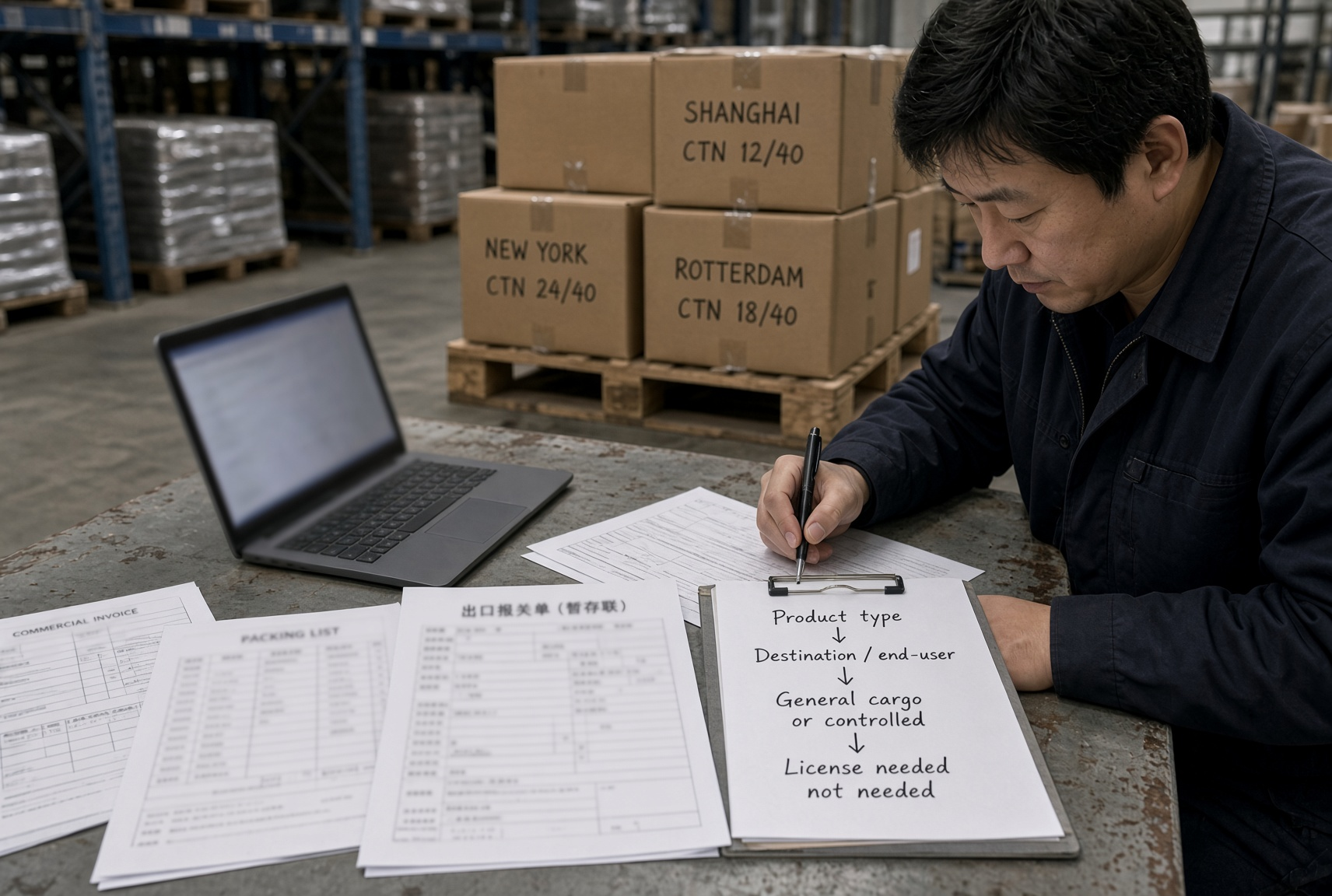
This is what really makes the difference in most of the bookings. China export of general cargo and controlled goods is not a brand decision. This is the classification of the product when exported. Many consumer shipments are moved without a separate License and with a Standard Customs Declaration. Additional approval required for other SKUs for carrier to take the booking on good faith and for export declaration to be completed.
Never cite a rule by the number, as a rule is a rule. Patterns exporters actually work from the patterns, they see what they want to work from, then confirm the current classification for that SKU and route.
Typical general cargo that often does not need a specific license
Many general consumer electronics, toys, household goods, general hardware, furniture, apparel and textiles are considered general commercial goods. All those shipments require precise documents, a description of the product, and a normal export declaration. No specific license does not mean no paperwork.
The danger is in overgeneralizing. The bucket “electronics” isn’t a safe one. A Bluetooth speaker is not the same thing as a telecom equipment with encryption or limited radio. “Machinery” also doesn’t make a safe bucket. The sewing machine and a special machine tool that has controlled performance data don’t work under the same assumption.
If they answer “we ship this all the time,” probe them about what they ship and to which markets. History on tshirts does not equal history on SKU to yours.
Product categories that frequently trigger license or special approval
For some chemicals and chemical intermediates, some batteries or battery materials, selected telecommunications equipment, encryption-related items and specialized machinery, a China export license for controlled goods is more likely to be in play. Classification of dangerous goods is similar, but not synonymous, with export-control classification. Many products may be DG for carriage, but not for licensing; or the other way round.
The conundrum in operation is a supplier’s verbal "no problem" where there is no written evidence that no license is necessary. Sales teams’ job is to move the order. They don’t necessarily match the exporters who complete the export declaration. Go to the exporter and inquire and write it down who the exporter will be.
When the product contains a controlled component within an otherwise normal product or assembly, classify the product correctly. Describing the sensitive part under a generic term like “accessories” or “spare parts” does not take the control. It gives rise to a documentation issue later on.
When the line is blurry
There are some SKUs on the line: components that can go into a controlled system, industrial sensors, radio modules, chemicals sold for a civilian process that also has a restricted use, or equipment which has software that alters the control status. Do I need to obtain an export license for my product is not something you determine from a product photo, in those files.
Ensure the supplier and forwarder confirm in writing whether an export license or special approval is required, the name of the person who will obtain it and the description on the declaration. If they don’t respond, stop the booking. It is less expensive to have ambiguity at origin than to have to have a hold after cargo has departed the factory.
Who Is Responsible for the Export License?
The buyer in China does not usually apply for the export license; it is the exporter of record that applies. In the vast majority of trade agreements, the Chinese party to the trade contract responsible for exporting the goods, or the trading company that has been named on the export declaration, will decide whether or not a licence is required and will arrange for the necessary licences to be obtained. The importer has more to do. It is not a risk that is written in the paper.
Supplier and trading company responsibilities
The importer on the customs declaration is usually the person who classifies the goods, applies for the license and is the exporter. That’s why, in general, a factory without an SKU history of export or a trading company that cannot demonstrate that it is authorised to export the category is a project risk, even if the price seems very attractive.
If the supplier is not licensed, or does not wish to become the exporter, then the importer must be prepared to deal with the situation as the forwarder may not “handle it”. A forwarder can prepare transport documents. A forwarder cannot conjure up an export qualification that the supplier doesn’t have.
Confirm early: who will appear as exporter; if it is the same party, whether or not they have exported these or similar products before; if a license or special permission exists, who holds it?
Importer and buyer due diligence
Before production is completed, buyers should inquire about the necessity of an export license, if the supplier has exported products of similar nature to the country of destination, and if similar products have previously been held for origin. Projects lose a sailing and gain storage when a discovery is made of a license issue after the goods have been packed and space has been booked.
Be sure to place the question in the commercial dialogue, rather than a last week WhatsApp message. If the supplier does not respond, don’t take it as a sign of hope that the terminal will ignore the description, slow down.
Do not require to be the Chinese licensing authority. Written trail is required and the exporter must have agreed to the classification question.
Forwarder and customs broker role
Forwarders and brokers can pick up potential license requirements from product description, HS heading and destination. They typically assume the responsibility for confirming and acquiring the license, which is done on the exporter’s end. Use forwarder as a check point. Avoid allowing the forwarder to be regarded as the license holder.
If the booking is "gifts" or "samples" or "parts" a good forwarder will seek clarification. What you’re asking isn’t a delay for the sake of delay. Controlled goods are most frequently mis-declared and stopped using vague descriptions.
If the forwarder requests written confirmation from the supplier and the supplier refuses, then halt the file and resolve it. If you book it it doesn’t show up on the license.
Practical Checks Before You Book Freight from China
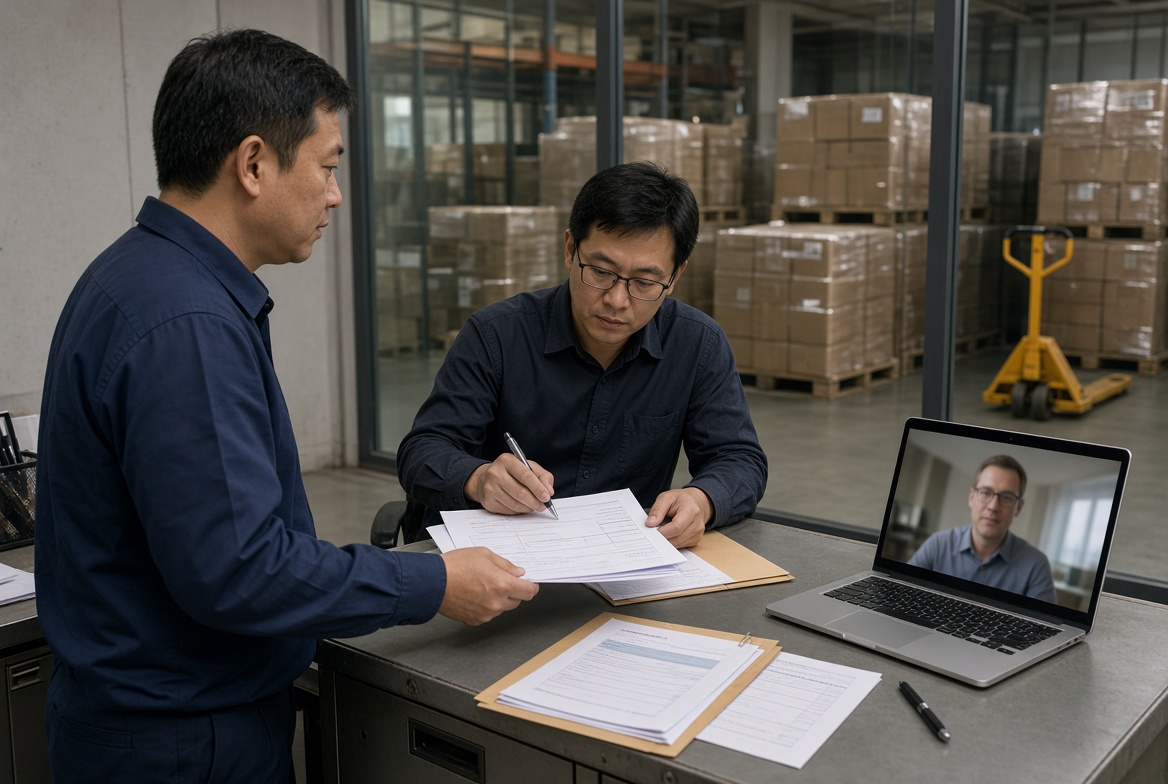
The questions asked before the truck is booked is easier to do shipments with export compliance from China. The following checks are in use. They are not a substitute for legal advice for a controlled SKU. They effectively prevent the most frequent last minute obstacles, such as not knowing what product to export, an initial exporter on a sensitive route, and no written answer on a license need.
Product and HS code confirmation
Use an actual product description and a probable HS code. Gifts is not a description, as is samples, parts, and daily necessities. Placeholders that are collapsed during a customs/carrier review.
Request the material, the function, the model, and any battery, chemical, radio, encryption or software element embedded. The HS code is certainly not the full legal solution, but it is the initial guide. Do not ignore this warning that two different suppliers are offering two different headings for the same SKU.
Supplier export history and references
Inquire if the supplier has had any experience exporting the same or similar product to your country. It helps to have a yes with documents. Without the matching files, no is just not a yes.
It is not prohibited for a new product–destination combination to be the first test case. If a license or additional review comes up, it does mean, however, that you need a certain amount of time buffer, as well as a written plan. Do not schedule your launch based on the assumption that it will perform as an apparel repeat shipment.
Written confirmation on license needs
In this instance, obtain a written response from the supplier as well as a note from the forwarder, if he has seen the description, if an export license is required, who is required to apply for it, and how long it may take to obtain the license. The confirmation is part of the salesperson’s commercial file and should not be in a chat thread that vanishes once the salesperson moves on to another position.
If the reply is “needed” then ask what will happen if it is not approved or denied – will the cargo be stored, will the order be cancelled or redesigned and who will be responsible for the costs? If the answer is “not needed,” retain the written statement. It will be useful if it is later reviewed and they ask why it was moved as general cargo.
A Simple Export License Readiness Checklist
This is a pre-shipment list – not a classification on a sensitive SKU.
Product and compliance checks
- Detailed product description: function, materials, model, battery, chemical, radio, encryption, software.
- Probable HS code agreed by supplier and the party drafting the declaration
- Any known controlled components or dual uses such as items within an assembly
- Destinations, consignment and end-use
- If the same SKU has ever shipped this way, then include the documents, if available
Documentation and responsibility checks
- The exporter of record on the Chinese declaration is?
- Whether an export license or special approval is needed for this SKU and route
- Who is to apply and what information they still need from the buyer
- The timing of the product – which is NOT a commitment created to retain the booking, but rather what is expected by the exporter as a range.
- If license is delayed or denied: storage, cost, and production or bookings to be held.
- Commitment in writing held with commercial documents prior to the calling of the truck.
If the file is empty, no line is found, it is not ready to book. Starts are assigned to the origin after the cargo is received at the warehouse.
Frequently Asked Questions
Do all shipments from China need an export license?
No. A large number of regular commercial products are exported without special license on the basis of a normal export declaration. A license is more likely if the product is controlled or dual-use, or if it is destined to or used by an extra restriction place by the destination or end-user. There is no "all exports need a licence" and "no exports need a licence" view.
Which product categories are most likely to require an export license from China?
Some chemicals, some batteries or battery components, special telecommunications and encryption equipment, military items and special machinery or technology are among the categories that are more frequently subjected to additional review. It’s not the marketing category on the website, but the specific SKU and route that is triggered.
Who is responsible for applying for the export license: supplier or forwarder?
It is generally the responsibility of the Chinese exporter of record (usually the supplier or trading company that is listed on the export declaration) to determine the need and apply. The forwarder can point out the problems and make transport papers. The forwarder is not typically the applicant for a license.
How long does it take to get an export license if one is needed?
There is no universal and dependable number that fits any product and authority. Duration varies according to the type of license, the extent of the file and the need for additional review by the destination and/or end user. Request a realistic range for this SKU from the exporter and book freight only in the range specified.
What happens if cargo is ready but the export license is not approved in time?
The goods are typically not able to go through export formalities in time.The goods are generally unable to go through export formalities in time. The goods can remain in the factory / warehouse, handling / storage costs may begin and the scheduled sailing / flight may be postponed. Preplan if production and booking requires approval and if the license is deferred or refused who will pay.
Can I ship samples or small quantities without an export license?
A control may not be cancelled by quantity. A sample of a controlled or dual-use item may require licensing or other authorization. For ordinary general cargo small shipments may be transported under a standard declaration. Classify and then verify, in writing, the same as you would do for the bulk order.