What is Alibaba shipping after you have made payment to the supplier? The marketplace is where you will find the factory and settle the order is called Alibaba. No, it’s not the ocean line, the airline or the courier that carries the cargo. The shipping involved is another job, and is arranged by the supplier, your freight forwarder or both, according to the Incoterm on the proforma: EXW, FOB, CIF/CFR, DAP or DDP.
Payment and supplier chat is covered by Trade Assurance. It makes no bookings, doesn’t file an export declaration, and doesn’t designate an importer of record. The working sequence remains the same; lock the order terms, gather the real cargo data, move the goods in China, complete export, perform the international main leg, clear the customs in the destination country and deliver. The idea that Alibaba will ship it much like Amazon is a myth. There is of course a named party at every handoff, a real shipment requires a booking, documents and a named party.
Alibaba Is the Marketplace. Shipping Is a Separate Job
The commercial tools are the product pages, chat, and the “shipping method” dropdown. They assist you to compare a quote. Not a substitute for bill of lading or airway bill, China export declaration, or importer of record at destination. International buyers are successful if those two jobs are separate as they are at Alibaba – ordering from the marketplace and arranging shipment of cartons.
There are three patterns that appear again and again. The supplier opens a tiny courier account and provides you with a tracking number. The supplier quotes FOB and your forwarder assumes responsibility from the origin port / CFS. Your forwarder picks up goods at EXW factory (or the China warehouse if there are multiple factories involved), does the export, main leg, clearance and delivery. None of those patterns are “best” per se. The danger is that you pay a generic “shipping included” price, there’s no named carrier, no Incoterm on the proforma and you have no destination scope written.
What the supplier actually controls
The factory guarantees the production date, the quality of packaging, the consistency of the commercial invoice and packing list with the goods. It also owns export eligibility – the commodity must be in compliance with the law, accurately described, and be packable for export. Some suppliers will send the cartons by truck to a designated warehouse in China. Others will send only to a FOB named origin port.
A typical work environment: cartons are taped and stacked at the loading door while the invoice remains "gifts," or lithium batteries remain undelclared until the truck arrives. This is not a freight issue, however. It’s a supplier control issue that converts to a booking refusal or destination hold later on. Request carton marks, actual measurements and a commodity description that customs will classify prior to the booking of space.
What the buyer (or their forwarder) must own
You have the freedom to choose between express, air, LCL or FCL delivery, as well as a valid delivery address and importer information. You also have the option of who files destination entry. Boxes are demurraged when they are left without identification at a terminal.Cargo is left without identification at the terminal where demurrage begins. It’s not an Alibaba account email that’s an importer of record. Customs requires a legal entity, an existing delivery address, and documents matching the cargo.
Start With the Incoterm, Not the Tracking Number
It is not when a tracking number comes that the actual method of distribution from Alibaba suppliers is determined, but rather when the proforma is drawn up and signed. The Alibaba Incoterms shipping operations are divided into picking, export filing, pick-up of the main leg, payment of destination charges, and delivery.
EXW is an arrangement where your team picks up from the factory gate (or agreed warehouse). FOB: The supplier is responsible for getting the cargo to the origin port or on board port per contract, where you book the international main leg. CIF or CFR indicates that ocean freight is charged to a named destination port usually without destination clearance or door delivery. DAP: Delivered to named place, but not cleared. DDP puts the responsibility and destination clearance upon the seller’s appointed and named contractual party – only if that contractual party is appointed and named.
EXW and FOB: When the buyer’s forwarder runs most of the job
EXW vs FOB Alibaba shipping is usually the choice of serious importers, who want to have control over the routing, consolidation and destination charges. The EXW service includes arranging pick-up from the factory in China and/or booking, export filing and warehousing if necessary. Under FOB, the supplier will bring the goods to port or CFS and the buyer’s forwarder will book the vessel or aircraft and pick up the documents.
The failure mode is either ready cargo without a booking, or FOB cargo without a VGM, cut-offs or a complete packing list. If space is not booked, but against the weight field on the product page, then control will not work!
DDP and “shipping included”: When to be extra careful
Attractive single door price. The danger here is that shipping is not a clearly defined service, and thus there is no way to predict what happens. May receive no named carrier, no clarity on who clear/clears, hidden destination surcharges, delivery may stop at destination port. When scope is written, door-to-door from China is real ship.
Before payment of freight, ask for actual carrier or forwarder, destination charge list and importer name. Although if those answers remain generic, don’t count it as DDP; instead, it should be considered as origin handling plus hope.
The Working Sequence: How Does Alibaba Shipping Work After You Order
If the order is paid, audit each handoff. Please note that a tracking number doesn’t always mean it was booked by anyone on the main leg.
Lock cargo data before anyone books space
A forwarder should look for the pieces, actual weight, outer dimensions, commodity, HS code if provided, ready date, Incoterm, destination and whether it is general cargo, battery-powered, branded or otherwise restricted. It is a frequent error to quote from the Alibaba “product weight” field. Many factory cartons are double walled, and they are typically 30% bigger than the listing indicates.
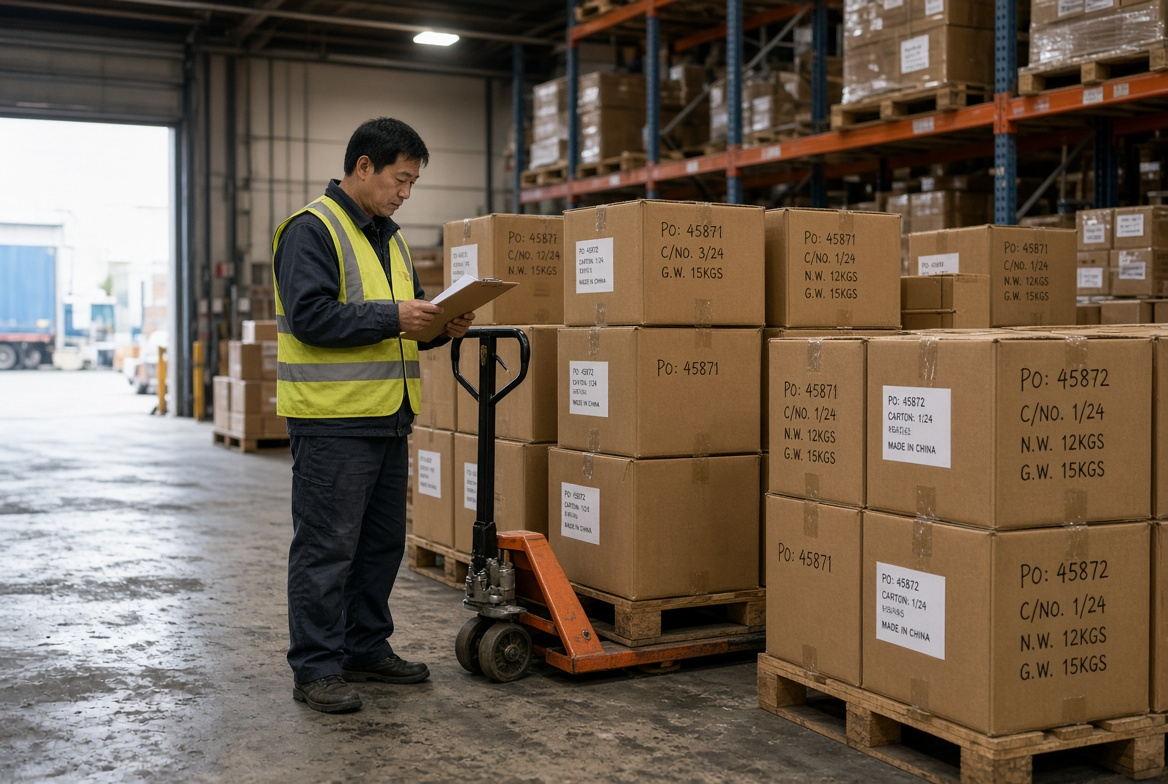
Photographs of full cartons and a packing list. If three SKUs are on the same carton, indicate this. The chargeable weight and LCL measurement are from the outside pack and not from the storefront weight.
Factory pickup, warehouse receiving, or port handoff
Typically, there are three paths that the origin takes. Multiple Alibaba suppliers deliver into a consolidation warehouse and then the one export shipment. A container is full of products at one factory. Or the supplier loads the cargo on the trucks FOB and the trucks arrive at the port or CFS.
When two Dongguan suppliers are all set up on Tuesday and a Yiwu supplier is still packing, the typical solution is: Alibaba cargo consolidation! The unfinished lot stays as the shipment is not interrupted by three orphan lots. If a container is being filled with the product, and a shipper can complete the product on the same day, then direct factory load is appropriate.
Export declaration and the international main leg
Here, China export filing, China carrier booking and master documents taking place include bill of lading or airway bill, commercial invoice, packing list. FCLs are container spaces only. LCL is a shared container space, with additional CFS handling. Air circulates inside the airport freight terminal. Expresses move via a courier network that has its very personal clearance model.
The use of personal courier account for business goods is a red flag. The parcel might leave China and not pass destination entry due to the value, commodity or importer data not matching a commercial shipment.
Arrival, import clearance, and delivery
Notice of arrival is not delivery. The difference between duties and taxes is that they are not calculated in conjunction with freight. An absence of entry information or an incomplete ISF entry (where applicable) and/or an ambiguous product description can result in the detention of cargo upon arrival. Cleared is NOT on your dock. They still require a delivery address, a window to receive the contents and someone at the shop or home to receive the goods at the warehouse.
How Freight Method Choice Changes the Same Alibaba Order
The same purchase order can be shipped as a courier parcel, an air shipment, LCL or FCL. The method should be based on volume, value, destination charges, and level of control, etc., and not a default on the product page checkbox.
Express small boxes, samples and emergency replacements. Light, bulky cartons can cause a significant change in chargeable weight. When time is of the essence and handling at the airport is satisfactory, air is used between express and ocean. LCL is applicable where the capacity is less than a container and CFS handling is possible at both ends. Cubic volume or only being able to seal out exclusive space make FCL the best choice. Some lanes may be available by rail or road, and this is a comparison, rather than a guarantee of availability for all destinations.
With the FCL "sellers use containers" being the only rational justification, it’s a waste of money to try to fit a 2 cubic meter trial order into the FCL box. The selection of method should be based on the Incoterm and the cargo, not on the seller’s preference.
When small parcels and express make sense
Sample runs, very small first orders and urgent replacement parts should be on express. Maintain the integrity of the commercial story. Business inventory goods shouldn’t be shipped as a personal parcel “to make customs easy.” It’s not a shipping shortcut it’s a destination risk.
When LCL or FCL becomes the smarter play
A stack of courier labels is typically outcompeted by shared or exclusive ocean space as carton count, value and destination handling increases. Once the cargo is consolidated in the warehouse, LCL takes the cargo from the various suppliers. FCL provides you with the box, the seal and less number of CFS touches. The choice of the method shall be made after the writing of the Incoterm and delivery scope.
Documents Buyers Should Demand Before Cargo Leaves China
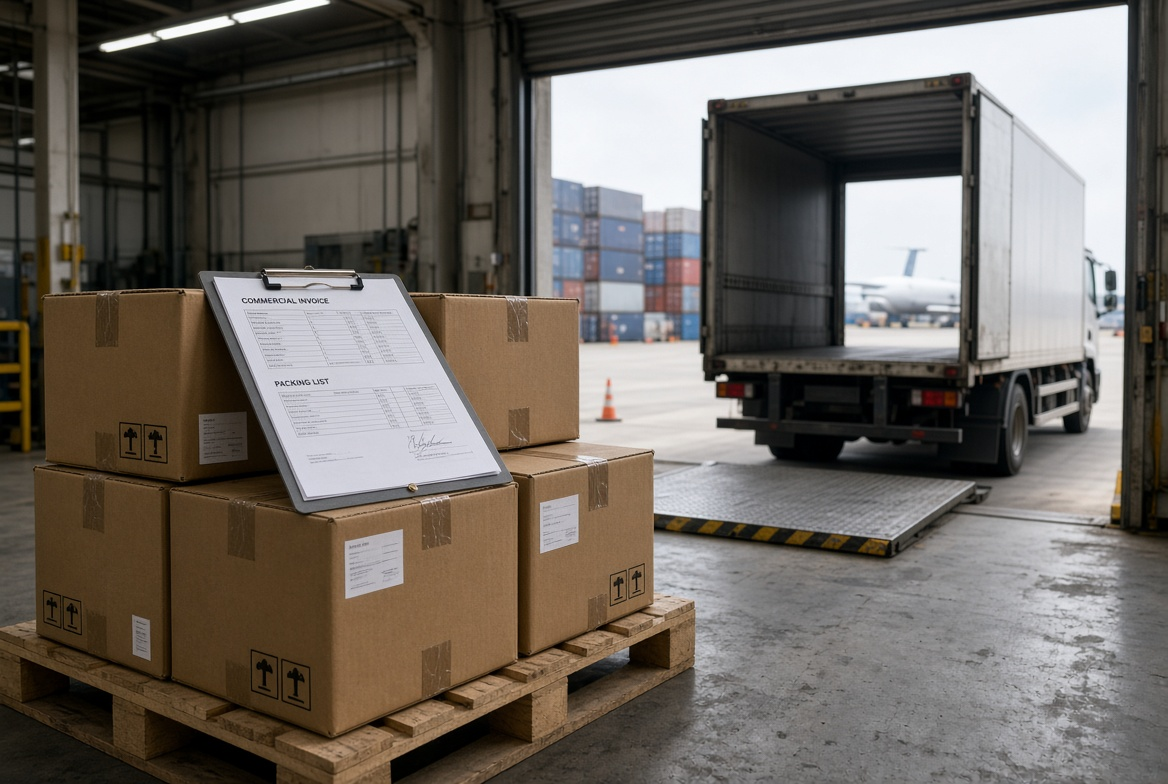
There is no requirement to have a full book of documents. You must have a set which is the same as the Alibaba order and withstanding export and import. Attach a commercial invoice that corresponds to the amount you paid, have a packing list including carton marks, have the Incoterm on the proforma, have a real shipper contact on the bill of lading or airway bill and have a product description that can be classified by customs. Flag batteries, brand and pack wood before departure of the truck.
It is not a favour to undervalue the invoice “to make customs easy”. It is a hold, penalty risk and something you will have on your own when you arrive at the destination.
Minimum document set for a clean handoff
- Commercial invoice that matches the Alibaba order and actual SKUs
- Each piece and weight to be packed, dimensions, and carton marks.
- All Incoterms, all named places, all costs, all risks, all terms – in a proforma or a contract.
- Information that a shipper and consignee can give a carrier.
- Any battery, brand or packing declaration that the cargo truly needs
For each item, there’s a job. The invoice can be used to file export and import it to the destination country. When the packing list is provided to the warehouse or CFS they can verify the lot. The Incoterm is a message to all those who follow the next bill. Contact information determines if an arrival notice will be delivered to someone who can take action.
Red flags in shipping documents
Stop export when weight do not match, the commodity is general merchandise, the shipper or consignee is empty or there is a conflict in the addresses on the invoice, packing list and booking. It takes a revision in China to make that right. After arrival problems are storage, missed receiving appointments and demurrage.
Handoff Mistakes That Stop Alibaba Cargo
The vast majority of hold-ups with ships are not enigmatic. The Incoterm didn’t appear in the PI. Ready date was postponed due to booking up. To finish, China was left without a carton list by mixed SKUs. When the arrival notice arrived, the buyer was not available. The goods were delivered ‘shipping included’.
Write scope in one paragraph before cargo moves: who’s picking up, who’s filing export, who’s paying destination charges, who’s delivering. If a shipment can’t be written into that paragraph, it is not scheduled.
The “someone else will handle it” trap
If the supplier (Alibaba) or “the forwarder” takes up all the space then there are empty seats. It’s just that no one books the main leg! Nobody files entry. There are no destination charges. The symptoms are clear-cut: the cargo at origin, the cargo arriving at the port of call without an importer, the terminal demurrage, or the return to origin conversation you had not planned for. Assign the name for each step in the cartons, before they arrive in China.
Frequently Asked Questions
Does Alibaba itself ship my order internationally?
No. It is the market place and the name is Alibaba. The supplier or freight forwarder or a combination agreed under the Incoterm can arrange transportation to other countries. Platform tools enable payment and communication. These are not a carrier booking or customs entry.
Who arranges shipping if my supplier quotes EXW?
You do, typically via a forwarder. EXW stands for collection at the factory, or at an agreed upon origin place. Your team picks you up, exports, does the main leg, destination clearance if applicable, and then delivers to your end.
Can the supplier and my forwarder split the job on FOB?
Yes. This is a typical division. The supplier is responsible for delivering the product to the origin port or CFS as agreed. Your forwarder books the international main leg and receives the documents from this handoff. Record the name of the port and the time of the document so that the goods are not left unbooked.
What information does a forwarder need after I pay on Alibaba?
The following information: Pieces, actual weight, dimensions, commodity, pickup city, ready date, Incoterm, destination, delivery address, importer details and any restriction (batteries, branded goods, etc.). Quotes are not based on the listing weight as this is covered by a packing list and photo of cartons.
Is “shipping included” the same as DDP door delivery?
Not by itself. Delivered Destination Price (DDP): Seller’s contracted party takes destination duty and clearance on and delivery made only if as contracted. Shipping included can be origin trucking, port-to-port freight or a courier label without any importer plan. Request the carrier, charge list and importer of record.
Can I combine orders from more than one Alibaba supplier?
Yes, if you plan it that way when you’re dealing with origin. A China warehouse can gather the goods from various factories, inspect them and send out as 1 LCL/FCL shipment. Only if ready dates, documents and carton lists are synced together prior to space booking can combining only work.