
It is not a carton-count quiz when it comes to deciding between FCL vs LCL shipping. It’s a total cost and risk decision – pay per CBM or pay per unit; how long does the cargo sit at origin and destination; how many times do the cartons get handled; can goods from multiple Chinese factories be processed as one plan? A half full 20ft box is not necessarily the wrong FCL. Not all mid-size lots are low cost LCLs. The better choice depends on the volume, weight, supplier locations, the inventory strategy, and the amount of damage and/or inspection exposure you are willing to take.
This guide will look at the cost of FCL and LCL, the transit time, the risk profile, the operations at the origin, and the cargo profile, before presenting decision rules to check against actual quotes.
FCL and LCL Defined: What Importers Actually Get
The textbook definitions only go so far as “full container” and “shared container.” In reality, it’s a different business model – who owns the box, who handles the cargo and how charges are calculated.
FCL: Dedicated Container, Single Shipper Responsibility
FCL (Full Container Load) is a service where you charter a whole container (usually 20ft, 40ft or 40ft high cube) for your company. It is normally boxed and sealed at the origin and is opened at the destination under that booking. Who packs, secures and stuffs is up to one party. Handovers are less on a shared box: factory/warehouse to terminal to vessel to destination terminal to inland delivery.
The container does not have to be 100% full. When booked as FCL, it will be counted as a dedicated unit. This is why some importers will pay for a 20ft that is only used two-thirds – they are paying for control and a more straightforward charge structure rather than a perfectly packed cube.
LCL: Shared Container, Consolidated Cargo from Multiple Shippers
LCL (Less than Container Load) is a shipment where the goods are consolidated from several shippers into a single container in an origin CFS (container freight station) and then deconsolidated at destination. The charge is quoted per CBM or per ton, with a minimum chargeable volume. Cards and boxes are stacked on your pallets or cartons, along with the other lots. The closing time of the box may vary due to marks, packaging quality and readiness of other shippers.
LCL includes the handling points you are missing on a seal FCL – origin receiving/stuffing at the CFS, destination unstuffing, sorting prior to final delivery. That’s the deal you make if you ship smaller quantities in exchange for no empty box charge.
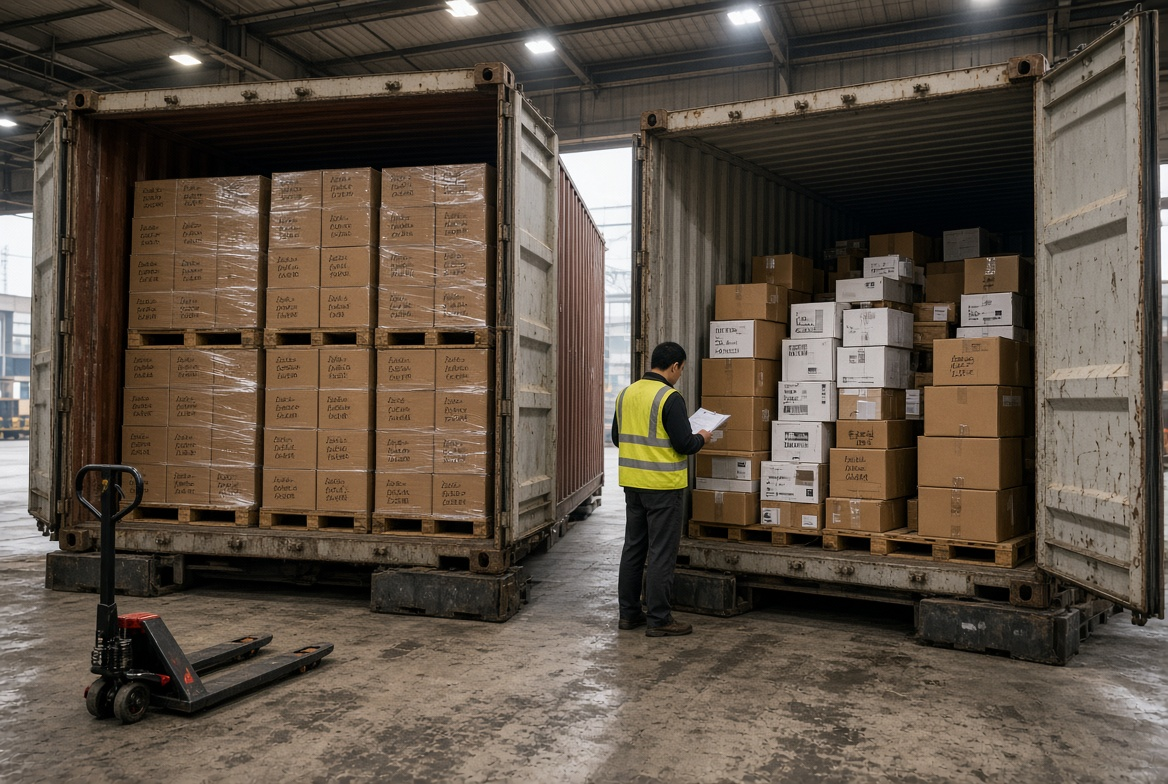
FCL vs LCL Shipping Cost Comparison: Ocean Freight, Local Charges, and Cost per CBM
Ocean line haul, only one line on the invoice. Those who only compare the container rate to the LCL CBM rate are likely to select the wrong product.
Ocean Freight Rate Structures for FCL and LCL
FCL is charged on lanes, per container and container size, such as 20ft and 40ft/40HC. The rate fluctuates depending on equipment, carrier and season. LCL is charged on CBM or RV ton basis with an applicable minimum charge. Volume is typically the costing method used for light, bulky goods. Heavy goods may bill by weight. It is possible for a “low” ocean rate per CBM to lose when CFS and destination fees are thrown in. To get a win from a “high” FCL box rate, you need to divide by usable CBM.
The lowest per-CBM ocean figure does not represent the lowest landed figure. Before choosing FCL or LCL from China, you need to make both quotes within the same scope.
Origin and Destination Charges: THC, CFS, Handling, and Delivery
Common extras FCL include origin pick-up or warehouse handling, export documentation, origin THC, destination THC, delivery order, and inland haul. Common LCL extras are same-origin CFS receiving and stuffing, same-destination CFS unstuffing and per-CBM handling which is typically higher in cost when volume is low compared to equivalent FCL local cost.
The extras can narrow or widen the gap. LCL local fees at some lanes are reasonable at 3 CBM and too high at 15 CBM. On others, LCL destination delivery of the same cube will be more expensive than FCL shipment of the same 20ft once CFS + lines for multiple handling are added. Place the same order specifications on both quotes: Origin work and destination delivery. The FCL number mentioned next to the CFS-to-door LCL number is not a comparison.
Calculating Cost per CBM and Cost per Unit for Decision-Making
Use a simple frame:
- Include all actual origin/destination charges in addition to ocean freight.
- Divide that total by the usable CBM, or sellable units.
- Repeat for the other mode on the same cargo and Incoterm and delivery point.
For illustrative purposes only, not a live quote. Assume that the importer holds 8 CBM of general cargo on a major lane. An LCL offer may be as follows: $90 per CBM ocean / $45 per CBM combined CFS and local charges or $1,080 in total for that slice of the move. A 20ft FCL on the same lane can be priced at $1,900 ocean and $750 O/D locals, or $2,650. Cost per CBM: approximately $135 (LCL) and approximately $331 (FCL). That volume will be cheaper in a LCL box.
Replace the lot with 24 CBM. LCL at $90 + $40 local is $130 per CBM, or $3,120. The same 20ft FCL at $2,650 is about $110 per CBM. It now makes more economic sense to use FCL, even if the box isn’t full to the brim. If you sell by piece, then run the same math per unit. Having lower cost per CBM is still insufficient if there is a waiting period of weeks for the items to sell.
Your data on your cargo beats any rule of thumb. The amount of a 20ft that can be used will vary depending on carton strength, stack height and weight limits.
FCL vs LCL Transit Time, Frequency, and Flexibility
Time is more than just days on the water. Waiting for final supplier, waiting for CFS closing the box, waiting for destination unstuffing.
Sailing Options and Transit Time Differences
On longer lines, booking an FCL service may offer more direct sailing routes as the shipment is a complete load that the carrier can book as one. The speed at which sufficient cargo is collected to close a container and the receiving cutoff date will determine the value of LCL. Upon discharge, LCL typically stays for a second time at the destination CFS.
The differences can be found by the lane and provider. There are some LCL services on heavily used corridors with tight schedules. Even with some FCL bookings, the vessel is not available due to late packing at the factory. Request named sailings and an origin to destination window for both products on your lane. Planning data is not a generic “LCL is slower” line.
Flexibility for Smaller, More Frequent Shipments
LCL is used for smaller, more frequent, shipments. That can help reduce the stock in a destination warehouse, cash, and also allow for you to adjust when a SKU performs better than anticipated. FCL prefers large loads and less frequent. Freight Per-Unit can be improved. Destination stock and warehouse space increases.
Right call should be based on inventory strategy, and not just the ocean rate. A retailer with a weekly replenishment might be willing to pay a higher LCL cost per CBM to make sure that the shop shelves are stocked regularly. A project buyer with one delivery window may choose to opt for FCL and use the remaining cube, instead of loading the remaining cargo into two LCL closings.
Risk, Damage, and Inspection Exposure
Freight cost is apparent. Not claims and inspection delays. Don’t include FCL vs LCL transit time and risk in the same decision – factor both first.
Handling Touchpoints and Shared-Space Risk in LCL
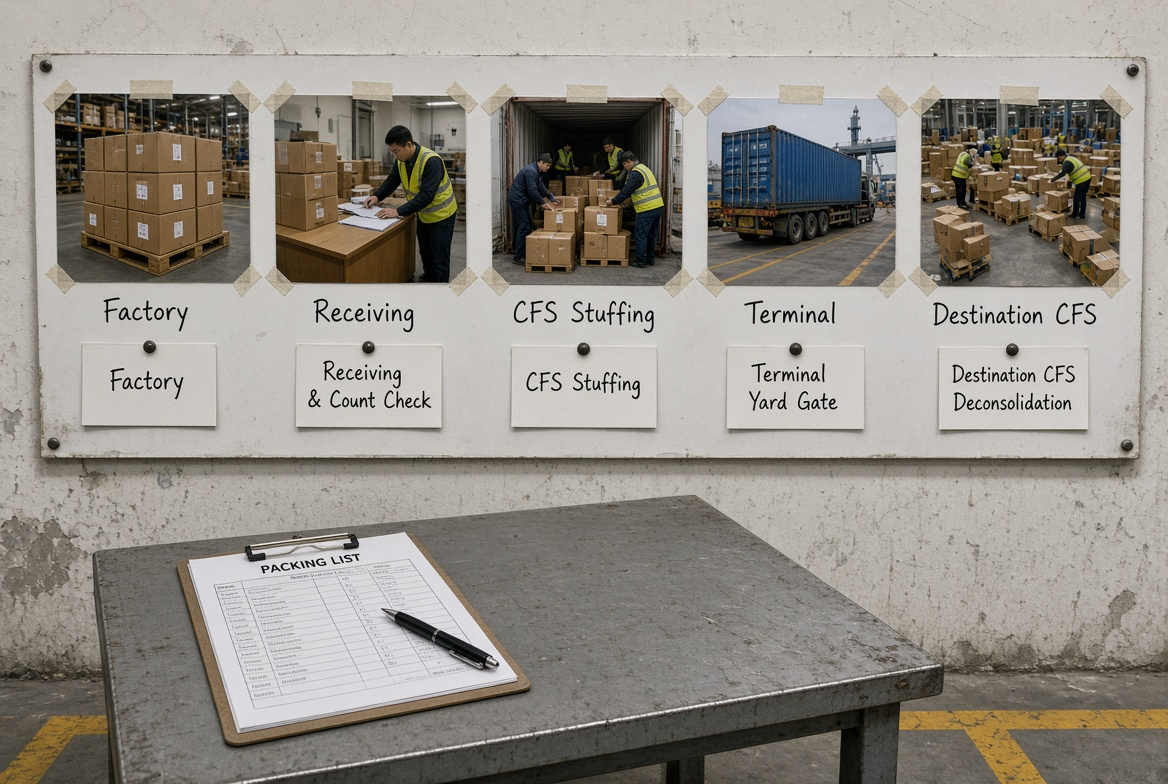
When transporting LCL cargo generally there are a few more movements: the receiving of the LCL at the origin CFS, stuffing with other cargo, unstuffing, sortation and delivery. Shared space is where lots are segregated but still have to deal with other shippers’ packages, moisture, odor or improperly secured packages. Getting a corner knocked off your opponent’s pallet can cause a stack shift. Claims go slower due to more parties involved with the box.
That is not to say that LCL is reckless. It turns packaging specification and the consolidator’s handling into the "buy" price as opposed to an add-on.
FCL Control Over Packing, Securing, and Sealing
FCL provides greater flexibility of staking, bracing and sealing of cartons. The box doesn’t contain other shippers’ cargo. The packing list and seal number are typically for one shipper, and belong to a single inspection and claims. For high-value electronics, finished surface furniture and products that are sensitive to additional lifts, the cost per CBM of FCL may be a bit higher, but it is worth it.
There is no absolutely safe way to transport goods by FCL. Even when the stuffing is poor, the cartons are weak or the lashing point has been missed, there is still damage. Risk profile is more focused and managed.
Customs and Inspection Scenarios for FCL and LCL
Customs treatment is not standard treatment. Typically, an FCL exam is conducted with one container and one shipper’s cargo. While the box is being replaced at an LCL station, it can slow down several shippers. The additional dwell time should be a part of the comparison if there are regular exams in your commodity or lane. If your product category is regularly pulled, don’t consider inspection a footnote.
Multi-Supplier Sourcing and Consolidation from China
Most China programs are not a factory and a packing list. There are three suppliers in three cities and a buyer with one arrival.
When LCL Simplifies Multi-Supplier Shipments
If each factory is sending a few CBM there is no need to store stock until the 20ft is full, and thus LCL can be the economically better option. A forwarder who can take delivery to his warehouse from more than one city can inspect and count marks and carton and can close one LCL shipment. The importer coordinates 1 booking, rather than a number of small FCL ideas which never get utilised.
That’s the real-world example of LCL consolidation from multiple suppliers, China, where the shipping industry is split between smaller volumes, multiple cities, and the desire to ship sooner rather than later, when a shopping list of last orders is completed.
When FCL with Consolidation Makes More Sense
If from the same suppliers, the combined volume is close to a feasible 20ft or 40ft then the ocean product is often FCL. Cargo still arrives at an origin warehouse, is counted, and is put under one shipper’s control. Typically, this is where regular programs with a fixed cube of weekly or monthly frequency should be listed. The certainty of savings per unit and reduced number of destination CFS steps is more important than the flexibility of shipping each factory on the day it is completed.
In both cases the idea is the same as the warehouse step. Change occurs once you’ve booked the product you receive.
Decision Framework: When to Choose FCL and When to Choose LCL
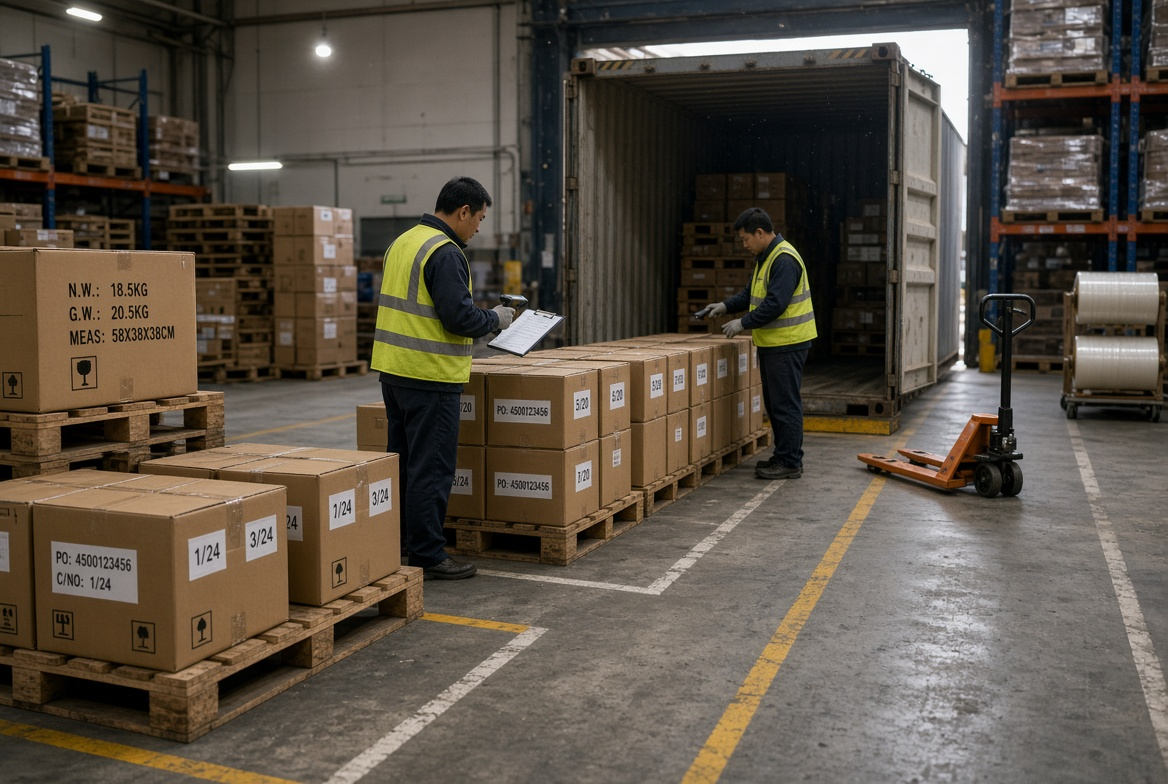
Go for volume first, then value, fragility, and finally the way you purchase inventory. That’s how you’ll know when to consider using FCL instead of LCL without using a CBM cutoff as the rule.
Volume and Weight Thresholds as a Starting Point
Indicative only—check with quotes on your lane:
- Typically, Very small lots (VSL) of less than a few CBM: LCL will be the working option.
- Mid-size lots: sail and run cost per CBM both ways, include sailing options, add risk.
- Lots closer to usable 20ft or 40ft: FCL is normally the choice.
The cube is not the only factor that must be taken into account when weighing a model rocket. Heavy goods may exceed the weight of a container without taking up all the space. The 20ft will have a capacity of bulky cargo, and even scale weight will appear light. Some thresholds are misleading because they don’t consider density.
Cargo Value, Fragility, and Risk Tolerance
Cargo that is easily handled, high value, fragile or finish sensitive would typically be in FCL. If the packing is good enough and the additional CFS steps are not an issue and there is a low freight budget, then lower value, robust cargo can remain on LCL. Even a low-priced product in weak cartons can be a poor LCL candidate. So a robust unit value can still be used for a good industrial part, even in the case of LCL transport.
Inventory Strategy, Cash Flow, and Order Frequency
LCL: fewer, larger sized shipments; possibly more expensive freight per shipment; less inventory and quicker response times.
Match the ocean product to the way you’re selling. Don’t pick up the FCL shipments to “save freight” if the additional freight will be in inventory during a slow season. If your customer orders one delivery per month, and you are simply calculating CFS fees for weekly LCL, then do not order weekly LCL.
How to Work with Your Freight Forwarder to Optimize FCL vs LCL
In an ocean freight FCL LCL comparison for importers, it is as good as the cargo file that’s given to the forwarder. Recommendations are guessed based on guessed dimensions.
Data to Share for a Data-Driven Recommendation
Send a usable pack, not a one-line CBM estimate:
- Information about the cargo including any handling restrictions.
- The size of carton or pallets and the weight of carton or pallets.
- The packs of cartons and pallets.Packs of carton and pallets.
- Supplier city and ready dates are listed.Supplier city and ready dates are listed.
- Incoterm and named place
- Address of the port or door to which the vessel is headed.
- Target arrival window and inventory constraints
This file enables a China based team to simulate FCL and LCL on the same scope: pickup, warehouse receiving if required, export, ocean, destination charges and delivery. Central to the FCL LCL optimization from China process is not asking for “the cheapest box.”
Questions to Ask About Cost, Transit Time, and Risk Trade-Offs
Request both on one single call, local calls. Question what are the actual sailings this week and not the brochure average. They are asking how multi-supplier cargo would be received, and whether it would be best to use one LCL, one FCL, or a split. Inquire about the delays, damage, and exams for the same cargo on the lane.
When volume increases, come back to the choice. A program initiated on LCL can be shifted to FCL without having to change suppliers. Don’t just set and forget the mode.
Summary Guidance – Turning FCL vs LCL Into a Strategic Lever
FCL vs LCL is not a checkbox that you check in administration. It affects landed cost, handling risk, cash tied in stock, and the ease of which you can combine factories in China. Definitions are easy. Both options are running on the same cargo, the same delivery point and the same ready date.
Have correct carton data, ignore the ocean line, and stick with a forwarder who can pick up, warehouse and close either product. Next, select whichever option best suits this shipment, and adjust it if it differs from the next shipment.