LCL shipping is not a mini container. What is involved in LCL shipping? It is a multi-stage process, which includes factory pick-up, warehouse or CFS consolidation, ocean transport in a shared box, deconsolidation at destination and final delivery. They have their own charges, handovers and delay points for each stage.
It is common to see importers who book LCL as a scaled-down FCL booking and not consider origin and destination CFS charges or underestimate the door-to-door timings, and under pack cargo that will be handled more than a dedicated box. This guide takes you step by step through the LCL process from beginning to end, after which it examines LCL cost, factors that influence LCL transit time, and the risks that exist at the multi-modal touch points.
LCL Step by Step: From Chinese Factory to Destination Door
LCL is best read as a sequence of handovers. You don’t ship all of your goods in one container from your factory to your warehouse. It is received, staged, combined with other shippers’ cargo, sailed, re-opened, sorted and then released for delivery. Consider the sailing schedule for only part of the time and cost; in the balance of the time and cost are the extra steps.
Origin Pickup and Warehouse Receiving
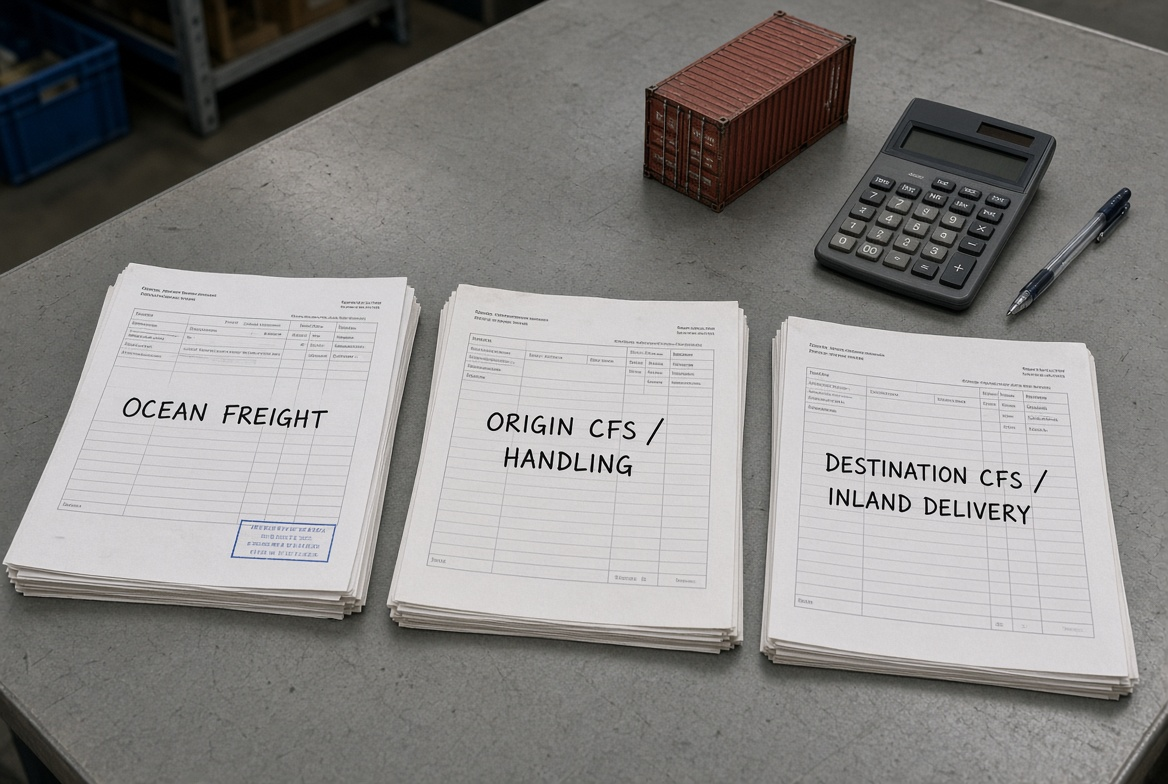
Typically, cargo commences from one factory (or more than one factory if sourcing from different cities). A forwarder organises the pickup by truck or you deliver into a warehouse which is connected to an origin CFS. There is no receiving to do. Staff compare carton/pallet count to the packing list, inspect for obvious damage and wet cartons, verify marks and prepare goods by destination.
In multi-supplier shipments, the marking and paperwork requirements are higher. When three factories in Dongguan, Yiwu, and Ningbo send all the shipments to the same PO without the same carton marks, the warehouse is required to rebuild the shipment based on the invoice and pictures. That is work that is done before consolidation begins.
Consolidation at Origin CFS: How Your Cargo Shares a Container
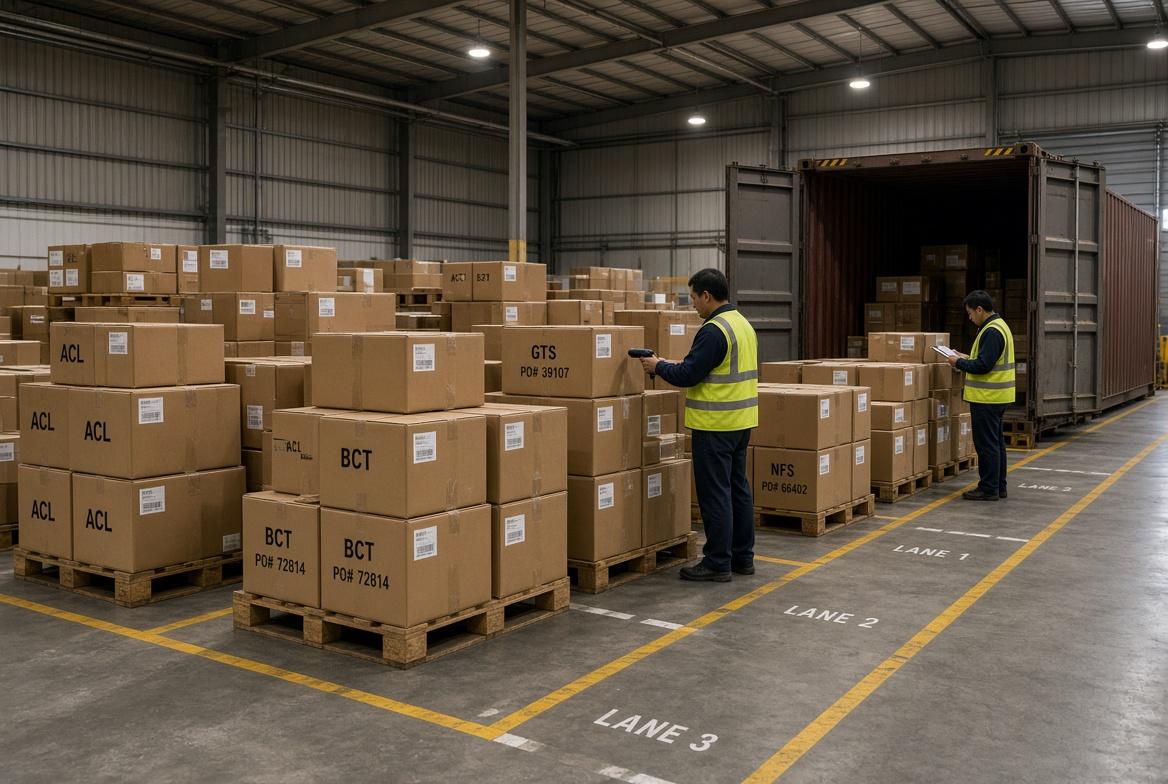
This is where LCL differs from FCL. Cargo from numerous shippers at the origin CFS is sorted by destination and loaded in one or more containers. Planners consider volume, weight, nature of the cargo, and the sequence of boxes offloading to destination. So, the heavy pallets go low. Fragile cartons remain on the shelf as long as they can. When incompatible goods are required to be separated by the consolidator’s SOP, the goods are separated.
Those in the box are not under your control. You have the power to determine how your goods are packaged and what is the attention drawn to its identification. It is the consolidator’s role to do space planning. You can still make cartons crushed or square depending on compatibility and load sequence.
Ocean Transport and Destination Port Discharge
Ocean leg is basically the same as FCL: gate-in, vessel load, sail and discharge the container. Not all the routing is the same. The LCL boxes are typically shipped along with the consolidator’s stream of business and may therefore be transshipped by the consolidator which a dedicated FCL booking on the same lane would not. The days at sea are just one component of LCL sea freight costs and time. Sailing days are not the time to consolidate or deconsolidate and they are still in the importer’s sailing calendar.
Destination CFS Deconsolidation and Final Delivery
Once discharged, the container will be transported to a destination CFS. The box is opened. Staging and check against documents of cargo for pick up or inland delivery according to bill of lading or house shipment. This is a 2nd peak handling. When your cargo actually leaves is determined by CFS throughput, local truck capacity and any document and/or inspection hold.
The time of delivery is not dependent on the arrival of the vessel, but on the release of CFS. You can leave a carton in a carton box at the terminal, without having to remove the box from the carton yet. Don’t accept a port-to-port ETA as a door-to-door picture, or a picture that includes destuff services and last mile bookings.
LCL Cost Breakdown: Ocean Freight, CFS Charges, and Local Fees
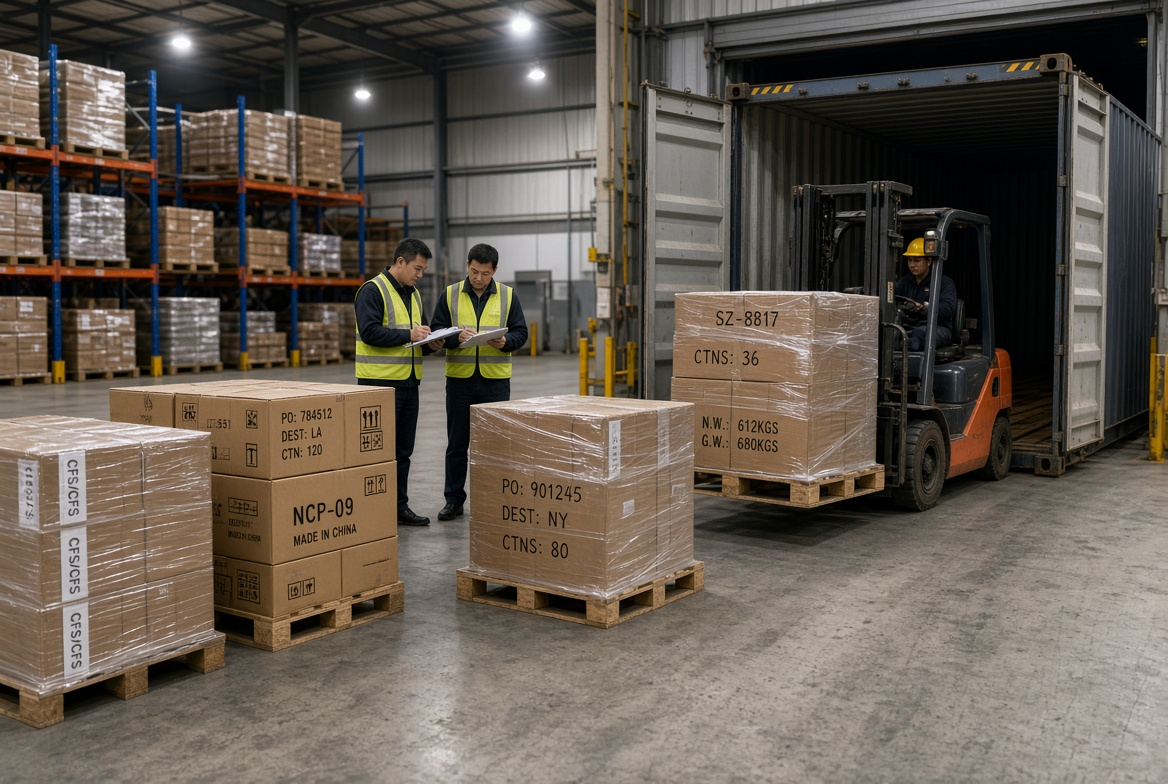
First line in all quotes is the per-CBM ocean rate. The choice between LCL and FCL services is not always a given but is more often than not based on the line. This is then added to by origin handling, CFS work and destination local fees. Don’t just use the ocean line, compare total landed cost.
Ocean Freight Pricing: Per CBM, Per Ton, and Minimums
LCL ocean freight is typically charged by cubic meter, or by revenue ton, whichever is the largest. There are many consolidators who establish minimum chargeable volume, typically 1 CBM, so that a shipment of 0.4 CBM can be billed as 1 CBM. Dense cargo – small and heavy, may cost on weight, not on cube.
Rates fluctuate according to the lane, the consolidator, market. Surcharges may be added during peak season. The ocean figure is the first layer. Does NOT cover pickup or origin CFS, export docs, destination destuff and inland trucking.
Origin Charges: Pickup, Handling, CFS, and Documentation
Common origin charges are: factory pick up or trucking to the warehouse, receiving and storage, consolidation handling, origin CFS charge, export declaration and forwarder documentation. The lines are different for different origin cities and ports, such as Shenzhen, Ningbo, Shanghai, and Qingdao, so there is no fee card that is common to all. The lines are also different depending on the scope of services provided. Port-to-port means you are responsible for more outbound work. That work is incorporated into the quote by door-to-door, and the result can seem steep without including the additional local bills.
If multiple suppliers are delivering on a variety of dates, it’s simple to undercount LCL consolidation and CFS charges at origin. Any extra storage days, any additional receiving events and late cargo which does not load as planned, are all reflected as origin cost.
Destination Charges: THC, CFS, Delivery Order, and Inland Transport
On arrival, you will be liable for a combination of terminal handling charges, CFS destuff, delivery order or release fees, port/ security charges, customs clearance, possible inspection fees and inland transport to your site or warehouse. Destination CFS and handling costs may constitute a significant portion of the cost of a small LCL shipment. This is one of the reasons why a 12-15 CBM LCL can sometimes be the same price as a light 20ft FCL on certain lanes, once local fees are added on.
Create a 3 layer view: ocean freight, origin fees, destination fees. The ocean quote does not constitute a cost comparison. It is an incomplete (partial) number.
Transit Time in LCL: What Drives Speed and Delays
LCL transit time is door to door time and not vessel steaming time. “Ready” cargo can still wait for the consolidation window at factory. There may be cargo waiting for destuffing after they reach the port of destination. Make against the total chain.
Consolidation Windows and Sailing Frequency
LCL shipments are held until a cargo load is sufficient to fill a box or to reach the consolidator’s cut off. That’s a delay of several days before the ship sets sail. The rhythm was set by how often people used the lane for sailing and the provider’s weekly or twice-weekly consolidation pattern. If a factory completes production Thursday, it may go to the next week’s box due to the CFS cutoff.
Request a door to door estimate which includes consolidation and deconsolidation days, not just port days. If the answer is just “18 days ocean” nothing else, then you are using an incomplete calendar.
Transshipments, Port Congestion, and CFS Throughput
Time is added after the booking is confirmed because of transshipment, berth congestion and CFS backlogs. The destuff capacity is shared on LCL containers, which can be more vulnerable to CFS queues than a dedicated FCL container. A single congested destination CFS may be able to carry multiple house shipments in one container.
Include buffer in launch times and replenishment during peak season. The buffer is not the glass half empty.The buffer is not half empty. The time that elapses between sailing days and the day the truck arrives.
Typical Transit-Time Ranges by Major Trade Lane (Indicative Only)
These ranges are general pictures, from door to door, for regular lanes from China to LCL. They are not schedules, and vary for origin/destination pair, consolidator, routing and market conditions. Check prevailing estimates with your forwarder before you commit to a sales date.
| Lane (indicative) | Approximate door-to-door range | What usually sits outside sailing days |
|---|---|---|
| China to US West Coast | About 25–40 days | Origin consol, destuff, inland trucking |
| China to US East Coast | About 32–48 days | Longer ocean plus destination CFS |
| China to Northern Europe | About 32–48 days | Transshipment risk on some routings |
| China to Australia | About 25–40 days | CFS throughput at destination |
| China to Middle East | About 25–40 days | Local release and inland capacity |
These ranges will be shorter than a port to port sailing figure. That is expected. It is important to have the longer term picture for LCL planning.
Risk Exposure in LCL: Handling, Damage, and Inspection
LCL vs FCL risk and handling is no slogan. It’s a tally of exposures. The cargo is carried by more people. There are more cargoes next to yours. A single inspection can decelerate an entire box.
More Handovers, More Touchpoints
The normal process for LCL cargo is through an origin warehouse or CFS, container load, through a vessel and terminal handling, and then through a CFS destuff and final delivery. Every handover can be a scuffed carton, a missed mark, a late scan. Weak cartons that successfully pass the FCL floor load may not pass the destuff and restack test.
Don’t pack the factory truck when packing for the CFS. Cheap damage, which only becomes apparent when the product reaches the destination, is reduced by the use of corner boards, appropriate palletization where possible and readable marks after the cargo has been stretch-wrapped.
Shared-Space Risk and Cargo Compatibility
The goods are stored with other shippers in the container. The quality, weight and type of commodities in the packaging will vary. Large objects may roll over to lighter cartons. Liquids can leak. If segregation does not occur, odorous or dirty cargo may contaminate textiles or food contact products.
Professional consolidators plan loading and keep incompatible goods apart. Risk is minimized but not eliminated. When booking, if it is high value, fragile or will pick up odours or condensation then pack it accordingly, as if it is next to a heavier pallet.
Customs and Inspection Scenarios in LCL
LCL is not the only carrier that has customs inspections. The common box alters the influence. Each house shipment in a container may be held for as long as a day at destination customs facility until it is inspected and boxes are removed and replaced. Another window of damage comes from extra handling of the exam.
Using accurate commercial invoices, packing lists and HS classification reduces the risk that your line is the cause of the container being pulled. They don’t get rid of tests. They prevent your file from becoming the earmark file in a mixed box.
When LCL Makes Sense: Cargo Profiles and Business Scenarios
LCL is not a standard service for all China orders. Apply to cargo profile and inventory plan that matches with extra handling.
Small to Medium Volumes and Trial Orders
LCL serves for shipments which are not suitable for full container load: trial orders, first production runs and top-up quantities between FCL cycles. A 20ft. is not needed for testing a supplier or a market. The downside is that it will cost more per cbm than a sealed FCL box and the handling is more.
Multi-Supplier Consolidation and Flexible Replenishment
Even when the volume increases, one of the practical reasons for importers not to change to FCL is multi-supplier LCL consolidation China. Three separate small bookings may transform into a single export, from cargo from factories in various cities. This reduces noise in coordination and facilitates lighter replenishment (without having to carry a full container of one SKU).
Cost vs. Speed Trade-Offs Compared to FCL and Air
LCL is in between FCL and air. It travels at a lower rate of speed and at a lower cost than air. More flexible and has more touch points than FCL at low volumes, and has a higher per-CBM cost (including CFS fees). Use LCL for flexibility and inventory discipline more than the fastest transit or the lowest unit freight on a full box.
How to Reduce LCL Risks and Improve Predictability
The process does not have to be noisy. The majority of the surprises that importers complain about after the first LCL move are eliminated by packaging, partner choice and a realistic calendar.
Packaging, Marking, and Documentation Best Practices
See that you are using cartons that hold up to restacking. Palletize if it is feasible for the commodity. Make consignee, PO and carton count marks on both sides with durable marks. The number of cartons should correspond with packing lists. The HS codes and product description must be the same as what will be displayed at customs, not a marketing name.
Those details minimize misrouting, handling damage and document queries. They are less expensive than a claim.
Choosing a Consolidation Provider with Strong CFS Control
A freight forwarder LCL shipping from China program is as reliable as the CFS network that it is dependent upon. Inquire about the concept of origin receiving, how loading and segregation is controlled, how cargo is tracked from warehouse to destuff and what the lane history is for delays and damage. A repeatable SOPs owned or partner warehouse is better than a booking that varies CFS each sailing.
As one of the forwarders based in Shenzhen since 2007, OriginLink International Logistics Co., Ltd. arranges for picking up goods from the factories, multiple suppliers consolidation, LCL ocean freight, clear goods from the customs at the destination countries and deliver to the overseas importers. There is still scope to write some more into the booking. The above questions should be part of that conversation.
Planning Buffer Time and Communication Cadence
Place buffer on calendar between peak season, product launches, and promotion dates. Establish a basic touch down checklist with forwarder: cargo received at origin warehouse, consolidated and gated in, vessel departed, arrived and destuffed at destination CFS, out for delivery. It’s better to have a status at those points than to get a daily email with no event.
Summary Guidance – Running LCL as a Predictable Part of Your China Sourcing
LCL is not a discount ocean line. The key element of flexibility involves smaller lots, multi supplier pickups, and replenishment not waiting for the full box. Those benefits come with the added cost of handling more CFS, a longer door-to-door clock than sailing days imply and more opportunities for damage and inspection delay.
Pack for destuff. Use a single picture to quote origin, ocean and destination. Use buffer time when using door to door. Choose a consolidator not just a booking screen consolidator. Do that and LCL is not an invoice you are surprised with on arrival in China, but rather a regular part of the process.