
If you are tracking shows why is my package stuck in customs, chances are the goods are not lost. This will normally indicate that a customs officer, broker, or the carrier is awaiting documents, duty and/or tax payment, inspection, or a decision from a different agency. The hold is quite common for overseas importers and internet users, who get products from China, and is usually solvable after the trigger is identified.
You don’t always get a better deal by waiting longer to pay an unmatched invoice or unpaid charge. Read the entire tracking note and be sure to distinguish between a carrier delay and a regulatory delay; act on the request rather than take customs for granted.
How Customs Holds Differ from Normal Transit Delays
A late scan and a customs hold are portrayed as the same on the phone screen. This isn’t the identical issue. Transit delays are caused by weather, missed flights, port congestion or a full ship. A regulatory pause: a document is not issued, a payment is not made, a classification question is not answered, and/or an inspection is not completed until it is resolved.
That changes who you talk to and what you send. A document request cannot be made by calling the airline, which does not affect the position of the document. Try emailing the seller on a marketplace and request them to “push customs.” – This seldom works either.
Transit delays vs regulatory holds
Carrier language remains in use: In transit, delayed, missed connection, arriving late. A tracking status that is in customs is indicated by the following terms: held, pending clearance, customs review, awaiting documents, or duties and taxes due.
This is a typical scene. When a first time importer sees “held by customs”, he calls the help line for the courier and receives a call from the help line that the courier is waiting for an invoice from the buyer. The package is stored in a bonded premises. Time is ticking away on storage and response time. There is an existing shipment by the seller.
Who can actually release the hold
A regulatory stop can only be released by the customs authority or the other agency holding the stop. The importer, licensed broker or freight forwarder still needs to provide the missing information in the file, which would include providing corrections, proof of payment, product information, or a response to a query.
There is assistance in China from the seller in Chinese packing items, factory invoice and photos. They are not a customs official who can tell another customs office to not check the declaration. Treat the seller as a document source, rather than the party who “controls customs”.
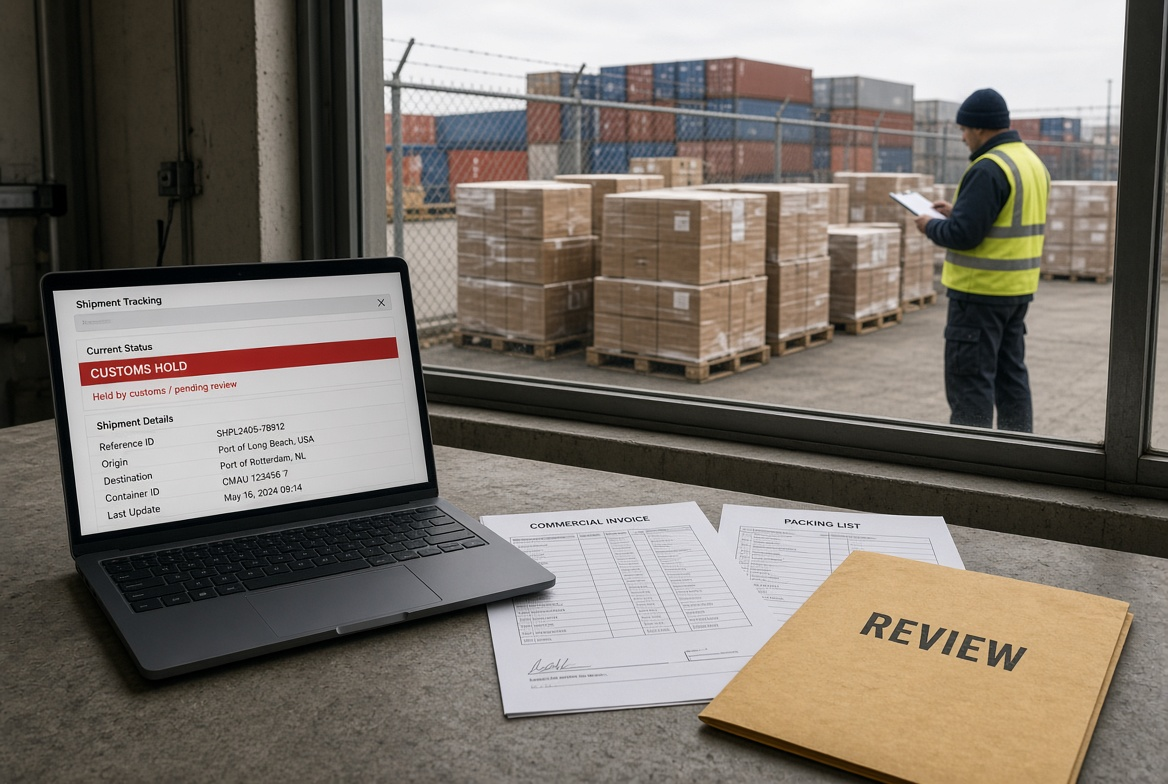
Common Reasons Packages Get Stuck in Customs
Most holds have a simple set of operating triggers. The actual legal basis is rarely referenced in one place, but the note, broker email or carrier portal message will typically indicate one of the following patterns.
Incomplete or inconsistent documents
Documentation for customs clearance is on top of the list of missing documents. The description of the goods, quantity and values in the commercial invoice, packing list and export declaration must be identical. One of the most common causes of holds is a payment proforma that hasn’t been adjusted to the number of cartons in the actual shipment. Yes, an invoice which states that it contains “assorted items”, with a packing list that refers to specific SKUs.
If there are inconsistent consignee names, no address or a different currency on the invoice and payment record, then the file is also stuck. A screenshot of a chat thread doesn’t replace an invoice with the seller/buyer information, description, quantity, unit price, currency and Incoterm.
Value and classification questions
The declared value is unusually low, so that it is brought to the attention. So does a fuzzy line of products that are not categorized. When the officer copies a supplier’s generic terms “gifts,” “samples,” “parts,” or “accessories” they are provided with nothing helpful. The description should accurately identify the product using a standard commercial description for classification and valuing purposes.
Goods being classified does not imply that the goods are illegal. It indicates that the file is not assessable as it is. Sometimes a photo, better product title, material composition and intended use can close the query quicker than a lengthy argument about, “What similar sellers state.”
Restricted, controlled, or product-specific items
Restricted items customs hold is used for products that require additional evidence: food and supplements, cosmetics, branded goods, electronics with batteries, machinery, chemicals, or license or a test report for the destination country. The hold could be with customs or another agency that is considering that product type.
Determine if your category is controlled prior to goods leaving China. When a certificate, a label, or a license is required, cargo will be sent first, and then the documents will be hunted, and then it will become storage, return or abandonment.
Duties, taxes, and processing fees unpaid
Unpaid duties and taxes customs hold is frequently easier to understand than it sounds. Goods may be already classified. The file is pending duties, taxes or the processing fee of the carrier or broker. The status won’t change until the right party pays via the specified channel.
Verify the responsibility under the sales term and service that you booked. A courier duty invoice is not closed if paid to a seller as “to cover customs”. The case where two emails are received from two parties but the importer does not request which invoice is which is also a common situation that results in paying twice.
What Each “Stuck” Status Usually Means
Carriers and customs systems don’t speak the same language. The words still correspond to a limited number of problems. Read the entire statement, not just the status line.
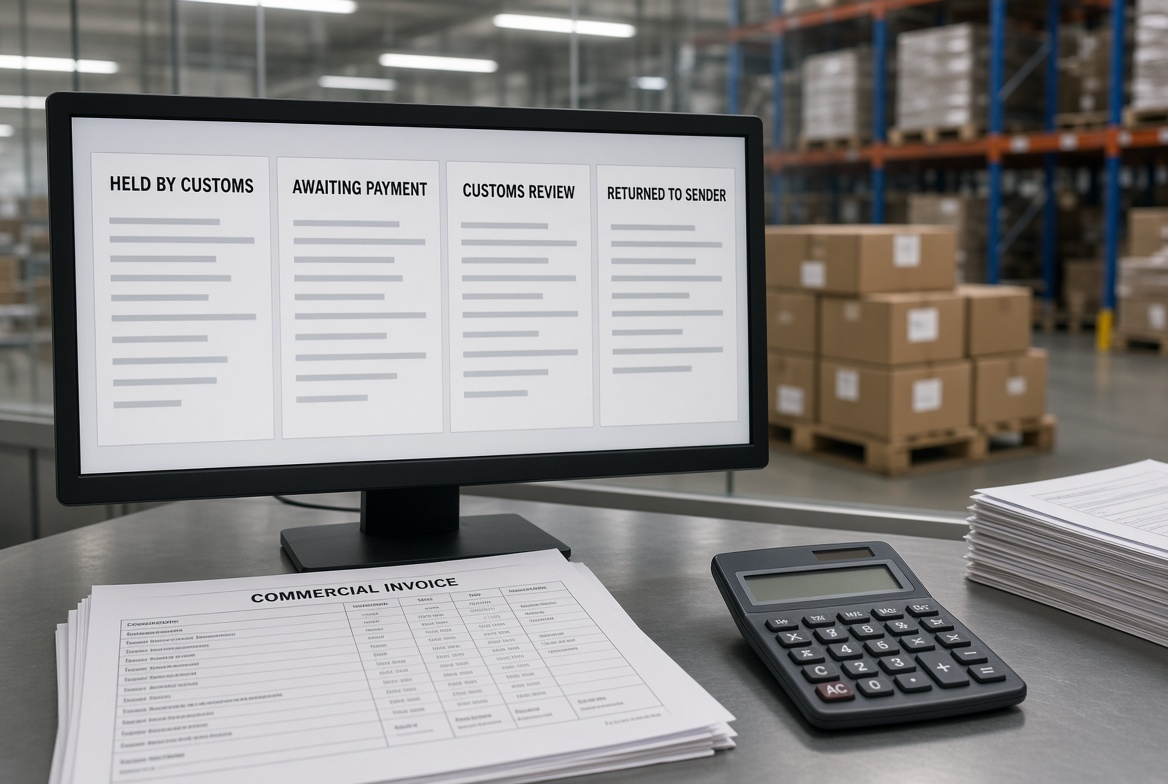
“Held by customs” or “customs review”
The customs status meaning is wide. This may be a document review, value review, classification review, physical inspection or referral to another agency. If you see the second sentence, additional documents required, payment pending, inspection in progress, or contact the broker, you should proceed with caution.
“Awaiting payment” or “duties and taxes due”
This typically indicates a debt due for services, taxes or fees. Verify the quantity, currency, payee, and payment method that are indicated on the official invoice or carrier website. Retain the receipt and pass the receipt along to the party that sent the request.
The danger lies in paying the incorrect desk. There are three places where a payment request may look official: marketplace seller, freight origin office, and destination courier. Before transferring funds, match the invoice to the tracking number and importer listed in the invoice.
“Returned to sender” or “abandoned”
Return, end-stage, and abandonment. They have a long hold, payment is refused, no responses or an un-cleared product. These are not the first status that you should expect if a parcel is one day late for delivery.
If the status has already changed to returned or abandoned, inquire what window is still open, if any, whether storage fees are due, and if there’s any chance of a correction to prevent the return. Do so in writing and with the last document submitted along with the tracking number.
What to Do When Your Package Is Stuck in Customs
Package stuck in customs what to do is a series of steps, not a single phone call. Send the file in order, otherwise you may get a half document set or pay an invoice that isn’t included in the hold.
Check the exact status and who is holding the cargo
View all the tracking data. Copy the most recent status text, location (if displayed) and reference/entry number. Decide if action is to be taken by the carrier, nominated broker, or customs officials.
Please record any dates or "respond by" language. If there is a contact desk on the portal, use it. Social media text to the company’s account is not an entry file.
Gather and send the right documents
These are often: updated commercial invoice, packing list, proof of payment of the supplier, product photos, and—if applicable to the category—certificates/licenses. Send clean PDFs. For the file name, incorporate the tracking number and in the subject line of the email.
Never include a ‘cropped’ chat screen shot as an invoice! The officer must require the names of the seller and buyer, an exact description of the product, quantity, unit value, currency and the terms of the sale. If the first invoice was a payment proforma, send a shipment invoice which corresponds to the invoice number of the cartons shipped.
Pay the correct charges through the right channel
Confirm who has to pay; the importer, forwarder under booked service or the carrier collecting on behalf of customs. Only pay using the invoice associated with that shipment or the portal associated with that shipment. Keep the receipt and return to the address from where the request was made.
In the case of two invoices, request which is LIVE before paying either. Double payment is more difficult to unwind than one day’s delay to confirm the payee.
When to escalate and when to wait
Once the documents or payment is received, allow the receiving desk to put the documents in and update the entry. If the status has not changed, and if you have evidence of receipt, then a brief follow up after two or three business days is acceptable after a couple days.
If the file goes quiet beyond that window, or if the request continually changes but no explanation is given, or if the storage language appears, escalate. Request the entry number, the list of outstanding items, and the name of the desk that is doing the hold. Escalation is more effective with a full notification rather than “any update?” notifications each day.
A Practical Troubleshooting Checklist for Held Shipments
This will serve as a working list for the first time the status is changed to a hold. Make sure to check off the items as they get collected, so there’s a full list in the next email.
Information and document checklist
- The location or facility name (or port) identified on the scan is displayed.The location, facility name (or port) identified on the scan is listed.
- Any customs, broker or carrier reference number
- Commercial invoice similar to the goods shipped and values
- Packed List / Count, weight & contents of cartons
- If the value is disputed, proof of payment to the supplier must be given.
- A brief specification sheet or product photos.
- Certificates or Licences (if applicable for product category)
- Previous e-mail or portal messages from the carrier or broker
Action checklist
- Make sure to find out if the delay is a transit delay or a customs hold.
- Find out who was waiting and what they requested – customs, broker or carrier.
- Mail corresponding documents in one package, attached to the tracking number.
- Only pay the invoice that matches that shipment and then share the receipt.
- Check that the files / payment was accepted at the desk.
- If the status is still the same after a brief window of time during business hours, set follow-up date.
- Follow up using the reference number and a listing of what you have previously answered.
Frequently Asked Questions
How long can a package stay stuck in customs?
There’s no clock in the world that ticks in one time zone 24/7. If a payment or document hold is active, they can be lifted when the file is finished. An inspection or inter-agency review is a more lengthy process. Storage and response windows are dependent on country, facility and carrier. Use the date of the status and any reply date given as the timeline and not a “rules of thumb” 10 days of customs.
Who should I contact if my package is held by customs?
Begin with a party as stated on the tracking note or the broker as stated on the arrival notice. The importer of record would typically be the party who would be responsible for providing the documents or payment. Origin seller will be able to send invoices and packing information. They do not have the office that releases the hold
What documents are most often requested for customs holds?
The first thing people usually like to see is a commercial invoice, a packing list and proof of purchase/payment. Where there is doubt about a product’s value, classification, or product controls, product photos follow, a clearer description, and category certificates.
Why am I being asked to pay duties on a small online order?
Duty and tax treatment depends on the destination’s de minimis rules, the declared value, the product classification, and how the shipment was entered. A low retail price on a product page does not automatically exempt the parcel. If a duty invoice appears, confirm it matches the tracking number before paying.
Can a package be returned or destroyed if it stays stuck in customs?
Yes. Prolonged silence, refused payment, missing licenses, or goods that cannot be cleared can end in return to sender, abandonment, or destruction under local rules. Those outcomes usually follow failed contact attempts, not a single missed scan.
Does “stuck in customs” mean my package will never arrive?
No. The majority of holds are closed when the missing payment or product detail is submitted after the invoice is sent. The status indicates that the file is open. It is not a final decision in seizing the cargo. Commit to the particular request made whilst the shipment is in the facility which issued the hold.