
Many importers would believe that goods were already on the truck or at the door when they see “cleared from customs.” It’s not the meaning of the line. What does “Cleared from Customs” mean? It indicates that the customs authority has accepted that entry for that shipment has taken place and, in most cases, has completed customs duties and taxes and handed over the shipment to the next stage of the customs process. This is NOT a delivery confirmation, it’s a customs decision.
The goods may still be in a terminal, cargo shed or warehouse. The process from the time of clearance to arrival includes terminal release, charges not paid, booking at the last-minute, and delivery appointments. Read the status as one checkpoint, and read what is to be done following the status.
What Does “Cleared from Customs” Mean for Your Shipment
The cleared from customs status meaning is regulatory and not physical. An entry was filed. Documents were reviewed. There were duties and taxes levied. Then customs decided that the vessel could move from its grip for further travel. It is up to customs to make that choice. It is NOT a “out for delivery” scan and it is NOT a warehouse gate-out.
Wording varies. The “customs cleared” or “cleared” or “released by customs” or “import shipment status cleared” status will be displayed in a carrier portal, a forwarder dashboard, or customs system. Those labels typically reference the same concept: at this time customs is not preventing the entry. They will not let you know if a gate pass has been issued by the terminal, if a truck is booked or if all cartons in a consolidated load are in the same area.
Ocean, air and express all employ some form of this status. It’s a different handoff after it. There must be a trucker, and a container must be terminal released. Air freight requires additional handling clearance at the cargo terminal. However, sometimes the clearance process and the last-mile service are combined very closely by Express and any issue at the customs line, such as a hold, incomplete duty payment, or address issue, can block the parcel from being delivered after the customs line update.
Customs Approval vs. Physical Location
Cargo may be cleared but not moved. The typical situation: the importer is following the flips on paper to ‘cleared’ and he or she begins the process of receiving labour, while the box or container is still in the port or airport facility. There has been no Gate-out. The terminal still requires the evidence that the charges are paid, the delivery instructions are complete and the evidence of the right person to receive the delivery.
Location and status are two different questions. Ask both. Entry does not necessarily equal exit from the terminal.
Who Sees This Status and Where
The same shipment might be finished in one system, and unfinished in another. Carrier Tracking might report customs cleared. The terminal/warehouse system may still continue to display “awaiting release” or “on hold for charges.” Last mile partner might not have a booking.
Use one screen as a "partial view. If the line has not been changed since clearance, inquire from the forwarder/destination agent about the terminal/warehouse status, not the customs wording.
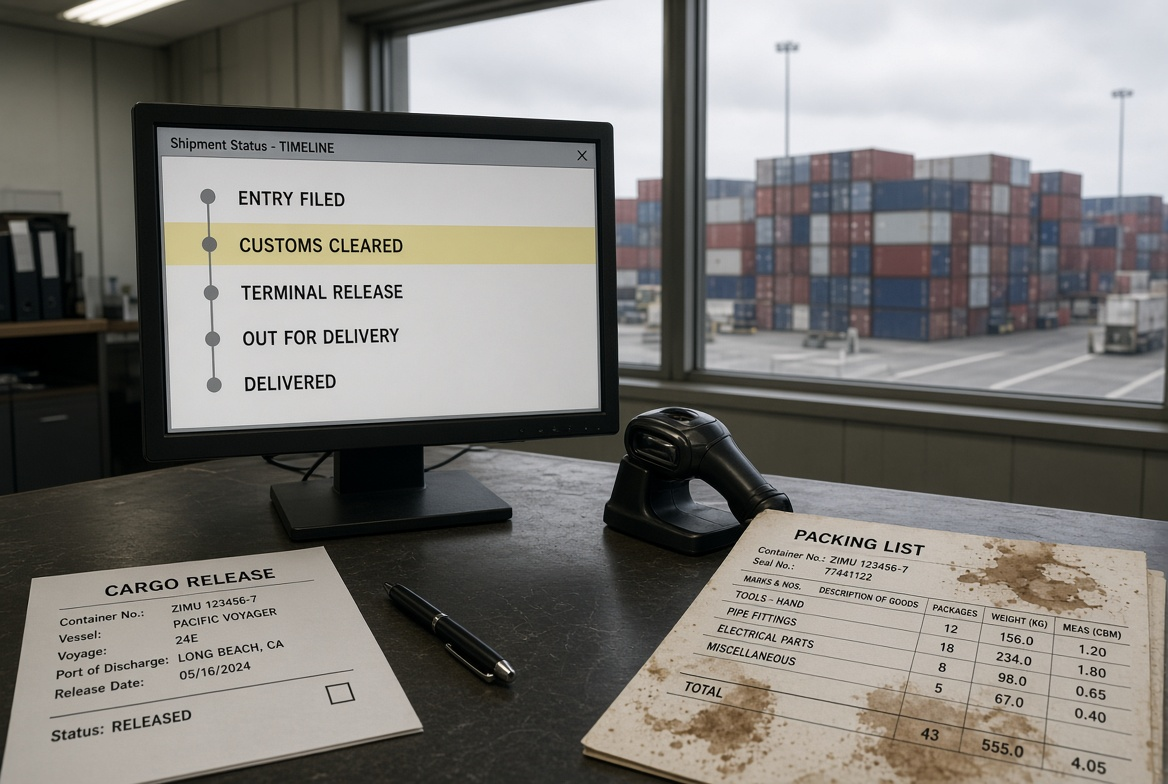
What “Cleared” Does Not Guarantee
Any clearance is required for delivery. It is not enough. No one has ever found a fault with the normal state where customs are cleared but not delivered. Post-approval gaps are operational: terminal release, booking of trucks/couriers, appointments and in some cases a second agency check.
Do not think of “cleared” as a clock that initiates a set delivery window. The next speed at which the cargo moves is dependent on the mode, the facility, unpaid charges, documents and if anyone is waiting to take it.
Terminal Release and Gate-Out
Even though the goods have been cleared by customs, the terminal/warehouse must still release the goods for collection. This process is also known as terminal release after customs clearance, gate-out or cargo release. Typical requirements are proof of duties and taxes paid or paid up, terminal or handling charges settled and proper delivery or collection instructions.
Thereafter, the cargo remains in its current position until such release is made. Storage may begin before and after the goods have been cleared by customs. If the status doesn’t go any further, the next question isn’t “Did customs finish?”. It’s “Which one is the block-out?”
Last-Mile Booking and Delivery Windows
The truck, the courier/cartage partner still needs to be picked up. For ocean freight, this could be a drayage appointment, and delivery to a warehouse or fulfillment center. For air freight, it can be a bonded trucker or a booking on the premises with a local cartage service from the cargo terminal. Typically, express networks will make after-clearance the last-mile part of their product, but if a site does not have a complete address or the parcel will not fit at that site, the run will be cancelled.
But don’t take for granted that last mile is booked as soon as customs clearance is received. Verify the owner of that booking for your service and Incoterm and verify the appointment.
Partial Releases and Split Shipments
Cleared can be limited to a portion of the cargo, and not the entire shipment. That is most frequently seen on LCL and other consolidated freight, and on shipments which are spread over more than one house bill or carton range. One bill may pass, another may be pending. The cartons may be allowed off while another batch of the same consolidation is still held.
Inquire if the status includes all of the house bills and all of the cartons that you’re awaiting. A split can be hidden with a single “cleared” line on a master view.
Common Next Steps After Customs Clearance
The next step after customs clearance varies according to the type of service purchased, the Incoterm and the constitution of the destination. A DDP-type delivery typically retains most of the post-sale logistics processes. Port to port or airport to airport service requires less terminal or inland work for you or your local agent. The usual suspects for importers are still those that are required when the package is cleared for customs — money, location, then delivery instructions.
Confirm Duties, Taxes, and Charges Are Settled
Customs clearance and payment go together, but the terminals and agents will still be able to retain the goods for unpaid goods. Verify duties and taxes paid and/or confirmed, and ensure terminal, handling and documentation fees and agent fees are accounted for. If there is a delay in the gate-out and they can’t say the hold, ask for a breakdown of what they are charged with.
One of the most common reasons a shipment looks “done” on tracking, but stays still is unpaid charges.
Check Terminal or Warehouse Status
The following status to be alerted is frequently “terminal release,” “gate-out,” “departed terminal” or “available for pickup.” If those lines are not there, then inquire the exact location and what the facility is waiting on. A helpful response identifies the facility, specifies the hold reason (if applicable) and whether the facility has an existing pickup/delivery booking.
Anything that isn’t specific is not a plan. Location plus blocker is a plan.
Final Delivery Instructions and Appointments
Verify the delivery address, contact to receive, phone number and any reference for the appointment. Don’t expect commercial warehouses and fulfillment centres to accept an unannounced truck. A person must be available at residential and small commercial sites to receive and sign.
The cargo may be ready and waiting and the appointment may not have been made, the dock may be closed, or the contact on the file may not pick up and deliver the cargo. When you see clearance, look at those details, not after the first delivery attempt that failed.
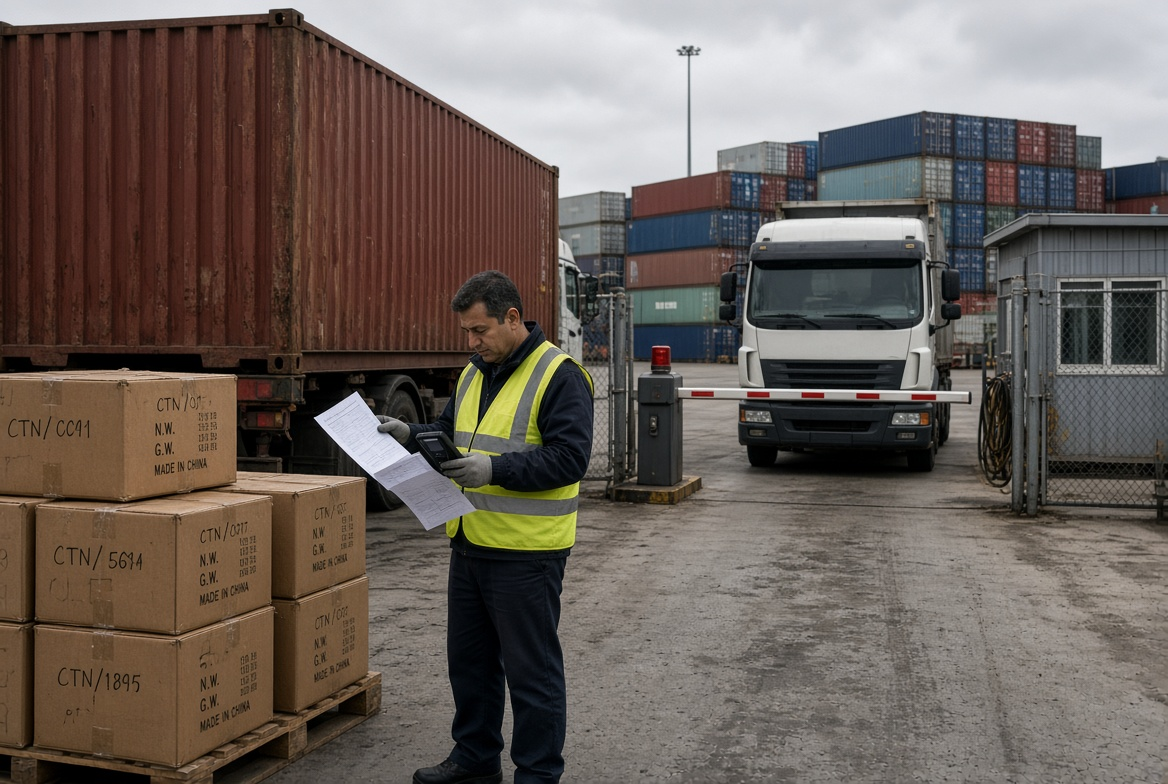
When “Cleared” Cargo Still Gets Stuck
Why is my shipment not moving to the warehouse following clearance? In most cases not because the customs line was incorrect, but because the post clearance task is missing. Here are the most common holds that are hit by importers.
Unpaid Terminal or Agency Charges
After customs has cleared the entry, the terminals and agents of destination may retain cargo for handling, storage and documentation and/or agency charges. Those invoices are not being wiped away with the customs decision. If gate-out is delayed, request the open charge list and who is responsible for each line. One common cause for cargo sitting is paying the duty bill and neglecting to pay the terminal invoice.
Missing or Incorrect Delivery Instructions
The delivery of wrong suite numbers, missing contacts, out-of-date warehouse appointments and “deliver to the same place as last time” notes are all blockers to last-mile movement. Don’t expect that the forwarder already has a receiving file. Please check the current address, hours, appointment rule and on-site contact information with this shipment, and not with the previous shipment.
Inspections or Holds Triggered After Clearance
Last word is not “cleared from customs”. Cargo can be marked by other agencies such as health, agriculture, product safety or destination agencies after the customs entry is cleared. That may result in an additional exam, document request, or hold in the same location.
If tracking indicates cleared and the cargo has not yet departed, inquire if there is any non-customs hold. The resolution alters who you’re chasing, and what documents you are sending.
A Simple Post-Clearance Checklist for Importers
This list can be used with your forwarder or destination agent on the day the status changes. It lacks any purpose. The objective is to identify the true blocker before the number of missed appointments and storage builds up.
Status and Document Checks
- Verify that “cleared” pertains to the entire shipment, including all house bills and carton ranges awaiting.
- Make sure duties and taxes are paid or covered, and if any duties or taxes have not yet been paid, whether they are refundable or additional.
- Do not use customs line; also check terminal/warehouse status for readiness to gate out.
- If the cargo is not released, request the hold reason in a single sentence.
Delivery Readiness
- Verify the address, receiving times and the name of the person.
- Confirm the need for an appointment and if an appointment is made, check if it is already booked.
- Ensure that someone is available to receive and sign when the truck/courier arrives.
- If collecting, check who is permitted to be at the gate and which documentation they need to bring.
Frequently Asked Questions
Does “cleared from customs” mean my shipment is delivered?
No. = Customs has cleared the entry and in most cases, has permitted the cargo to proceed to the next stage. Delivered” refers to delivery, when the goods are delivered to their agreed location and handed over to the buyer. The status between the two is terminal release or pickup, and last mile delivery, all of which have been the subject of a trucking business.
How long after clearance will my cargo be delivered?
There is no single clock. Time after clearance depends on the mode, the facility, unpaid charges, appointments, and whether the cargo is whole or split. Ocean freight still needs terminal release and inland haulage. Air freight still needs handler release. Express is often faster after clearance, but a hold or address problem can still delay it. Ask for the current facility status and the next booked move instead of a generic number of days.
Why is my tracking showing “cleared” but no movement?
The cargo is probably still waiting on terminal release, charge settlement, a delivery booking, or a document fix. Tracking systems often update the customs line before the facility updates gate-out. Ask where the cargo is sitting and what the facility needs before it can leave.
Who should I contact if cargo is cleared but not released from the terminal?
Start with the party handling destination operations: your freight forwarder, customs broker, or destination agent. They can see terminal messages, charge lists, and release status that a public tracking page will not show. Contacting only the ocean carrier or airline often produces a customs update you already have, not a gate-pass.
Can customs re-open a shipment after it is cleared?
In some cases, yes. A later review, a document mismatch, or another agency exam can put the cargo back under a hold even after the first clearance message. Treat clearance as the current customs position, not a permanent lock. If movement stops after a cleared scan, ask whether a new hold has been added.
What is the difference between “cleared,” “released,” and “delivered”?
“Cleared” is the customs decision on the entry. “Released” usually means the terminal, warehouse, or carrier handler has authorized the cargo to leave that facility. “Delivered” means the cargo has arrived at the agreed destination and been received. A shipment can be cleared and not released, or released and not yet delivered. Read the three words in that order.