
Uncategorized

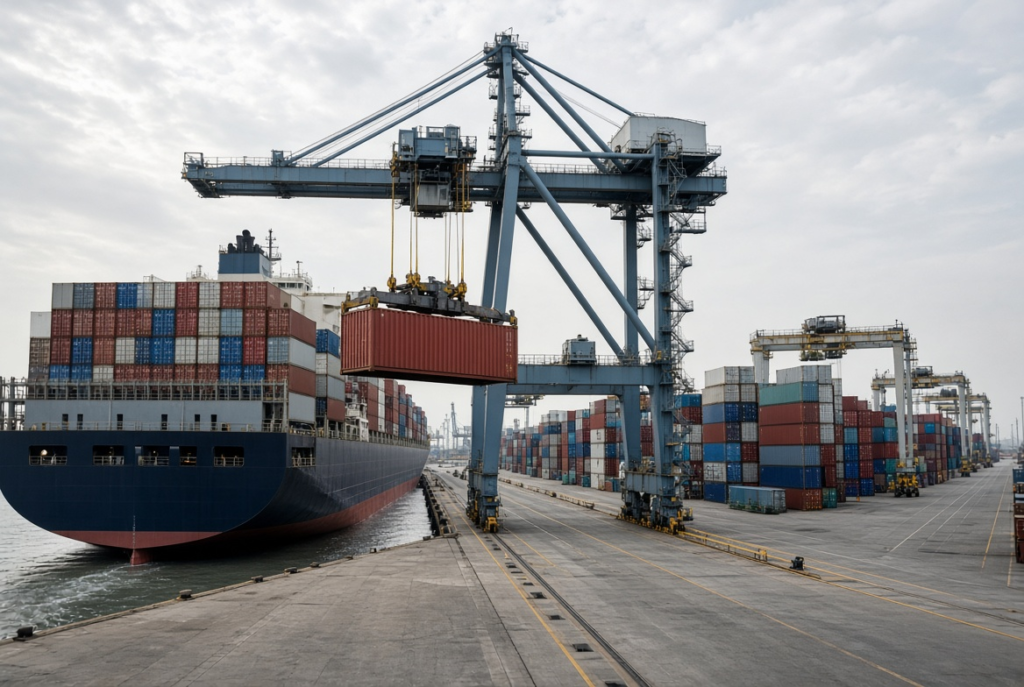
Quay crane lifting a container at a port terminal, illustrating terminal handling charges (THC) in ocean shipping for importers.
Uncategorized

What Are Terminal Handling Charges (THC) in Shipping?

This guide is for overseas importers and logistics managers arranging sea freight from China who keep seeing THC on quotes and invoices. It explains what terminal handling charges cover at origin and destination, who typically pays them under common Incoterms and service scopes, and how to place THC in a total landed-cost model so quote comparisons and budgets stay honest.

Side-by-side 20-foot and 40-foot shipping containers labeled 1 TEU and 2 TEU on a port terminal, showing TEU as a container capacity unit for freight planning
Uncategorized

What Is a TEU in Shipping? Container Capacity and Freight Planning Explained

This guide is for overseas importers and logistics managers who see TEU in carrier updates, port reports, and rate commentary but book 20ft, 40ft, or 40HC boxes from China. It defines the twenty-foot equivalent unit, maps common containers to TEU, and shows how to use capacity headlines as context—not as a booking rule—when you plan space, timing, and forwarder conversations.

Container vessel between an origin container yard and a destination container yard, showing CY/CY as yard-to-yard carrier scope rather than factory-to-door delivery.
Uncategorized

What Does CY/CY Mean in Shipping? Responsibilities, Costs, and Cargo Handoffs

Overseas importers and logistics managers booking sea freight from China often see CY/CY on quotes and bills of lading without a clear split of cost or work. This guide explains container yard to container yard in operational terms, maps handoff points and charges on each side of the yards, and shows how CY/CY sits with Incoterms and door delivery so landed cost is planned, not guessed.

Shipper-owned and carrier-owned containers parked side by side in a Chinese port yard, illustrating the SOC vs COC choice for FCL shipments from China
Uncategorized

SOC vs. COC Containers: Costs, Control, and When to Use Each

This guide is for overseas importers and logistics managers booking FCL from China who need a clear SOC vs COC decision. It explains shipper-owned versus carrier-owned containers in operational terms, then compares cost, control, flexibility, and risk. You get typical use cases, hidden equipment costs, and the questions to review with a freight forwarder before you lock equipment type.

Visual comparison of FCL dedicated-container cargo and LCL multi-shipper consolidation at a China warehouse, illustrating how importers choose ocean freight options.
Uncategorized

FCL vs. LCL Shipping: Which Ocean Freight Option Should You Choose?

This guide helps overseas importers and logistics managers choose FCL or LCL for sea freight from China. It explains cost-per-CBM logic, origin and destination charges, transit and flexibility trade-offs, and damage or inspection risk. Readers get practical decision rules by volume, cargo value, inventory strategy, and multi-supplier consolidation—not a one-size CBM cutoff.

40ft high-cube shipping container with an open door and visible palletized cargo in a port yard, used to illustrate shipping container types and sizes for importers planning FCL loading from China.
Uncategorized

Shipping Container Types and Sizes: A Practical Guide for Importers

This guide is for overseas importers and logistics managers arranging sea freight from China. It explains how container type and size affect loading, cost per CBM, and damage risk. You will see when a 20ft, 40ft, or 40HC dry box is the right FCL choice, when open-top or flat-rack equipment is needed, and when LCL or multi-supplier consolidation beats forcing a full container.

滚动至顶部